What Are Business Management Tools: Everything You Need

Practical guide to What Are Business Management Tools for Australian businesses. Streamline operations with Xero integration, automated ordering, and real-ti...

Prefer to talk? Call 1300 980 598
  • Real-time inventory visibility across multiple warehouse locations and stocktake management
  • Automated purchase order generation based on reorder points and supplier lead times
  • Customer ordering portals enabling 24/7 self-service ordering for wholesale clients
  • Seamless Xero integration for automatic financial record synchronisation and GST compliance
  • Negative inventory tracking for wholesale operations with pre-sold or on-order stock
  • Mobile-friendly stocktake apps with barcode scanning for efficient EOFY counts
  • Centralised reporting and analytics dashboards showing sales trends and inventory performance

Business management tools are software solutions designed to help companies streamline their operations, improve efficiency, and make better decisions across multiple departments. For Australian wholesale, manufacturing, and distribution businesses, these tools have become essential for managing everything from inventory levels to customer orders and financial reporting.

At their core, business management tools consolidate information from different areas of your business into one centralised system. Instead of juggling spreadsheets, emails, and disconnected software platforms, you get a unified view of your inventory, orders, customers, and finances. This integration is particularly valuable for SMBs operating across multiple locations or managing complex supply chains. A Melbourne brewery, for example, might use business management tools to track raw materials across warehouses, manage customer orders from bottle shops across Victoria, and ensure they're compliant with GST requirements all in one place.

The best business management tools go beyond simple data storage. They automate repetitive tasks, generate real-time reports, and help you identify trends before they become problems. When you're running a wholesale operation, knowing exactly how much stock you have, where it's located, and when you need to reorder can mean the difference between satisfied customers and missed sales. Inventory management tools specifically help you avoid stockouts and overstock situations by providing visibility across your entire operation.

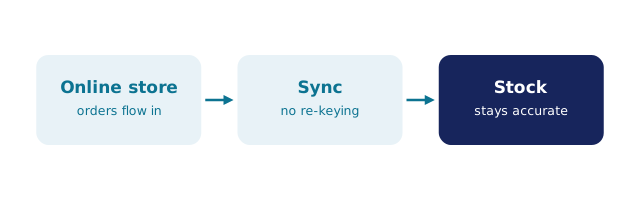
For Australian businesses, integration with accounting software like Xero is crucial. Business management tools that seamlessly connect with Xero ensure your inventory movements automatically update your financial records, making EOFY stocktakes and GST compliance significantly less stressful. This eliminates manual data entry errors and saves your team hours of reconciliation work that could be spent on growing your business instead.

BSimple inventory management dashboard

Understanding Business Management Tools and Their Purpose

Business management tools serve different purposes depending on your industry and business size. Understanding the main categories helps you identify what your business actually needs rather than getting caught up in overly complex enterprise solutions.

Inventory Management Systems form the backbone of wholesale and manufacturing operations. These tools track stock levels across multiple locations, monitor product movements, and alert you when items need reordering. A Sydney coffee roaster might use inventory management to track beans at their roastery, warehouse, and retail location simultaneously. The system can flag when single-origin Ethiopian beans drop below reorder points, automatically triggering purchase orders to suppliers. Advanced systems even handle negative inventory tracking, which is essential when you've sold stock that hasn't physically arrived yet—a common scenario in wholesale.

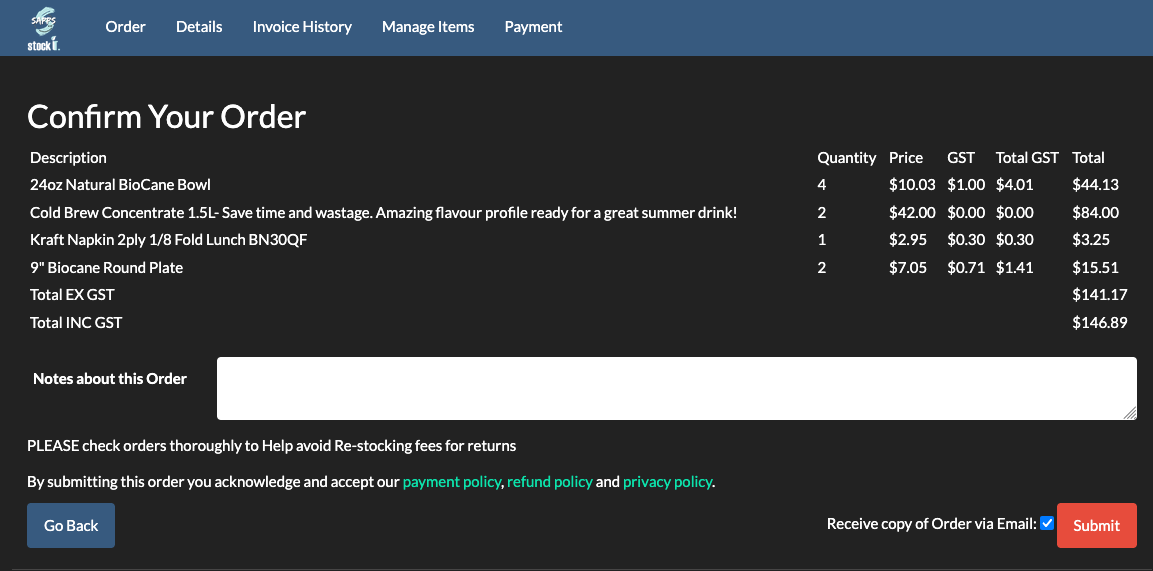
Order Management Tools handle the entire lifecycle of customer orders, from initial request through delivery and payment. These systems can include customer ordering portals where your wholesale clients can place orders 24/7, reducing the need for phone calls and emails. The system automatically generates picking lists, packing slips, and invoices, speeding up fulfillment significantly. For distribution businesses serving multiple retailers, this automation is a game-changer.

Financial Management Integration connects your operational data with accounting software. When you use a tool that integrates with Xero, every inventory movement, customer order, and supplier payment flows directly into your financial records. This means your P&L statements, balance sheets, and GST reports are always accurate and up-to-date, not reconstructed from scattered data sources weeks after transactions occur.

Reporting and Analytics Tools transform raw data into actionable insights. Rather than spending hours manually building reports, business management tools generate dashboards showing your top-selling products, slowest-moving inventory, customer ordering patterns, and cash flow forecasts. These insights help you make strategic decisions about which products to stock more heavily and which to phase out.

Talk to us

BSimple inventory control software

How Business Management Tools Solve Real Problems

The real value of business management tools becomes apparent when you consider the specific challenges Australian businesses face. Our wholesale and manufacturing sector operates with tight margins, complex supply chains, and regulatory requirements that demand accuracy and efficiency.

Solving the Inventory Visibility Problem is perhaps the most critical benefit. Many Australian distribution businesses still rely on manual stocktakes or outdated systems that don't reflect real-time movements. This leads to common problems: you think you have stock when you don't, customers get disappointed with backorders, and you end up with dead stock tying up cash. Business management tools provide real-time visibility, so you always know exactly what you have available. This is especially important during EOFY stocktakes when you need accurate counts for tax purposes and GST compliance.

Reducing Manual Data Entry saves both time and money. When your business management tool integrates with Xero, information flows automatically between systems. Your team isn't spending hours re-entering customer orders into accounting software or manually updating inventory counts in multiple places. For a manufacturing business with hundreds of SKUs and daily order volumes, this automation can save 5-10 hours per week that your team can redirect toward customer service or product development.

Improving Customer Service is an often-overlooked benefit. When you can instantly tell a customer whether you have their requested product in stock, when it will be available, and when they can expect delivery, you're providing service that competitors with outdated systems simply can't match. Customer ordering portals allow your wholesale clients to check stock availability and place orders independently, reducing back-and-forth communication and improving their experience.

Supporting Just-in-Time Operations becomes possible with proper business management tools. Rather than holding excessive inventory to cover uncertainty, you can operate leaner when you have accurate demand forecasting and reliable supplier relationships tracked in your system. This reduces storage costs and working capital requirements—critical for cash-conscious Australian SMBs.

Learn more

BSimple order management interface

Choosing Tools That Actually Work Together

Implementing business management tools requires understanding what specific capabilities matter most for your operation. Not every tool is right for every business, and Australian companies need solutions that work with local accounting practices and integrate properly with the software they're already using.

Automated Purchase Order Generation is a game-changer for wholesale and manufacturing businesses. Rather than manually creating POs when stock runs low, your system automatically generates them based on reorder points and supplier lead times. This ensures you're never caught short and reduces the admin burden on your purchasing team. For businesses managing relationships with multiple suppliers across different lead times, this automation prevents costly stockouts.

Stocktake Management Features make your annual EOFY process significantly less painful. Traditional stocktakes involve shutting down operations, manually counting everything, then reconciling counts against system records—a process that can take days. Modern business management tools streamline this with mobile-friendly counting apps that staff can use to scan barcodes and record quantities. The system automatically flags discrepancies and helps you investigate variances, making your audit trail clear for tax purposes and GST compliance.

Multi-Location Management is essential for Australian distributors and manufacturers with warehouses in different states. A single business management tool gives you visibility across all locations, prevents overselling from one warehouse when stock is available elsewhere, and helps you optimise stock distribution. You can see that your Brisbane warehouse has excess stock of a particular item while your Perth location is running low, then transfer stock efficiently rather than placing unnecessary supplier orders.

Xero Integration Benefits are substantial for Australian businesses. When your business management tool connects seamlessly with Xero, you get automatic synchronisation of customer data, invoice information, and payment records. This integration ensures your financial records always match your operational reality. For GST compliance, having integrated systems means your GST calculations are based on actual transactions rather than estimates or manual adjustments. Xero integration also simplifies your accountant's job during tax time, as they're working with clean, integrated data rather than trying to reconcile multiple systems.

The key is choosing tools that work together rather than creating new silos. A cohesive system where your inventory management, order processing, and accounting all communicate automatically creates efficiency that spreadsheets and disconnected tools simply cannot match. For Australian SMBs operating in competitive wholesale and manufacturing markets, this efficiency directly impacts your bottom line and your ability to service customers reliably.

Register for a free trial

BSimple purchase order workflow

Frequently Asked Questions

What's the main difference between business management tools and accounting software?

Business management tools focus on operational efficiency—inventory, orders, and supply chain—while accounting software handles financial records. The best approach is using both integrated together so operational data automatically flows into your accounts.

Do I really need business management tools if I'm a small wholesale business?

Yes, especially for wholesale. Even small operations benefit from inventory visibility, automated ordering, and customer portals. These tools prevent costly stockouts and reduce manual admin work that costs you time and money.

How does Xero integration help with GST compliance?

When your business management tool integrates with Xero, every transaction automatically updates your financial records with correct GST amounts. This eliminates manual entry errors and makes EOFY reconciliation and tax time significantly simpler and more accurate.

Can business management tools handle multiple warehouse locations?

Yes, this is a core feature. You get centralised visibility across all locations, prevent overselling, and can transfer stock between warehouses efficiently rather than placing unnecessary supplier orders when stock exists elsewhere.

What's negative inventory tracking and why do I need it?

Negative inventory tracking allows you to sell stock that hasn't physically arrived yet—common in wholesale when customers order before your supplier delivery. Your system shows the committed stock and alerts you when it arrives, preventing double-selling.

How much time can business management tools actually save my team?

Automation typically saves 5-15 hours weekly depending on your operation size. This comes from eliminating manual data entry, streamlining stocktakes, automating PO generation, and reducing customer service inquiries through self-service portals.

Are business management tools difficult to set up and learn?

Modern tools designed for Australian SMBs are relatively straightforward, especially those with strong Xero integration. Most require 2-4 weeks implementation and basic staff training. The learning curve is worth the efficiency gains you'll see immediately.