
Guide / Shopify and stock
Inventory software with Shopify: how the connection should work
The store sells; the record tells the truth. What a Shopify-inventory connection must actually do — direction, timing, quantity master — and what BSimple does and does not cover.
The key facts
- Two things must flow: orders from the store into the operational record, and stock truth back to the store. A one-way connection half-fails both.
- The quantity-master rule: the operations record owns quantities; Shopify displays and sells against what it is told. Two adjusting masters drift.
- BSimple's connection: Shopify orders import by webhook into the normal flow — delivery slips, pick/pack, approval, stock deduction — with invoicing between Shopify and your accounting system.
- The boundary, plainly: BSimple runs no storefront and claims none — Shopify is the shop; BSimple is the truth underneath it.
- Where it fits: this page is one branch of the inventory management guide.
- 01The key facts
- 02What a Shopify-inventory connection must actually do
- 03How BSimple handles it — and where the line sits
- 04Testing any connection before you trust it
What a Shopify-inventory connection must actually do
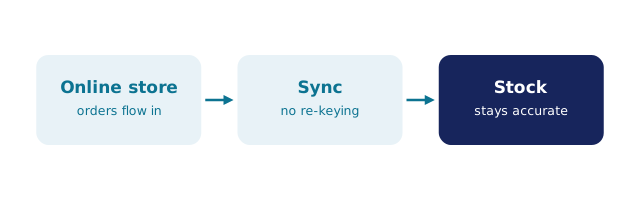
Orders in, immediately. A customer checks out; the order should appear in the operational record without a human copying it. Webhook-based import does this as the order happens; CSV exports and scheduled pulls do it eventually, and the gap is where the oversell lives — two units on the shelf, three sales before the sync.
Truth back, on a schedule you know. After picking, packing and any count, the store's available quantities need updating from the record. Whether that is continuous or batched matters less than that it is known — mystery gaps are how the store promises what the shelf cannot honour.
One quantity master. The deepest rule: quantities are adjusted by real movements in one system — receipts, orders, counts — and the other displays them. The moment both systems adjust stock, every discrepancy has two authors and no explanation.
Fulfilment without re-entry. The picked order should drive the shipping state without retyping, and the invoice should reach accounting without retyping — the accounting boundary is part of the connection, not an afterthought.
How BSimple handles it — and where the line sits
We build BSimple, so weigh that. Shopify orders import by webhook into the same flow every other order takes: delivery slips, picking and packing, approval, stock deduction at approval — so a store order and a phone order are the same record to your floor. Stock truth flows back to the store from that record, quantities stay honest against everything else sold that day, and the invoice path runs between Shopify and your accounting system (Xero and MYOB established; US integrations rolling out).
The line, stated plainly: BSimple does not run the storefront — no product pages, no checkout, no theme. Shopify is the shop; BSimple is the record underneath it. For wholesale-heavy sellers, the same record also serves per-customer ordering portals — retail through Shopify, trade through their own links, one truth. The Shopify comparison, the ecommerce-layer guide and the small-retail angle cover the surrounding decisions.
Testing any connection before you trust it
Three tests, one afternoon: sell the last unit (place an order that empties a product and watch the store react — oversold or sold out?), receive mid-day (add stock and see how long until the store can sell it), and mismatch it (let the store and record disagree deliberately, then see which system surfaces the conflict first). Any vendor can demo a happy path; these three tests find the sync's real opinion. BSimple's trial runs them on your store and your products.
Frequently Asked Questions
Does BSimple sync inventory with Shopify?
Yes — Shopify orders import into BSimple by webhook, and stock truth flows from the operational record back to the store. The design keeps BSimple as the quantity master so the two systems never compete to adjust the same stock.
Does BSimple replace my Shopify store?
No — there is no BSimple storefront. Shopify runs the shop and checkout; BSimple runs stock, fulfilment and invoicing underneath. Stores leaving Shopify entirely are leaving BSimple's scope, stated plainly.
How fast do Shopify orders appear in BSimple?
By webhook, as the order happens — not on a nightly sync. The pick list the floor works from includes the order a customer placed minutes ago, which is the practical difference between a sync and a copy.
Can wholesale customers order outside Shopify?
Yes — through their own portal with per-customer products and pricing, drawing down the same live quantities the store sells against. Retail and wholesale finally share one stock truth.
What does the Shopify connection cost?
It is part of BSimple's core integration set — no add-on fee. Plans run $180/$250/$399 per month AUD; the trial connects your real store before any commitment.

BSimple