Ecommerce Software Examples Built for Your Industry

Ecommerce Software Examples designed for wholesale and manufacturing. Xero integration, customer portals, automated purchasing, and inventory control for Aus...

Prefer to talk? Call 1300 980 598
  • Seamless Xero integration for automatic financial reconciliation and GST compliance
  • Customer ordering portal with real-time inventory visibility and tiered pricing support
  • Automated purchase order generation when stock falls below minimum thresholds
  • Negative inventory tracking and just-in-time inventory management capabilities
  • Multi-location inventory control with centralised management across warehouses
  • Stocktake management tools designed for efficient EOFY reconciliation and audits
  • Workflow automation reducing manual data entry and administrative overhead significantly

When you're running a wholesale, manufacturing, or distribution business, choosing the right ecommerce software can genuinely transform how you operate. There's no shortage of options out there, but most generic platforms don't understand the unique challenges Australian businesses face—from managing complex inventory across multiple warehouses to navigating EOFY stocktakes and GST compliance.

The best ecommerce software examples aren't necessarily the flashiest or most expensive. Instead, they're the ones that solve real problems. Consider a Sydney-based coffee roaster who needs to manage orders from cafes across three states, track roasted bean inventory in real-time, and automatically generate purchase orders when stock hits minimum levels. Or a Melbourne brewery managing distribution through multiple channels while keeping accurate records for tax purposes. These businesses need software that handles the nitty-gritty of wholesale operations, not just pretty shopping carts.

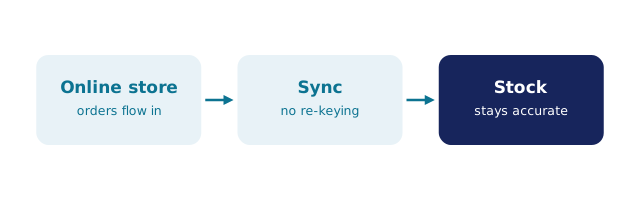
What separates exceptional ecommerce software from the mediocre is integration capability. Most Australian SMBs already use Xero for accounting, so finding software that plays nicely with your existing systems saves countless hours of manual data entry and reduces errors. Seamless Xero integration means your sales orders, inventory movements, and financial records stay perfectly synchronised without any manual workarounds. This is particularly crucial during peak trading periods or when you're managing multiple sales channels simultaneously.

BSimple inventory management dashboard

Why Generic Ecommerce Platforms Fall Short for Wholesale

Let's talk about what actually matters in ecommerce software for your industry. Most platforms focus on B2C retail—think Shopify or WooCommerce—but they're not designed for the complexities of wholesale and manufacturing operations. You need software that understands bulk ordering, tiered pricing, customer-specific pricing structures, and the ability to manage orders from dozens or hundreds of customers simultaneously.

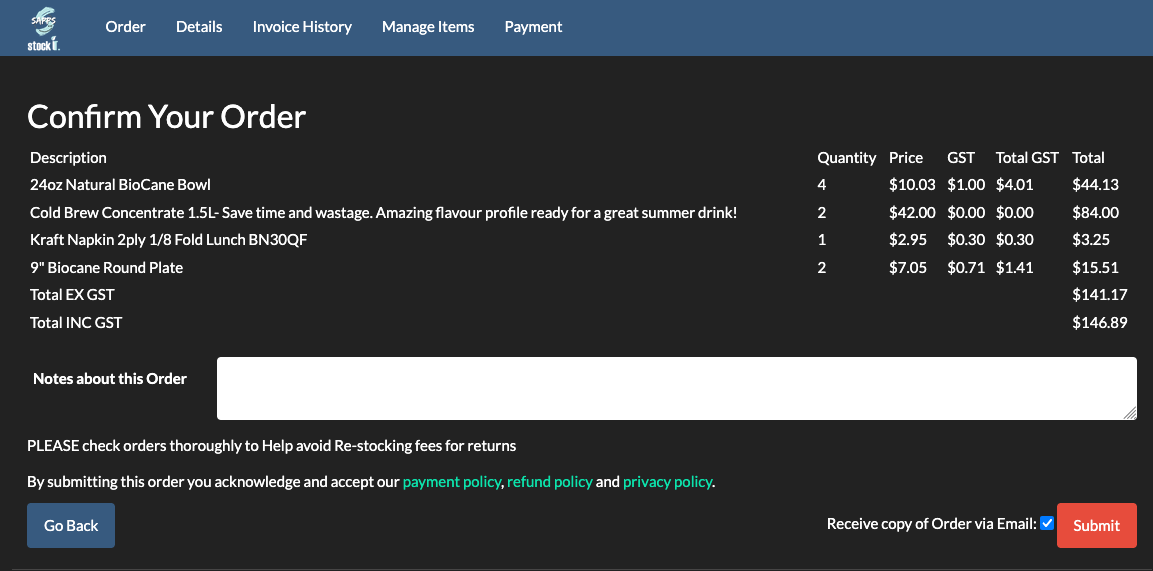
A proper ecommerce solution for wholesale should include a customer ordering portal where your clients can place orders 24/7, check real-time inventory levels, and view their order history. This isn't just convenient; it actually reduces the administrative burden on your team. Instead of fielding phone calls and emails, your customers self-serve through a portal that's integrated with your inventory system. When a customer orders through the portal, it automatically updates your stock levels and can trigger automated purchase order generation if you're running low on materials.

Real-time inventory visibility is non-negotiable. Whether you're tracking finished goods, raw materials, or work-in-progress stock, you need to know exactly what you have available. The best ecommerce software examples provide negative inventory tracking, which is essential if you're managing back-orders or pre-orders. Some Australian distribution businesses operate on a just-in-time model, ordering stock only when customer demand requires it. Your software needs to support this without breaking your supply chain.

Enquire Now

BSimple inventory control software

Industry-Specific Software Solutions That Actually Work

When you're evaluating ecommerce software examples, it's worth looking at what specific industries are using them successfully. Manufacturing businesses often have different requirements than pure distributors. A manufacturer might need to track component inventory, manage bill of materials, and coordinate production schedules alongside customer orders. A distributor, on the other hand, focuses on receiving bulk stock, managing multiple customer accounts, and fulfilling orders quickly and accurately.

Let's consider a practical example: an Australian manufacturing business producing industrial components. They need software that tracks raw materials, work-in-progress inventory, and finished goods separately. When a customer places an order through the portal, the system needs to check if finished goods are available or if production is required. If production is needed, the software should automatically generate manufacturing orders and purchase orders for required components. This level of sophistication isn't available in basic ecommerce platforms—you need purpose-built wholesale and manufacturing software.

Distribution businesses face different challenges. They typically receive large shipments from suppliers, need to manage inventory across multiple locations, and fulfil orders to numerous customers. The software needs to handle receiving workflows, quality control checks, and efficient picking and packing processes. Stocktake management features become particularly important during EOFY when you're reconciling physical inventory with system records. The best software makes this process straightforward rather than a three-week nightmare of spreadsheets and manual counts.

More features

BSimple order management interface

Integration and Automation: The Real Game-Changers

One of the biggest mistakes Australian businesses make is adopting generic ecommerce platforms designed for retail. Shopify, WooCommerce, and similar platforms are excellent for B2C retail, but they're not built for wholesale complexity. They lack proper multi-user account management, can't handle tiered pricing structures efficiently, and don't provide the inventory control features that manufacturing and distribution businesses require.

The better approach is finding software specifically designed for your business model. This means looking for platforms that understand wholesale operations, have built-in customer portal functionality, and integrate seamlessly with Australian accounting software like Xero. When you're evaluating options, ask yourself: does this software solve the problems we actually face? For most Australian wholesale and manufacturing businesses, that means automated ordering, real-time inventory visibility, and tight integration with your existing systems.

Consider how a typical order flows through your business. A customer places an order through your portal or website. The system checks inventory availability and reserves stock. If stock is insufficient, the software flags this for your team and potentially generates a purchase order to your supplier. Once the order is fulfilled, it updates your inventory, generates picking and packing documentation, and integrates with your accounting system for invoicing. This entire workflow should happen with minimal manual intervention. That's what proper ecommerce software does. A robust customer ordering portal is the foundation that makes this possible, allowing customers to self-serve while your system handles the backend complexity automatically.

Create a free account

BSimple purchase order workflow

Building Your Business with the Right Software Foundation

Here's what many Australian businesses discover after implementing new software: the real value isn't in the features themselves, it's in how well everything integrates and automates. You can have the most sophisticated inventory management system in the world, but if it doesn't talk to your accounting software, you're creating extra work rather than reducing it.

This is why Xero integration matters so much for Australian businesses. Xero is the de facto accounting standard for SMBs in this country. When your ecommerce software integrates directly with Xero, your financial records update automatically as orders are placed, fulfilled, and invoiced. You're not manually entering data into two systems; everything flows through seamlessly. This is particularly valuable during busy periods when manual data entry becomes error-prone.

Automation goes beyond just integration. The best ecommerce software examples include workflow automation that handles repetitive tasks. When inventory drops below a threshold, the system automatically generates a purchase order. When a customer places an order, it automatically creates picking documentation for your warehouse team. When items are picked and packed, the system automatically generates a shipping label and updates the customer. These automations might sound like small things individually, but collectively they save hours of administrative work every week.

For Australian businesses managing seasonal demand—think Christmas trading or EOFY stocktake periods—automation becomes even more critical. When you're operating at peak capacity, you don't have time for manual processes. Your software needs to handle the volume automatically so your team can focus on customer service and exception handling rather than data entry.

Learn more

BSimple stocktake and inventory tracking

Frequently Asked Questions

What's the difference between ecommerce software and inventory management software?

Ecommerce software focuses on the customer-facing side—online ordering, product catalogs, and payment processing. Inventory management software tracks stock levels and movements. The best solutions for wholesale and manufacturing combine both, with ecommerce functionality integrated with comprehensive inventory control and supplier management features.

Do I need separate software for manufacturing versus distribution?

Not necessarily. Modern wholesale and manufacturing software handles both business models. The key is ensuring the platform supports your specific workflows—whether that's bill of materials tracking for manufacturing or multi-location inventory management for distribution. Look for flexibility rather than industry-specific rigidity.

How important is Xero integration for my ecommerce software?

Extremely important if you're using Xero for accounting. Direct integration eliminates manual data entry, reduces errors, and ensures your financial records always match your operational data. For Australian businesses, this is almost non-negotiable given Xero's prevalence in the SMB market.

Can ecommerce software handle just-in-time inventory management?

Yes, but you need software specifically designed for it. Just-in-time requires real-time inventory visibility, automated purchase order generation, and tight supplier integration. Not all platforms support this efficiently—look for software that can handle negative inventory tracking and automated reordering based on demand forecasts.

What features are essential for a customer ordering portal?

Essential features include real-time inventory visibility, customer-specific pricing, order history tracking, and integration with your inventory system. The portal should allow customers to place orders 24/7, check stock availability, and manage their account without requiring staff intervention.

How does ecommerce software help with EOFY compliance?

Proper ecommerce software integrated with Xero ensures accurate inventory records throughout the year, making EOFY stocktakes and GST reconciliation straightforward. It provides audit trails, tracks inventory movements precisely, and generates reports that support tax compliance and financial accuracy.

Is cloud-based ecommerce software secure enough for wholesale operations?

Modern cloud-based solutions are extremely secure, often more secure than on-premise alternatives. Look for software with enterprise-grade security, regular backups, compliance certifications, and transparent data handling policies. Cloud-based systems also provide accessibility and scalability advantages for growing Australian businesses.