
Guide / bakery operations
What should bakery inventory management software actually do?
Bakeries run two inventories at once — ingredients in, baked goods out — with recipes and batches between them. Here is what that demands from software, and where BSimple fits.
The facts about bakery inventory software
- The two-inventory problem defines the category: raw ingredients by weight and unit, finished products by batch and use-by date.
- Recipes are the bridge: a batch should calculate its own ingredient requirements and check availability before you start mixing.
- Use-by tracking matters in both directions — ingredients expiring on the shelf, finished goods expiring in the cabinet.
- Wholesale cafe accounts need self-service ordering with their own products, pricing and history — not a text message ordering system.
- BSimple covers the bakery job: recipes, production batches with use-by dates, par levels, a customer ordering portal, and the Xero or MYOB handoff, from $180/month (AUD).
- 01The facts about bakery inventory software
- 02The two-inventory problem, and the recipe in the middle
- 03Ingredient inventory: par levels, shelf life and waste
- 04Wholesale cafe accounts that order themselves
- 05Where BSimple fits — and where it does not
The two-inventory problem, and the recipe in the middle
Flour, butter, yeast, eggs, packaging — each arrives in different units, each has different shelf life, and each is consumed by recipes rather than sold directly. Finished stock moves the other way: baked this morning, sold today, expired tomorrow. A general inventory system treats both as the same problem; bakery software has to handle the conversion between them.
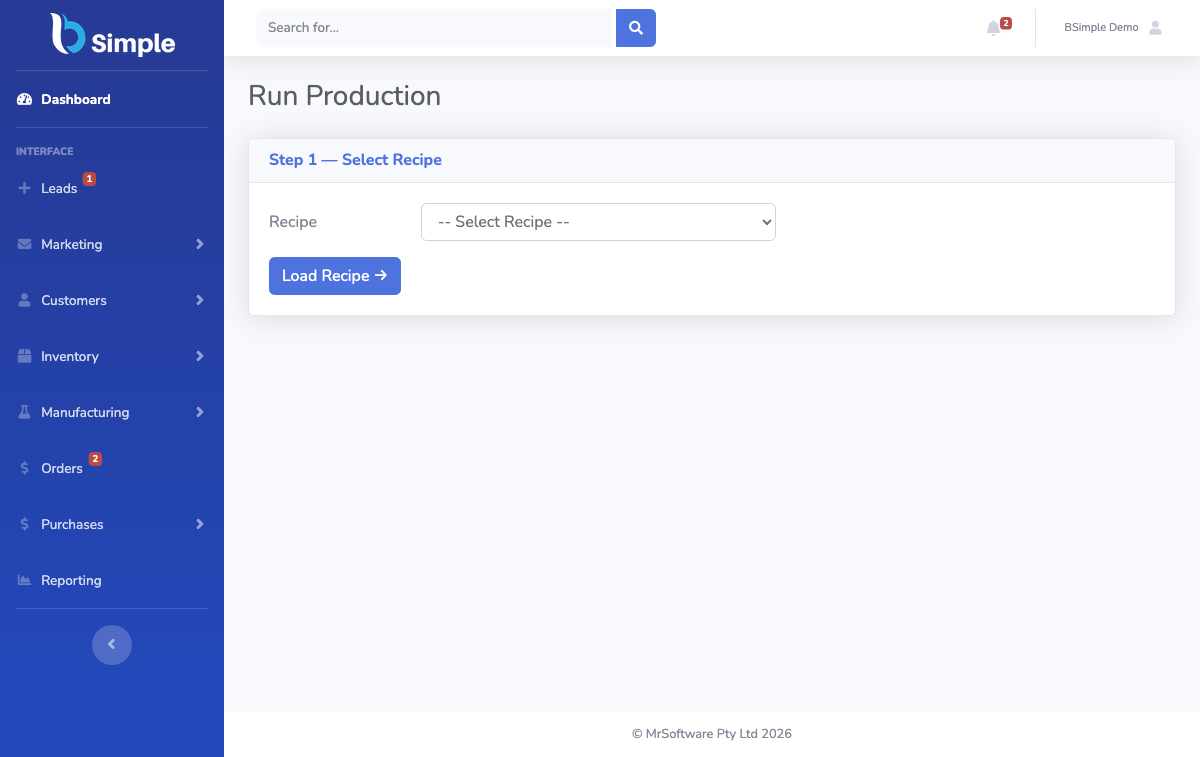
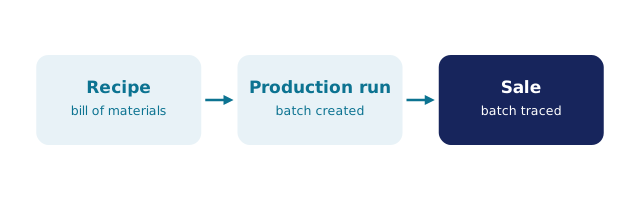
The conversion is the recipe. In BSimple, each baked product gets a recipe — ingredients, quantities, wastage allowances — and a production run calculates exactly what the batch will consume, checks stock is available, and warns on shortages before you preheat anything. When the batch finishes, finished-goods stock is created with use-by dates stamped on, so what you sell is traceable to what you made. The inventory management page shows how this sits on the same record as orders and invoicing.
Ingredient inventory: par levels, shelf life and waste
Ingredient stock is where bakeries lose money quietly. Set a par level per ingredient — bread flour, cake flour, butter, yeast — and the system shows what needs reordering before you run out mid-morning. For perishables, use-by dates recorded on incoming stock keep the older stock visible, and batch traceability search means a supplier lot can be traced through every batch it touched — the question a food-safety audit asks, answered without archaeology.
For certified organic producers, BSimple's mass-balance reporting supports ACO, NASAA and OFC certification — a claim our existing food-production customers rely on. Purchase orders raised from demand keep suppliers in sync with production, and goods receipts update ingredient stock the moment deliveries are counted in.
Wholesale cafe accounts that order themselves
The cafes, restaurants and grocers buying wholesale should not be ordering by text message. BSimple's customer ordering portal gives each account a unique link — no passwords — with their own product list and custom pricing. They order; the order lands in one record; production planning can see what is due for baking and delivery; and the approved order becomes the invoice without re-entry, with payment status mirrored back from Xero or MYOB. The order management page walks that flow end to end.
This is also where the two inventories meet the money: ingredient costs, batch production and delivered orders sit on one record, so the operations dashboard shows stock and invoice values together rather than in two systems that disagree.
Where BSimple fits — and where it does not
We build BSimple, so weigh that. It suits Australian bakeries — from artisan single-site to production kitchens with wholesale rounds — that have outgrown notebooks and spreadsheets: recipes and batches with use-by dates, par levels and purchase orders, a portal for cafe accounts, and the accounting handoff to Xero or MYOB. The free trial lets you load your real recipes and run one production batch before paying anything.
Be clear about the boundary: BSimple is not a bakery POS, does not run an online storefront, and does not schedule rosters. Counter sales and retail payments stay in your point-of-sale setup; accounting compliance stays in your accounting system. If you are weighing free options first — the simple free guide and the template guide for Sheets and Excel are honest starting points — and the food-manufacturing comparison covers larger production operations.

Frequently Asked Questions
Can BSimple manage bakery recipes and production batches?
Yes. Define a recipe per product with ingredients, quantities and wastage allowances. A production run calculates what the batch will consume, checks availability with shortage warnings, and creates finished goods with use-by dates — consistent output across staff and shifts.
How does ingredient expiry tracking work?
Use-by dates are recorded on incoming ingredient deliveries, and finished batches carry their own use-by dates. Batch and lot traceability search lets you trace any batch back through its ingredients — the trace a food-safety audit or recall requires.
Can our cafe customers order online themselves?
Yes. Each wholesale account gets a unique portal link — no passwords — showing their own products and pricing. Orders flow into the same record your production and invoicing run on, so what the cafe ordered is what gets baked, delivered and invoiced.
Does BSimple support organic certification reporting?
Yes — mass-balance reporting supports ACO, NASAA and OFC certification, and existing food-production customers use it. Combined with batch traceability, inputs and outputs stay reconciled the way certifiers expect.
Is BSimple affordable for a small artisan bakery?
Plans start at $180/month (AUD) with recipes, batches, traceability and the portal included — no separate manufacturing module fee. If you are not yet outgrowing spreadsheets, start free with templates and return when the workflow demands it.
BSimple