
Guide / Shopify and stock
The best inventory software for Shopify: the honest pattern
The store sells; the record must lead. Here is what Shopify shops actually need as they grow — webhooks, picking, wholesale, counts — and how BSimple covers it.
The short answer
- Shopify keeps stock for the store; growth breaks that assumption — wholesale, receiving, second channels and counts all move stock invisibly to the store.
- The pattern that works: one leading record; Shopify orders import via webhooks; availability flows out from the truth.
- The decision criteria: real-time order import, pick and pack, multi-channel truth, wholesale portal, accounting handoff.
- BSimple runs that pattern — from $180/month (AUD) with a free trial.
- 01The short answer
- 02When a Shopify shop outgrows the store's stock count
- 03Where BSimple fits
When a Shopify shop outgrows the store's stock count
The store's own stock count is honest while every movement is a store sale. The first wholesale order, the supplier delivery that arrives before the listing, the returns shelf, the market stall, the second channel — each moves stock in ways Shopify never learns, and the store's number becomes a copy with a head start on being wrong. Overselling follows, then the reconciliation Tuesdays.
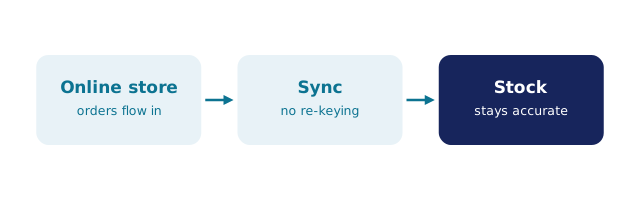
The pattern that scales is a leading record: quantities live in the inventory system; the store publishes availability against it; orders flow back as records, not surprises. The day's shape: a delivery received at 7am is sellable by 7:05; an overnight portal order reserves units the store can no longer promise; a Friday count corrects every channel at once. The ecommerce inventory guide covers the multi-channel version, and the ecommerce-website pattern the store-side detail.
Where BSimple fits
We build BSimple, so weigh that. The Shopify integration: orders import via webhooks as they happen — delivery slips, pick and pack, and approval on the BSimple side; invoicing stays between Shopify and Xero, so online sales are never double-invoiced. Around the store, the rest of the record: live multi-location stock with multi-level units, purchase orders from demand, batch tracking, stocktakes from any phone browser, and — the part pure-DTC tools lack — a customer ordering portal for wholesale accounts at their own pricing, writing to the same stock. Plans start at $180/month (AUD), with the free trial to connect one real product set.
The boundary: BSimple is not a storefront, not a marketing tool, and has no retail POS. It is the record behind the store — which is the part that decides whether the shop scales honestly. The inventory management overview shows the whole record.
Frequently Asked Questions
Does BSimple replace Shopify?
No — the store keeps selling; BSimple is the record behind it. Shopify orders import via webhooks with delivery slips and pick/pack, availability leads from the record, and online invoicing stays between Shopify and your accounting system. One truth, no double-entry.
We also sell wholesale. Does that matter?
It is the strongest reason to lead with a record: trade customers order through their own portal at their own pricing, allocating from the same stock the store sells — so a Tuesday boutique order cannot oversell a Friday website one. That mixed pattern is BSimple's home ground.
Does BSimple handle Shopify inventory quantities?
Availability leads from the record rather than being copied into it; the exact sync direction and field mapping for your setup is a trial question worth testing with real products — start here. What is designed-in: order import, pick and pack, and one record underneath every channel.
What does inventory software for Shopify cost?
BSimple starts at $180/month (AUD) with the record, the Shopify import, wholesale portal, purchasing and counts included. The comparison is against the oversells, the reconciliation Tuesdays and the wholesale orders the store cannot take — not against the licence line alone.

BSimple