
Guide / ecommerce stock
An inventory system behind your ecommerce website
Your online store sells; something else must hold the truth — receiving, back stock, wholesale, counts. Here is the division of labour, and how BSimple syncs with Shopify.
The short answer
- The store is a channel, not a warehouse: stock that only the store knows about breaks the moment anything else sells or receives.
- The pattern that works: one inventory record leading, the store syncing against it — orders in, availability out.
- BSimple imports Shopify orders via webhooks — delivery slips, pick and pack, approval — with invoicing staying between Shopify and Xero.
- The boundary: BSimple is not a storefront, and says so.
- 01The short answer
- 02Why the store cannot be the record
- 03How BSimple connects to Shopify
- 04The boundary, plainly
Why the store cannot be the record
An ecommerce platform keeps stock for what sells through it. The trouble is everything else: the supplier delivery that lands before it is listed, the wholesale customer ordering at trade pricing, the counter sale if there is a shop, the returns, the counts. Each of those moves stock in ways the store never learns, and the store's number drifts from the shelf — the oversell risk that ecommerce operators know intimately.
The working pattern is a leading record: quantities live in the inventory system; the store publishes availability against it; orders flow back in as records, not as surprises. The store stays the selling machine; the inventory system stays the truth. The retail-store guide covers the same division for physical counters, and the ecommerce inventory guide covers the practice in depth.
How BSimple connects to Shopify
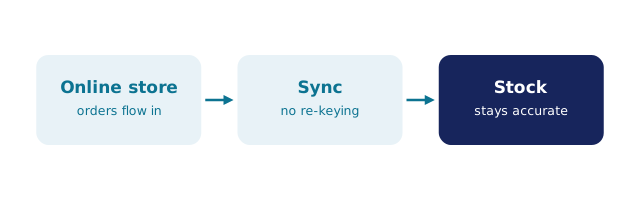
We build BSimple, so weigh that. The integration: Shopify orders import into BSimple via webhooks as they happen — landing in the same record the warehouse works from, with delivery slips, pick and pack, and approval workflow on the BSimple side. Invoicing stays between Shopify and Xero: online sales are invoiced by the store into your accounting system as they always were, rather than being double-invoiced through BSimple — a deliberate division that keeps the books clean. Stock availability leads from the record, so the store sells what actually exists, and a wholesale order or a delivery updates the same truth the storefront reads.
Beyond the store: purchase orders from demand, multi-level stock, batch tracking, stocktakes from any phone browser, and B2B portal ordering for trade customers at their own pricing — the parts of the business the storefront cannot see. Plans start at $180/month (AUD), with the free trial to connect one real product set.
The boundary, plainly
BSimple has no built-in ecommerce storefront and does not want one: the website you already run keeps selling. It is the record behind the store — receiving, wholesale, counts, purchasing, the accounting handoff to Xero or MYOB. If you need a storefront, themes and checkout, that is Shopify's job; if you need the truth behind it, that is this. The inventory management overview shows the record the store syncs against.
Frequently Asked Questions
Does BSimple replace Shopify?
No — the store keeps selling. BSimple imports Shopify orders via webhooks into the operational record (delivery slips, pick and pack, approval) and leads stock availability from that record. The storefront, checkout and themes stay where they are; the truth behind them moves to one record.
Who invoices online orders?
Shopify invoices online sales into your accounting system (Xero), as it already does — BSimple deliberately does not double-invoice them. BSimple-side invoicing covers the orders the store never sees: wholesale, trade portal, phone orders. One path per channel, no duplicates.
Can we run wholesale alongside the online store?
Yes — that mix is the point: trade customers order through their own portal at their own pricing, the store sells at retail, and both write to the same stock, so neither can oversell the other. Pick and pack runs against the same record for both channels.
What happens when we receive new stock?
Goods received against the purchase order update the live record immediately — and availability leads out from that record, so the store lists what actually exists. The old gap, where new stock went unlisted for days because the store never learned, disappears structurally.

BSimple