
Guide / retail stock software
Choosing inventory software for a retail store
The till is not the stockroom: retail stores fail on the record behind the counter — deliveries, back stock, and supplier orders. Here is what software needs to cover, honestly.
The short answer
- A POS system sells; it does not run the stockroom. Deliveries, back stock, supplier orders and counts need a real inventory record.
- Small single-channel shops can stay POS-attached — until wholesale ordering, a second outlet or an online store enters.
- The dividing question: does stock move in ways the till never sees? If yes, the store needs inventory software leading the record.
- BSimple runs that record — and deliberately leaves the till to the POS, syncing Shopify where selling is online.
- 01The short answer
- 02Where retail stock actually goes wrong
- 03What to look for, store by store
- 04Where BSimple fits
Where retail stock actually goes wrong
Not at the register — there the sale is scanned and paid, and the record is fine. It goes wrong around the register: the delivery arriving mid-shift that nobody books in until Thursday; the back-room stock the till believes was sold; the supplier order based on a shelf glance rather than a reorder level; the second outlet that sells the same catalogue from a copy of the truth. Retail inventory problems are back-room problems, and software for a retail store has to be judged there.
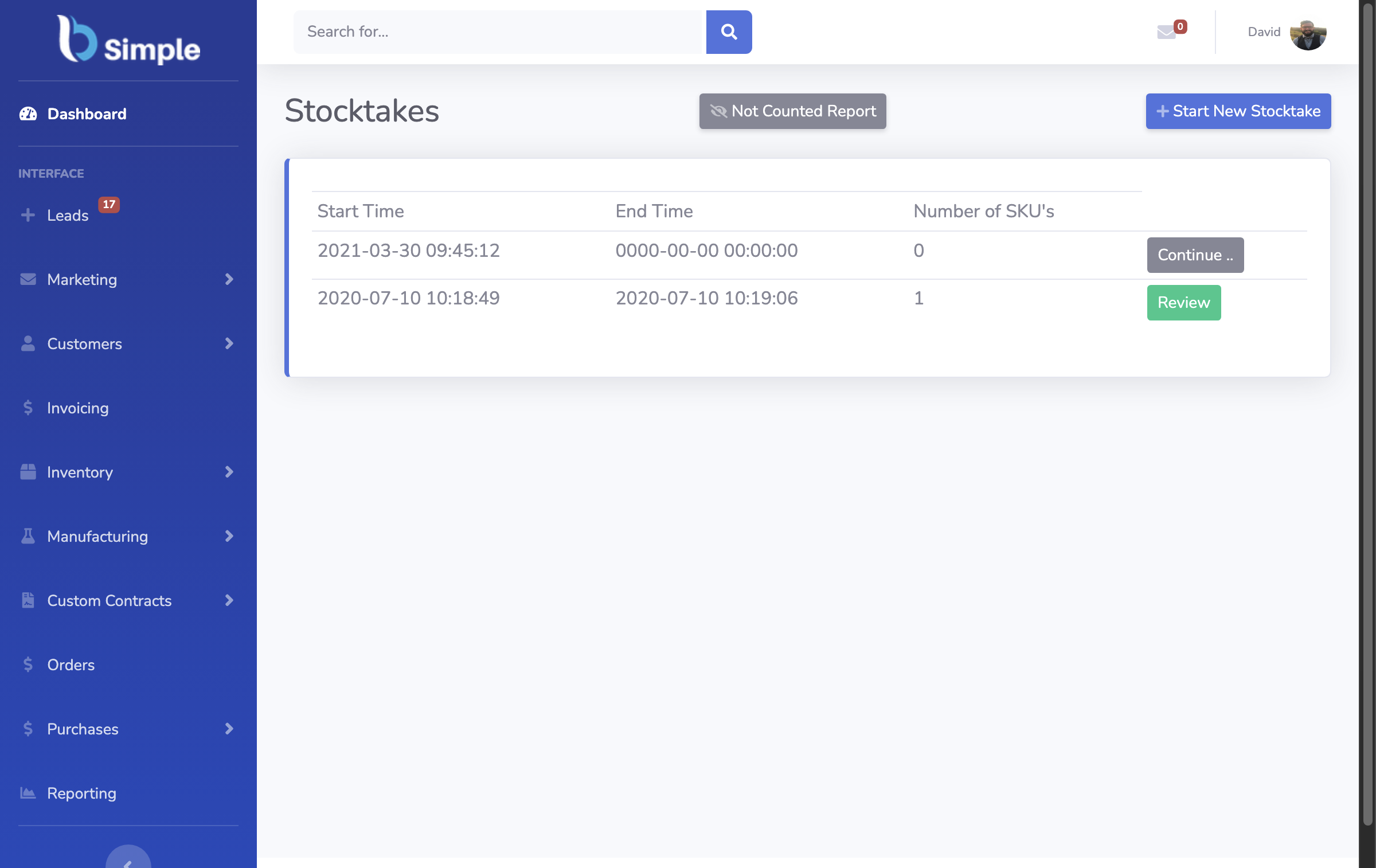
The structural fix is the same as every other stock business: one live record that deliveries, sales, transfers and counts all write to, with the POS reading from it rather than owning it. When the record leads, the counter stays fast and the back room stays honest. The retail inventory practice guide covers the day-to-day habits that keep it that way.
What to look for, store by store
Single small shop, walk-in only: your POS-attached inventory may be genuinely enough. The test is whether anything moves without a sale — a return to supplier, a transfer, stock used in-store. If nothing does, stay attached and spend nothing.
Shop with wholesale or trade customers: you now take orders the till never sees, at prices the shelf never shows. That needs an inventory system with an ordering portal and per-customer pricing — BSimple's home ground, with the portal giving each customer their own product list and pricing through a unique link.
Shop plus online store: two channels, one record. BSimple imports Shopify orders via webhooks so online sales hit the same stock the counter hits, with pick and pack between them. Two or more outlets: transfers between sites need a trail, and live quantities per location — again, the record has to lead.
Under every scenario sits purchasing: reorder levels that turn demand into supplier purchase orders, and goods receipts that update stock the moment cartons open.
Where BSimple fits
We build BSimple, so weigh that — and note the boundary first: it is not a POS. Counter sales belong to your till; BSimple is the live stock record behind it, plus the wholesale side many stores grow into: purchase orders from demand, multi-level units (packs versus singles), stocktakes and cycle counts from any phone browser, per-customer portal ordering, Shopify sync, and invoicing handed to Xero or MYOB. From $180/month (AUD), with a free trial to test with your own catalogue.
If the whole business is the counter and nothing else, a POS-attached record remains the honest answer. The moment wholesale, online or a second site enters, the retail inventory guide and the inventory management overview show what leading the record looks like.
Frequently Asked Questions
Do we still need a POS if we use BSimple?
Yes — keep your till. BSimple is not a point-of-sale system; it is the inventory record the till should agree with. The counter stays on whatever hardware it likes, while deliveries, back stock, supplier orders, transfers and the wholesale side run on the live record.
Can BSimple run a shop with an online store?
Yes. Shopify orders import via webhooks into the same stock record the store uses, delivery slips and pick/pack included, with invoicing staying between Shopify and your accounting system. One record, two channels — the oversell problem comes from anything less.
Our store also sells to trade customers. Does that help?
That is the pattern BSimple is built for: trade buyers order through their own portal link — their product list, their pricing, no passwords — while the counter keeps selling normally. Both write to the same record, so a busy Saturday cannot oversell stock a trade order already claimed.
What does inventory software for a store cost?
BSimple starts at $180/month (AUD) with stock, purchasing, portal and production features included. A POS-attached record may cost nothing extra and may be genuinely enough at single-channel scale — the comparison worth making is against the oversells and stockroom hours the record stops, not just the licence.
BSimple