Retail Inventory Management Software for Australian Retailers
Everything Australian retailers need to manage stock across stores, channels, and systems:
- Multi-location stock visibility — see what’s in every store from one dashboard
- POS integration with Square, Lightspeed, Tyro — every sale updates inventory in real-time
- Barcode stocktakes on mobile — scan the shelf, no clipboard required
- Automated reorder alerts with par levels set per store location
- Wholesale B2B ordering portal alongside your retail operations
- Xero integration — COGS, invoicing, and inventory valuation all handled automatically
Retail inventory management has one job: make sure the right stock is in the right place at the right time. That sounds simple. In practice, it means managing stock across multiple store locations, keeping your POS in sync with actual inventory, knowing when to reorder before shelves go bare, identifying dead stock before it ties up cash, and making sure your Xero account reflects what’s actually in your warehouse.
BSimple is designed for Australian retailers who’ve outgrown their POS’s basic stock tracking — from single-store independents with 500+ SKUs to multi-location chains running 3–8 stores. We manage the full retail inventory lifecycle: purchasing from suppliers, receiving stock, distributing across locations, stocktaking, reordering, and syncing everything to Xero. One system, no manual bridging between apps.
Multi-Location Stock Management
The perennial retail problem: your bestseller is out of stock at your busiest location while another store has 15 units sitting idle. Without real-time visibility across locations, you discover this when a customer walks out empty-handed.
BSimple gives you consolidated inventory visibility across every store. From a single dashboard you can see what’s in each location, initiate a transfer between stores, and track that transfer with a full audit trail. Receiving a bulk supplier order? Allocate stock to each location at the time of receipt — no separate process needed.
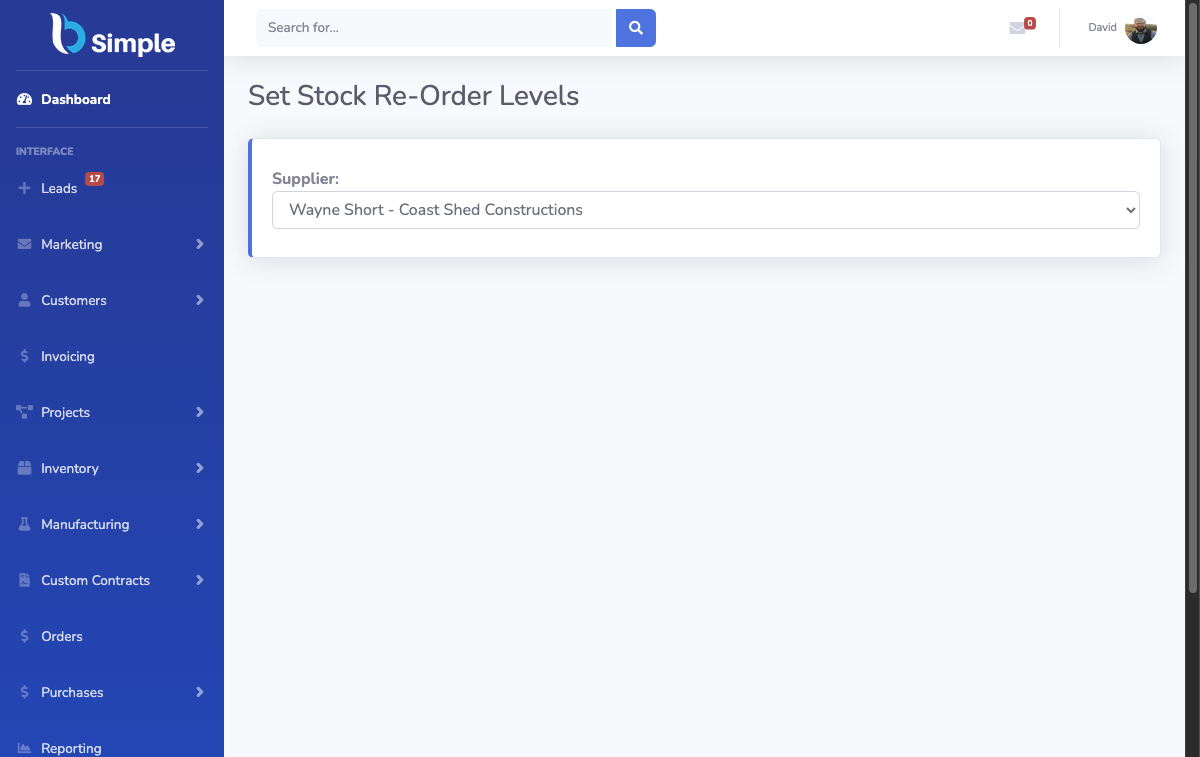
Location-specific par levels mean reorder alerts fire based on actual demand at each store, not a one-size-fits-all threshold. Your CBD flagship might run par levels of 20; a suburban location runs fine at 8. BSimple respects those differences and suggests purchase quantities that reflect each store’s sales velocity.
For retailers managing wholesale alongside retail — selling to cafes, other retailers, or hospitality businesses through a B2B portal — BSimple runs both channels from the same inventory pool. Wholesale orders and retail POS sales both allocate from the same stock, preventing overselling across channels.
POS Integration and Stock Control
Your POS handles the transaction. BSimple handles everything else. When a sale goes through the register, BSimple’s inventory decrements in real-time — not overnight, not via manual export. That means your stock data is always current, your reorder alerts are based on actual remaining stock, and your Xero account is updated with the correct COGS automatically.
Beyond the POS sync, proper stock control means running regular stocktakes without making your team’s lives miserable. BSimple’s mobile barcode stocktake lets staff scan the shelf with a phone or handheld scanner — BSimple counts against expected stock levels and generates a variance report when they’re done. No clipboards, no manual data entry, no Sunday afternoon lost to a spreadsheet.
The variance report matters as much as the stocktake itself. It surfaces shrinkage (the gap between what should be there and what is), helps identify whether losses are coming from specific locations, product categories, or time periods, and creates an audit trail for every adjustment made. You can’t manage shrinkage you can’t see.
For a deeper look at the stock control side, see our guide to retail stock control software. For detail on POS integration specifically, see POS inventory software for Australian retailers.
Buying Smarter: Reordering and Supplier Management
Reactive reordering is expensive. Waiting until stock is nearly gone before placing an order means you’re paying for urgency, losing sales during the gap, and making purchasing decisions under pressure rather than based on data.
BSimple’s Auto-Builder analyses your sales velocity by location and suggests purchase quantities based on current stock, incoming orders, and your target par levels. Review the suggested PO, adjust if needed, and send it directly to your supplier from within BSimple. When stock arrives, receive it against the PO — quantities, costs, and allocation to each store location all recorded in one step.
That receiving process also triggers the Xero bill creation automatically. Purchase costs flow into your accounts without manual entry. Your bookkeeper gets accurate COGS and inventory valuations without having to chase down spreadsheets or reconcile month-end manually.
For retailers also managing Shopify alongside in-store operations, BSimple syncs inventory with Shopify in real-time — Shopify orders, wholesale portal orders, and POS retail sales all draw from the same inventory pool. See our guide to Shopify inventory management software for the multi-channel setup.
Managing your retail store’s inventory can be a real headache, but BSimple’s POS and inventory management software is here to save the day. Seamlessly integrate your systems with Inventory Programs For Small Business for growing teams, and enjoy the benefits of affordable, free Hospital Inventory Management Software designed for your specific needs. Streamline your operations, keep your shelves stocked, and focus on delivering an exceptional customer experience.
Frequently Asked Questions
What inventory management software do Australian retail stores use?
Australian retailers typically use inventory management software that integrates with their POS system (Square, Lightspeed, Tyro) and Xero for accounting. BSimple is designed specifically for Australian retailers managing multi-location stock, wholesale alongside retail, and Xero integration. It handles purchasing, receiving, stocktakes, reordering, and financial reporting from one platform.
Does BSimple integrate with retail POS systems?
Yes. BSimple integrates with major Australian POS systems including Square, Lightspeed (formerly Vend), and Tyro. Every POS sale updates BSimple inventory in real-time, creates Xero entries automatically, and triggers reorder alerts if stock drops below par. See our guide to POS inventory software for full integration details.
Can BSimple manage inventory across multiple retail store locations?
Yes, multi-location retail management is one of BSimple’s core strengths. You can track stock separately for each store, transfer inventory between locations, set location-specific par levels and reorder points, and allocate supplier orders across stores on receipt. The dashboard shows consolidated stock across all locations plus store-specific detail when you need it.
How does BSimple handle retail stocktakes?
BSimple uses mobile barcode scanning for stocktakes — staff scan products on the shelf with a phone or handheld scanner, and BSimple counts against expected stock levels automatically. When complete, BSimple generates a variance report showing discrepancies. No clipboards, no manual data entry. See our guide to retail stock control software for stocktake detail.
Can I manage both retail and wholesale from BSimple?
Yes. Many Australian retailers also sell wholesale — to cafes, hospitality businesses, or other retailers. BSimple gives wholesale customers their own online ordering portal while retail POS sales run through the register. Both channels draw from the same inventory pool with real-time stock updates, preventing overselling across channels. Profitability by channel (retail vs wholesale) is visible in Xero.
Does retail inventory software integrate with Xero in Australia?
BSimple integrates natively with Xero. POS sales create Xero invoices automatically with correct COGS and GST. Purchase orders create Xero bills when stock is received. Inventory valuations update in Xero as stock moves. This means your retail accounting is always current without manual bookkeeping — important for Australian GST reporting and BAS preparation.