
Guide / ecommerce operations
What does an ecommerce inventory system actually do?
The store sells; the inventory system keeps the promise. One stock record behind every channel, orders flowing in automatically, fulfilment and invoices on the same record.
The facts about ecommerce inventory systems
- The system sits behind the store: the shopfront sells, the inventory system keeps stock true and drives fulfilment.
- One record behind every channel is the design that prevents overselling — marketplace, store and wholesale drawing on the same numbers.
- BSimple imports Shopify orders by webhook — delivery slips, picking and packing, stock deduction — while invoicing stays between Shopify and your accounting system.
- Be wary of channel claims: BSimple syncs Shopify; it does not run storefronts and does not claim every marketplace.
- From $180/month (AUD) with a free trial, all features included.
- The wider system: inventory management end to end maps the whole record this page sits in.
What an ecommerce inventory system is for
An online store answers two questions brilliantly: what looks good, and what can a customer buy in three clicks. It answers two questions badly: how many are actually left, and what happens after the order. The moment a business adds wholesale customers, a trade counter, or a second channel, the store's own stock field stops being the truth — and overselling begins at the seams.
An ecommerce inventory system is the layer that holds the truth: live quantities across every channel and location, orders arriving automatically from the store, fulfilment — delivery slips, picking, packing — run against the same record, and invoices that reach the accounting system without re-entry. The store stays beautiful; the system stays true. The ecommerce software comparison covers when you need one and when the store's native stock is enough.
- 01The facts about ecommerce inventory systems
- 02What an ecommerce inventory system is for
- 03How BSimple connects to your store
- 04The features that matter behind a store
- 05Where to start
How BSimple connects to your store
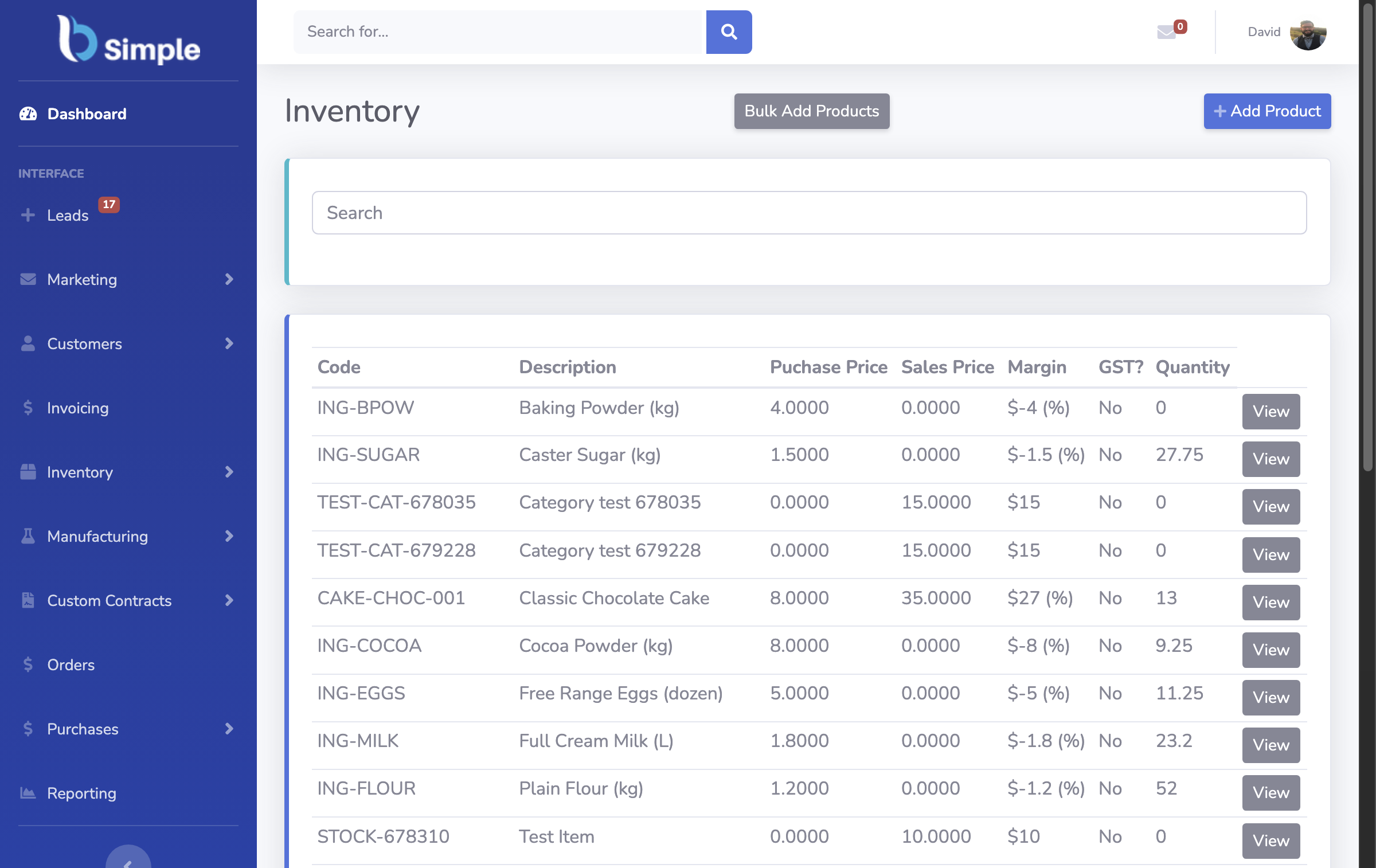
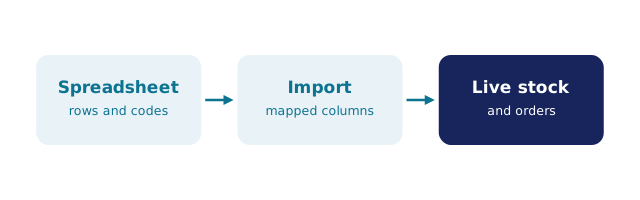
We build BSimple, so weigh that. Shopify orders import by webhook — no exports, no re-entry — into the same record BSimple uses for everything: phone orders, B2B portal orders with per-customer pricing, batch-tracked production if you make what you sell. Your team picks and packs from delivery slips on that record, stock deducts live, and invoicing stays between Shopify and your accounting setup, with Xero or MYOB handling payments and compliance.
One deliberate boundary, stated clearly: BSimple syncs Shopify, and does not run storefronts or claim every marketplace integration. If your channels include platforms we do not sync, the honest patterns are a REST API integration on your side or periodic imports — the record still stays one, with a wider seam. The Shopify-specific guide details that connection, and the eBay seller's angle covers marketplace-first sellers.
The features that matter behind a store
Live availability. The channel taking the order must read the same quantities the warehouse picks from; anything else is overselling with a delay. Guardrails. Negative-inventory protection catches the race between two channels for the last unit. Fulfilment workflow. Delivery slips and pick/pack states that a warehouse person can run — not a to-do list in email. Wholesale alongside retail. The same stock serving a Shopify order and a cafe's standing order, with each customer seeing their own pricing through their own portal. Accounting handoff. Invoices reaching Xero or MYOB untouched, GST intact, payment status mirroring back.
Those five decide whether the system protects the store or merely watches it. Everything else — dashboards, forecasts, badges — is garnish until those are true.
Where to start
If you sell on one store, in one location, with no wholesale: your platform's native stock plus a simple free setup may honestly be enough — revisit when a second channel or a B2B customer appears. If wholesale and online coexist, or stock spans locations, that is the system's territory: start the free trial, connect your store, and watch a real order arrive, get picked and reconcile in an afternoon.
For multi-marketplace sellers weighing the app ecosystem, the eBay inventory guide covers the marketplace-first pattern, and the inventory system explainer fills in the vocabulary the category assumes you already have.
Frequently Asked Questions
Do I need an inventory system if I already run Shopify?
Not always — one store, one location and no wholesale can run on Shopify's native stock. You need a system when wholesale or trade orders mix with online ones, stock spans locations, or a second channel appears and the store's numbers stop being the truth.
Does BSimple sync with Shopify?
Yes — Shopify orders arrive by webhook into the same record used for all other orders. Fulfilment runs in BSimple with delivery slips and pick/pack; stock deducts live; invoicing stays between Shopify and your accounting setup, as Shopify intends.
Does BSimple integrate with Amazon and eBay?
Not natively — BSimple's store sync is Shopify, and we would rather say that plainly than imply otherwise. Marketplace-heavy sellers can bridge other channels via the public REST API or periodic imports; the stock record stays one, with a wider seam.
Can wholesale customers order through the same system?
Yes — that is one of the main reasons ecommerce businesses adopt it. Each customer gets a portal link with their own products and pricing, ordering against the same live stock your Shopify store sells from, so neither channel oversells the other.
What does an ecommerce inventory system cost?
BSimple starts at $180/month (AUD) with every feature included and a free trial. Set that against the alternative costs — oversold orders, manual re-entry between store and books, stocktakes that never reconcile — and the subscription usually pays for itself in avoided mistakes.
BSimple