
Guide / Shopify native
Inventory management in Shopify — native tools and the ceiling
Shopify carries real inventory features: quantities per location, transfers, low-stock alerts. What it manages natively, where the ceiling sits for wholesalers, and the external layer that extends it.
The key facts
- Shopify's native inventory is real: quantities per location, transfers between them, low-stock thresholds, multi-channel selling from one pool.
- The ceiling is the floor: purchasing discipline, batch/expiry, supplier reconciliation, wholesale portals and production are outside the store's job description.
- The external option: an operations system connected by webhook (BSimple's pattern) — orders in, stock truth back, invoicing to the books.
- The honest comparison: native-first until the operations jobs arrive; the layer guide sorts the three layers.
- Context: the full inventory system holds the wider system, this page one stop in it.
- 01The key facts
- 02What Shopify manages natively
- 03Where the native ceiling sits
- 04The external pattern: BSimple connected to Shopify
What Shopify manages natively
Shopify's inventory toolkit is genuine: quantities per product per location, with locations being warehouses, stores, or pickup points; transfers between locations; low-stock thresholds and notifications; multi-channel availability — the same pool selling on online store, POS and marketplaces; and basic inventory history for adjustments. For a store with one or two locations and straightforward flows, this is legitimately enough — and the advice to exhaust it before buying anything is honest. The layer guide sorts when apps and external systems enter.
Where the native ceiling sits
Purchasing. No purchase orders from demand, no supplier reconciliation, no incoming-stock visibility feeding availability. The store knows what it has; it does not know what is coming or what it should buy.
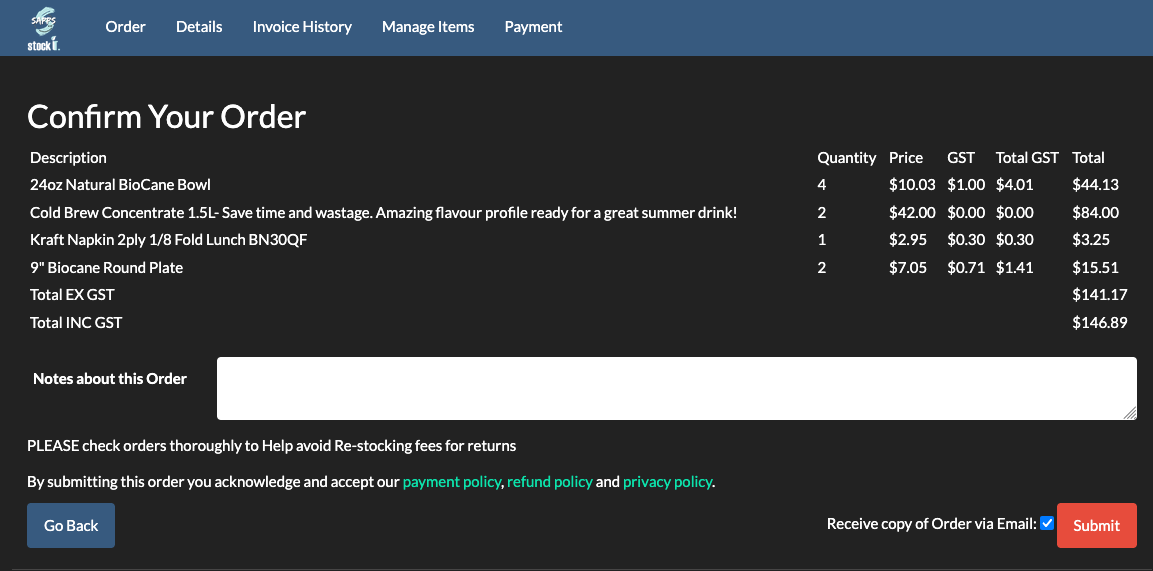
Operations beyond the store. Batch and expiry tracking, phone and wholesale orders living in the same record, picking and packing workflows for a real floor, and invoices that flow to an accounting system — these are operational jobs, and the store is a channel, not an operations record. The ecommerce-layer reasoning explains why the store cannot be expected to do them.
Wholesale ordering. Per-customer product lists, negotiated pricing, and repeat-order portals are trade workflows — the portal pattern — outside the retail store's shape.
None of this criticises Shopify: it is a storefront doing a storefront's job. The ceiling is where the operations layer begins — the external-system comparison covers choosing one.
The external pattern: BSimple connected to Shopify
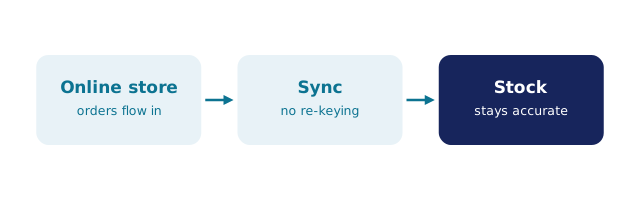
We build BSimple, so weigh that: Shopify orders import by webhook into the same operational flow as every other order — delivery slips, picking and packing, stock deduction at invoice approval — while stock truth flows back to the store. Around it: purchase orders from demand with GST-inc/ex-GST reconciliation, batches and traceability where products demand it, wholesale portals beside the retail store, and invoices pushed to Xero or MYOB (US integrations rolling out). BSimple runs no storefront — Shopify remains the shop; the operations record runs underneath. Plans: $180/$250/$399 per month AUD with the connection in the core, and the trial runs your real store before any commitment.
Frequently Asked Questions
Does Shopify have an inventory management system?
Yes — quantities per location, transfers, low-stock alerts and multi-channel availability, built in. It is a channel-honest tool: strong at what a store needs, silent on purchasing, batches and wholesale operations.
When do we need more than Shopify's built-in inventory?
When purchasing decisions, wholesale ordering, batch tracking or a shared record with non-Shopify orders become the job. Those are operations-layer needs — the three-layer guide sorts the options.
How does BSimple connect to Shopify?
By webhook: orders arrive as they happen into the operational flow, and stock truth flows back from the record. Invoicing stays between Shopify and your accounting system — the connection is core, with no add-on fee.
Does BSimple run inside the Shopify admin?
No — it is an external operations system connected by webhook, not an embedded app. The store stays in Shopify; the truth underneath runs in BSimple, and the trial shows the pair working on your real store.
We sell retail and wholesale — can both use one stock pool?
Yes — retail via Shopify, wholesale via per-customer portals, both drawing down the same live quantities. That single pool is usually the deciding benefit of the external layer.

BSimple