
Guide / Shopify tooling
Inventory tools for Shopify — the three layers
Shopify's own stock fields, the app store, and external operations systems — three layers doing different jobs. What each is for, and how to know which layer your store actually needs.
The key facts
- Layer 1 — Shopify's own inventory: stock quantities per location, built in, sufficient for single-warehouse stores with simple flows.
- Layer 2 — Shopify apps: add specific capabilities (bundling, forecasting, multi-channel sync) inside the Shopify ecosystem.
- Layer 3 — external operations systems: run the whole operational record — purchasing, batches, wholesale portals — with Shopify connected by webhook. BSimple is here.
- The upgrade signal: when purchasing, wholesale ordering or multi-location truth outgrow the store — the comparison covers the layer-3 choice.
Layer 1: Shopify's built-in inventory
Shopify tracks stock quantities per product and per location natively: set quantities, let sales decrement them, get low-stock notifications. For a single-warehouse store with straightforward flows, this is genuinely enough — and the honest advice is to use it until it hurts. Where it hurts: purchasing is a manual spreadsheet exercise, "available" ignores incoming purchase orders, batch or expiry tracking does not exist, and there is no wholesale ordering beyond discount codes. Each of those is an operations-layer job — what operations software is — wearing a store's clothing.
- 01The key facts
- 02Layer 1: Shopify's built-in inventory
- 03Layer 2: apps — power tools for specific gaps
- 04Layer 3: external operations systems — BSimple's layer
- 05Choosing your layer honestly
Layer 2: apps — power tools for specific gaps
The Shopify app store solves specific gaps inside the ecosystem: bundling and kitting, demand forecasting, multi-channel quantity sync, barcode apps. Apps are the right weight when the gap is genuinely singular — and the wrong weight when the real problem is that the operational record lives in spreadsheets between three apps. The evaluation trap is additive thinking: each app solves its slice, while the quantity master fragments across them. The ecommerce-layer guide explains why the record — not the app count — is the architecture decision.
Layer 3: external operations systems — BSimple's layer
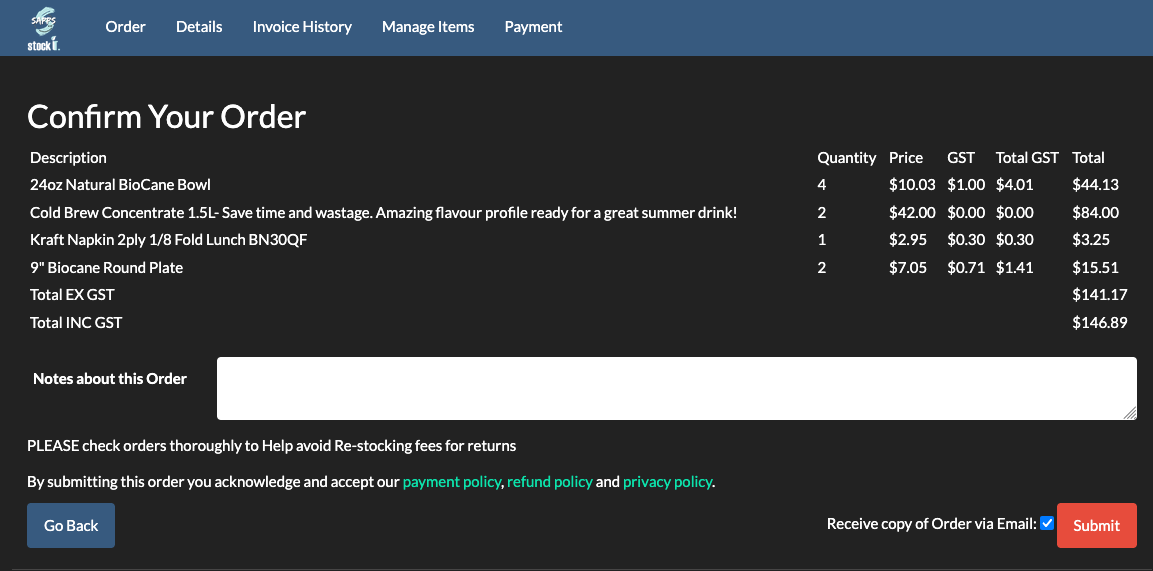
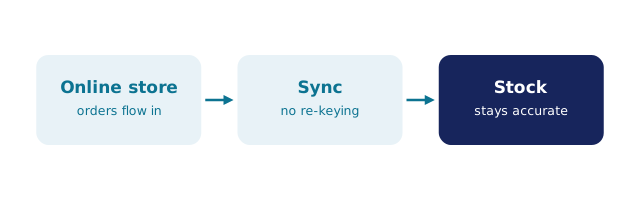
An external operations system runs the record underneath the store: live quantities across all locations, purchase orders from demand, picking and packing, batch tracking, invoicing to the books — with Shopify connected by webhook so orders flow in and stock truth flows back. We build BSimple, so weigh that: orders import by webhook into the same flow as phone and portal orders, stock deducts once at invoice approval, and invoices push to Xero or MYOB (US integrations rolling out). No BSimple storefront exists — Shopify stays the shop. Plans run $180/$250/$399 per month AUD with the integration in the core, and the trial connects your real store before any commitment. The integration spec and the shipping and dispatch flow cover the connection day to day.
Choosing your layer honestly
Three questions place you. Does one warehouse cover it? Layer 1 holds. Is the gap specific and singular (one app solves one thing)? Layer 2. Has purchasing, wholesale ordering or multi-location truth become the bottleneck? Layer 3 — and the trial is the test: one week with your real orders flowing through the record tells you whether the layer beneath the store earns its subscription. The store-side comparison and the connection detail finish the evaluation.
Frequently Asked Questions
What tools do I need to manage Shopify inventory?
Start with Shopify's built-in stock fields; add a layer only when a real job outgrows them — an app for a singular gap, an operations system when purchasing, wholesale or multi-location truth become the bottleneck.
Does BSimple work as a Shopify app?
Not from the app store — it connects by webhook as an external operations system. The record runs beneath the store: orders in, stock truth back, invoicing to the books. The trade is stated rather than hidden.
Will quantities stay in sync between Shopify and BSimple?
Yes — with one quantity master: the operations record adjusts from real movements, the store displays what it is told. Two masters adjusting each other is the drift this design prevents.
Can wholesale customers order outside Shopify?
Through their portal — their products, their pricing, one live stock record shared with the store. Retail and wholesale stop competing for the same numbers.
What does layer 3 cost?
BSimple is $180/$250/$399 per month AUD with the Shopify connection in the core. The trial runs the layer on your real orders — the honest test of whether the bottleneck is real.
BSimple