
Guide / templates
The inventory system template — structure before software
A template is not a file; it is a structure — the fields, the flows, the ritual. Defined here so it works in a spreadsheet today and survives the migration to software tomorrow.
The key facts
- A template is a structure, not a file: the fields you track, the flows you record, the ritual you keep — portable across any medium.
- The core structure: product fields, movement fields, order fields, count fields — with quantities derived, never typed.
- The process map around it: intake, receiving, fulfilment, counting, reordering — who does what, in which order.
- The graduation path: the template's tables import directly into systems like BSimple ($180/mo AUD up, trial) when shared truth or scanning arrive.
- 01The key facts
- 02The field lists — the template's heart
- 03The process map around the template
- 04The graduation path, and our stake in it
The field lists — the template's heart
Product fields: SKU, description, supplier, unit of measure, unit cost, par level. Keep variants as their own rows; decide boxes-versus-singles once, in writing.
Movement fields: date, SKU, direction (in/out/transfer/adjust), quantity, location, reason, actor. Append-only — the field that matters most is reason, because variances without explanations are how records drift into fiction.
Order fields: order reference, customer, date promised, lines (SKU, quantity, price), state (placed/checked/picked/packed/invoiced/paid). The state field is what makes the order trackable — the life-cycle stages are the standard set.
Count fields: count date, SKU, counted quantity, variance, explanation, approver. The counting discipline is what keeps every other field honest.
Derived: on-hand quantities by formula over movements — the one rule that separates a template from a fiction generator. The database-design reasoning explains why this field list survives contact with real systems.
The process map around the template
A template without a process map is a form nobody fills in. Map the flows in one page: intake — every order enters the record the day it is confirmed, from every channel; receiving — every delivery is logged against the purchase before it touches the shelf; fulfilment — picked and packed quantities update the order's state; counting — monthly, with variances explained on the record; reordering — a weekly pass over par levels, or automation once software arrives. Assign each flow an owner by name. The small-business method is this map in its simplest form.
The template works in any medium that holds tables: spreadsheets (the Excel build, the Sheets one), Notion or Airtable databases, or as the configuration plan for real software — which is the graduation path below.
The graduation path, and our stake in it
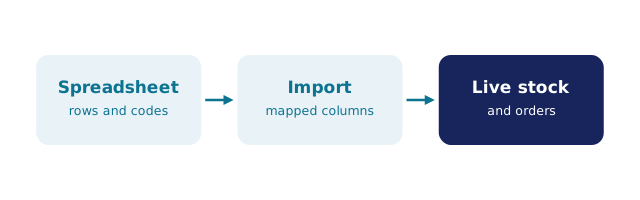
The template earns its keep until shared truth, guardrails or scanning arrive — then its tables become the import file for real software, and the graduation is an afternoon rather than a project. We build BSimple, so weigh that: it is commercial software, not a downloadable template — the structure above implemented as a maintained product (live multi-location stock, batches, purchasing from demand, portals, invoices to Xero or MYOB with US integrations rolling out), from $180/$250/$399 per month AUD, with the trial as the full product. The template and the product share the structure — which is precisely why the migration is cheap and the comparison is fair.
Frequently Asked Questions
What should an inventory system template include?
Four field sets — product, movement, order, count — plus the process map assigning owners to intake, receiving, fulfilment, counting and reordering. Quantities derived from movements, never typed.
Can I use the same template in Excel and Notion?
Yes — the structure is medium-independent. Choose by how your team works: spreadsheets for formulas and protection, Notion/Airtable for views and collaboration. The templates guide compares the mediums.
What field do templates most often miss?
The reason on movements — and its sibling, the actor. Without them, variances are unexplainable and adjustments are anonymous; with them, the record becomes self-documenting and audit-ready.
When does the template need to become software?
When shared truth, guardrails or scanning enter the requirements — the first unexplained quantity is usually the wake-up. The stage guide sequences the decision honestly.
Does BSimple ship a template?
BSimple is commercial software, not a template — but its import expectations match the structure above, so graduating is an afternoon. The trial runs your template's data through the product before any commitment.
BSimple