
Guide / small business
A business manager for small business — person, practice, or software?
Some searches want a hire, some want software. The small business needs both understood: the records that must be kept, the practice that keeps them, and the tools that help.
The key facts
- A "business manager" is three things depending on the day: a person (coordinating the work), a practice (routines that keep records), and software (the records themselves).
- The small business usually starts with the practice: one owner, honest routines, and tools only where the routines strain.
- The records worth keeping: money (accounting), stock and orders (operations), people (as they arrive).
- BSimple fills the operations seat: stock, orders, purchasing and portals on one record — $180/mo AUD up, trial free.
- Where it fits: this page is one branch of the inventory management guide.
- 01The key facts
- 02The person: what a business manager does
- 03The practice: the routines that do the managing
- 04The software: the records a small business needs kept
The person: what a business manager does
A business manager coordinates: quotes and jobs moving on schedule, invoices issued and chased, stock reordered before it runs out, staff and contractors clear on what happens next. In a small business this is often the owner wearing a second hat — and the hat's whole job is answering questions from records instead of memory: what is promised, what is owed, what is running out.
The hire question resolves honestly: if the business is at the size where coordination needs a person, hire or promote for it. Software is not a manager — it is what makes one manager effective, or what lets the owner keep wearing the hat an extra year. The stage guide sequences which records need help first.
The practice: the routines that do the managing
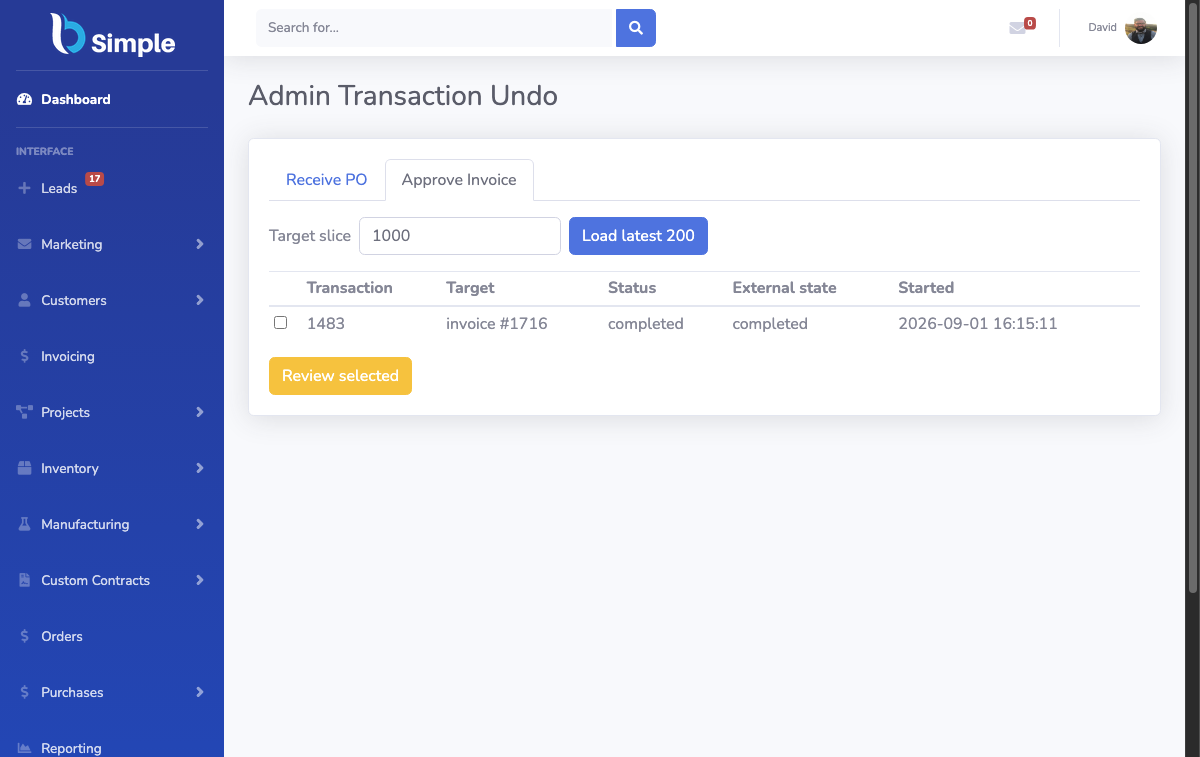
The practice is a handful of routines, kept regardless of tools: the daily pass over exceptions (orders stuck, variances unexplained), the monthly count keeping quantities honest, the weekly reorder review before stockouts surprise anyone, and the invoice discipline of issuing on completion and chasing on schedule. These cost minutes and are the substance of "management" — software automates their mechanics, never their judgement. The tools-and-techniques pairing maps the routines in full.
The software: the records a small business needs kept
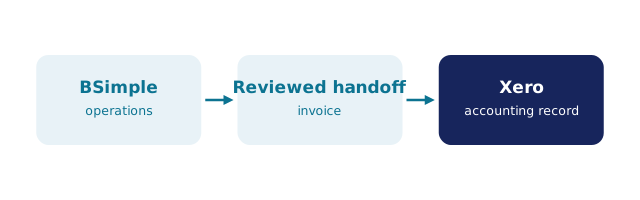
Money — an accounting platform (Xero, MYOB) from day one; stock and orders — the operations record, added when the routines strain: a second person needing the truth, quantities drifting, reorders guessed. We build BSimple, so weigh that: it is the operations seat for wholesale, manufacturing, distribution and trade businesses — live multi-location quantities, batches, purchasing from demand, order-to-invoice, customer portals, invoices pushed to the books (US integrations rolling out). It is not a decision-maker, an HR system or a bookkeeper — those stay human or in their own tools. Plans run $180/$250/$399 per month AUD with the trial as the full product, and the wider tool map covers the other seats if this one is not yours.
Frequently Asked Questions
What does a business manager do for a small business?
Coordinates the work and keeps the records honest: quotes moving, invoices issued and chased, stock reordered on time, staff clear on priorities. In small businesses the owner usually wears the hat; software makes the hat lighter, not redundant.
Can software replace a business manager?
No — software keeps records and automates mechanics; judgement, coordination and customer relationships stay human. The honest framing: software makes one manager effective rather than replacing the role.
What software does a small business manager need?
Accounting from day one; the operations record when stock and orders strain the routines; workforce tools as staff arrive. The category map sorts the seats.
Is BSimple a business manager for small business?
It fills the operations seat — stock, orders, purchasing, invoicing — which is the record most small goods businesses struggle with first. It is not a hire, an HR system or a bookkeeper, stated plainly.
How do we test whether we need it?
Time your routines for a week: hours spent checking stock, chasing orders, fixing variances. Then run the trial on your products and compare. The difference is the manager's hour, bought back.

BSimple