
Guide / tools and techniques
Business management tools and techniques — the working pair
Tools hold the records; techniques keep the routines honest — counts, reviews, approvals. The pair mapped honestly: what software automates, and what stays a management habit.
The key facts
- Tools hold records; techniques run routines — the pair works together, and either alone fails: tools without techniques decay, techniques without tools scale badly.
- The four techniques that matter most: the daily pass, the monthly count, the weekly reorder review, the exception post-mortem.
- Software automates the techniques' mechanics — surfacing exceptions, computing variances, queuing reorders — while the judgement stays human.
- BSimple pairs with the techniques: the record plus the routines, from $180/month AUD, trial free.
- 01The key facts
- 02The tools — one per record
- 03The four techniques that keep records honest
- 04Where BSimple fits the pair
The tools — one per record
The tool inventory is short by design: accounting for money (Xero, MYOB), operations for stock and orders (BSimple's category), workforce for people, channels for demand, reporting for visibility. Each tool keeps one record true; each earns its place by making the next truth easier to record. The category map sorts them, and the honest rule holds across all of them — one record kept deeply beats four kept shallowly.
What no tool supplies is the techniques: the routines that keep records honest. That is the half most businesses under-invest in, and it is free.
The four techniques that keep records honest
The daily pass. Five minutes scanning for exceptions — orders stuck in a state, variances unexplained, receipts missing. Performed on the record, not in the inbox.
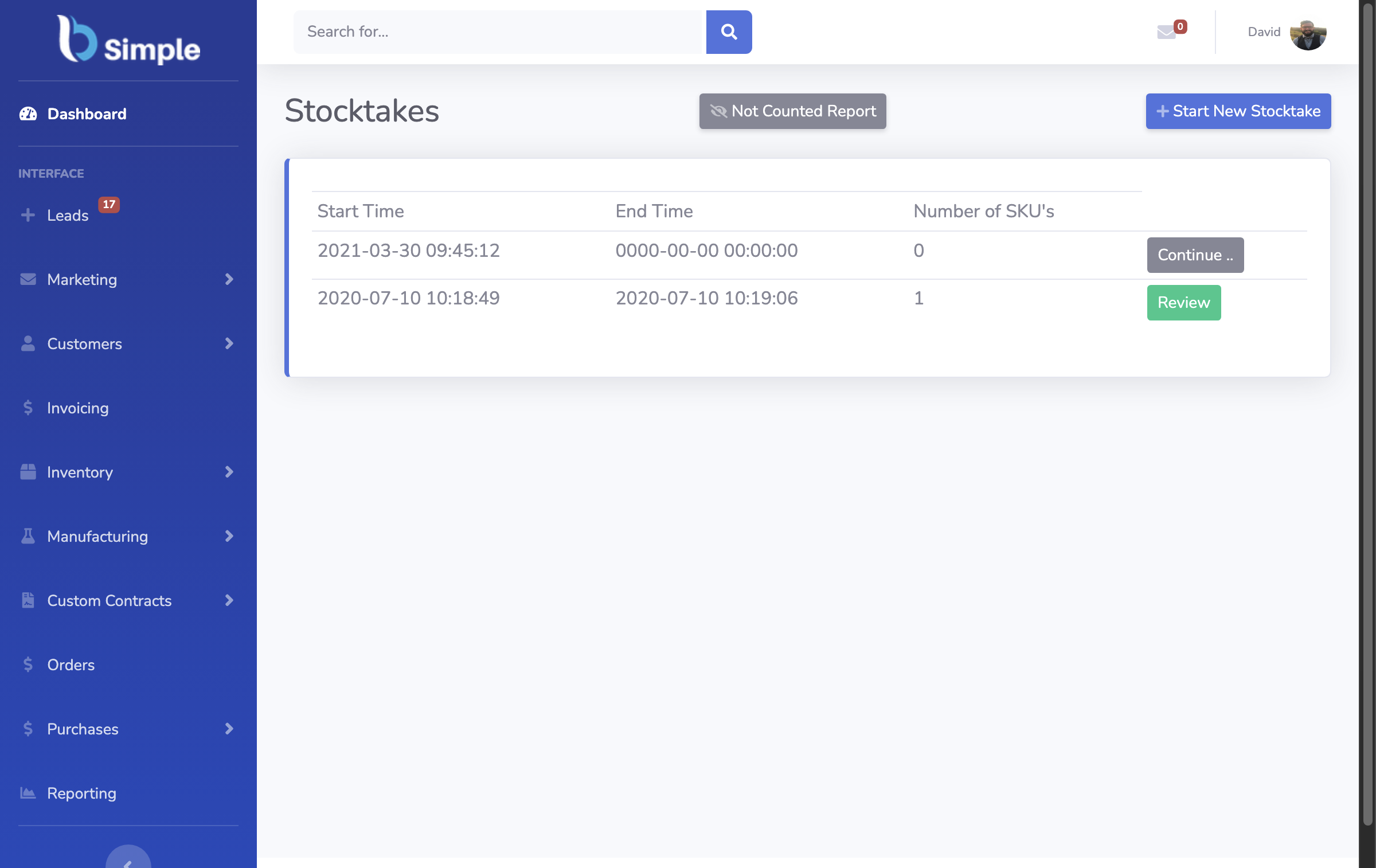
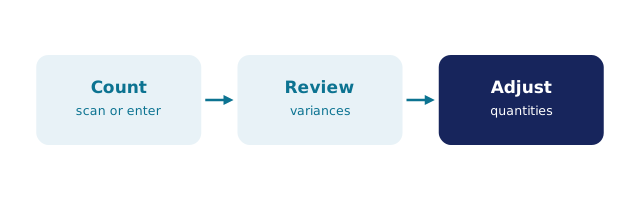
The monthly count. Cycle counts against the record, variances investigated before adjusting, corrections with reasons. The counting discipline is the technique that keeps every other number honest.
The weekly reorder review. Par levels versus live and incoming stock — decided from data, then automated where trust is earned. The reorder technique turns purchasing from firefighting into routine.
The exception post-mortem. When something went wrong — oversell, stockout, dispute — a ten-minute review of what the record shows, and one process change. The technique that converts incidents into improvements.
Software serves all four: surfacing exceptions, computing variances, queuing reorders, preserving the history the post-mortem reads. The tools-and-records distinction keeps the division clear.
Where BSimple fits the pair
We build BSimple, so weigh that: it is the tool built to serve the techniques — exception states visible on the record, variance review built into counting, reorder views computed continuously, audit trails behind every post-mortem. For wholesale, manufacturing, distribution and trade businesses it runs from $180/$250/$399 per month AUD, with the trial as the full product. The honest pairing advice: adopt the techniques first, because they work in any medium and survive every tool change; adopt the tool when the techniques need automation — the stage guide sequences that decision.
Frequently Asked Questions
What are the main business management tools and techniques?
Tools: accounting, operations, workforce, channel and reporting systems — one per record. Techniques: the daily pass, monthly count, weekly reorder review, and exception post-mortems — the routines that keep the records honest.
Which matters more, the tool or the technique?
The technique — tools amplify routines that exist and expose routines that do not. A disciplined team on a spreadsheet outperforms an undisciplined team on expensive software in every measurable way.
What techniques should we start with?
The monthly count and the daily pass — they cost minutes and produce the trust that every other technique and tool depends on. Reorder reviews follow once the record is trusted.
How does software change the techniques?
It automates the mechanics — variance computation, reorder maths, exception surfacing — so the routines take minutes instead of hours. The judgement in each routine (explaining, deciding, improving) stays human.
How does BSimple support the techniques?
By being the record the techniques run on: variance review in counting, reorder queues from par levels, exception states visible, audit trails for post-mortems. The trial shows the pair working on your products.

BSimple