Complete Inventory Management System Xlsm Solution Made for Doers

Inventory Management System Xlsm helps Australian wholesalers and manufacturers manage inventory, orders, and purchasing. Xero integration, customer portals,...

Prefer to talk? Call 1300 980 598
  • Real-time inventory tracking across multiple warehouse locations with instant stock visibility
  • Seamless Xero integration for automatic accounting synchronisation and GST compliance
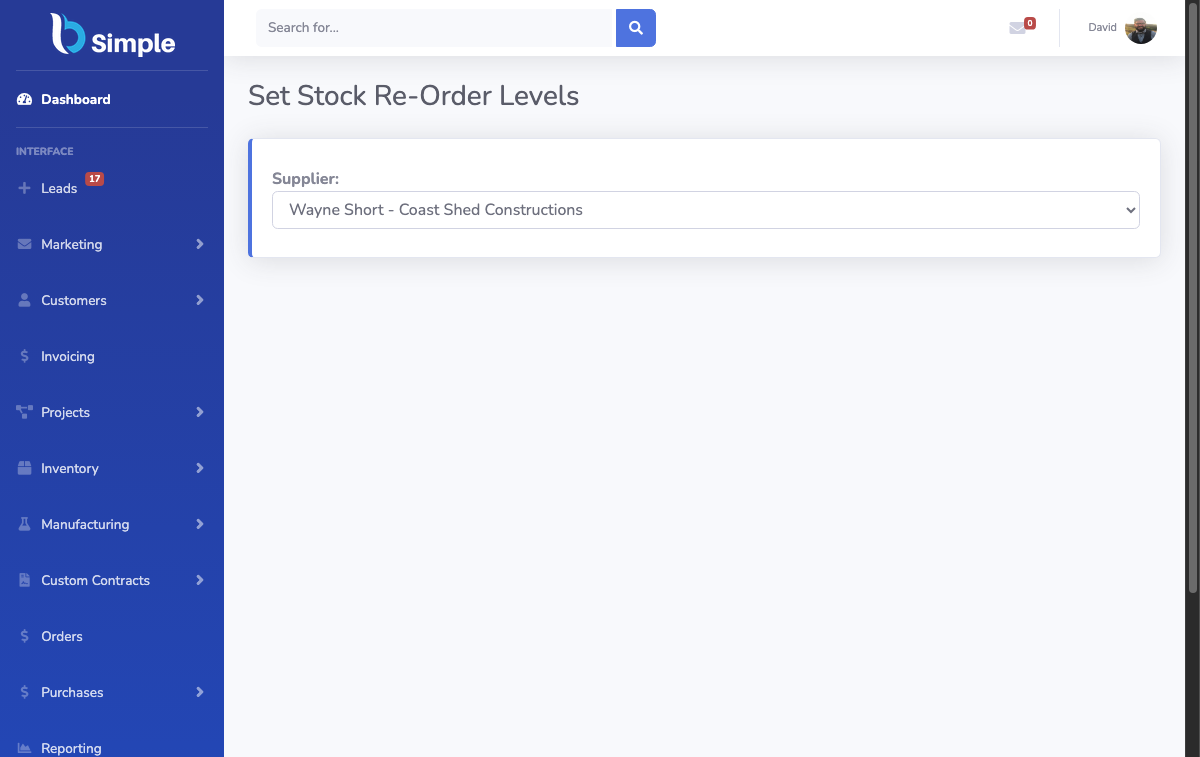
  • Automated purchase order generation when stock falls below reorder points
  • Mobile-enabled stocktake management with barcode scanning and variance detection
  • Customer ordering portal for wholesale customers with live stock availability
  • Negative inventory tracking for backorders and pre-orders management
  • Comprehensive audit trails for every stock movement and transaction history

Managing inventory with spreadsheets is like trying to run a wholesale business with one hand tied behind your back — and if you're still using an inventory management system xlsm template, you're probably feeling that pain every single day. Welcome to our guide on inventory management system xlsm — see also our Inventory Management Software for the full picture. The truth is, Excel spreadsheets were never designed for the complexity of modern wholesale, manufacturing, and distribution operations. Sure, they're cheap and familiar, but they're also prone to human error, impossible to scale, and they'll cost you thousands in lost time and missed opportunities. A Sydney coffee roaster we worked with was managing 200+ SKUs across three warehouses using Excel — they were spending 15 hours a week just updating stock levels and reconciling data. When stock counts didn't match reality, they had no audit trail to investigate. When a customer's order came in, the process was manual and slow. An xlsm inventory template might seem like a quick fix, but it's actually a band-aid on a much bigger problem. This guide will show you why upgrading to a proper inventory management system is the smartest move you can make for your business, and how BSimple makes the transition seamless with full Xero integration and features built specifically for Australian businesses.

BSimple inventory management dashboard

Why Spreadsheets Are Holding Your Business Back

The limitations of Excel-based inventory management become painfully obvious once your business starts scaling. Most xlsm templates rely on manual data entry, which introduces errors at every step. When a team member forgets to update stock after a sale, or when two people edit the same spreadsheet simultaneously, you're left with conflicting information and no way to know which version is correct. For manufacturing and distribution businesses, this is a nightmare — you might think you have stock when you don't, leading to unfulfilled orders and disappointed customers. You might also overstock items that aren't moving, tying up capital that could be invested elsewhere. Melbourne breweries managing seasonal demand swings need real-time visibility into stock levels across multiple locations, and spreadsheets just can't deliver that. An xlsm system also lacks automation. Every time you need to generate a purchase order, check stock levels, or reconcile inventory counts, someone has to manually create formulas, copy data, or worse, do the calculations by hand. During EOFY stocktakes, this becomes absolutely chaotic — you're trying to reconcile physical counts with spreadsheet records, and if they don't match, you're stuck manually hunting through months of transactions to find the discrepancy. A proper order management software solution automates these processes, tracks every movement, and gives you an audit trail that makes reconciliation quick and accurate. You'll also get real-time alerts when stock falls below reorder points, so you're never caught out by surprise shortages. For Australian SMBs dealing with GST compliance and regular stocktakes, this automation is genuinely transformative.

Enquire Now

BSimple inventory control software

Automation and Integration That Actually Works

One of the biggest advantages of moving beyond xlsm templates is gaining integrated automation across your entire supply chain. When inventory, orders, and purchasing are disconnected — as they are with spreadsheets — you're managing three separate systems that don't talk to each other. This creates delays, duplicates work, and leaves room for mistakes. A proper inventory management system creates a single source of truth. When a customer places an order, the system automatically deducts from stock. When inventory falls below your reorder point, it can automatically generate a purchase order. When goods arrive from your supplier, a few clicks updates your stock and reconciles against the PO. This is the kind of efficiency that transforms how you operate. BSimple integrates directly with Xero, which means your inventory movements automatically sync with your accounting records. No more manual journal entries, no more reconciliation nightmares at month-end. For Australian businesses managing GST, this integration is invaluable — every stock movement is tracked and accounted for, making tax time and audits significantly less stressful. You also get just-in-time inventory capabilities, which means you can reduce holding costs by ordering stock closer to when you actually need it. This is particularly powerful for businesses with limited warehouse space or high carrying costs. The customer ordering portal feature also means your wholesale customers can place orders directly, reducing back-and-forth emails and phone calls. They see real-time stock availability, so they're not ordering products that are actually out of stock. This improves customer satisfaction while reducing your administrative burden.

More features

BSimple order management interface

Advanced Features for Accurate Stock Control

Negative inventory tracking and stocktake management are two features that xlsm templates struggle with, but they're absolutely critical for distribution and manufacturing businesses. Negative inventory tracking allows you to fulfil orders even when you're temporarily out of stock — useful when you're waiting for a supplier delivery that's en route. The system tracks this negative balance and alerts you when the stock arrives, so you can reconcile everything correctly. Without this feature, you either have to turn away orders or manually track backorders in a separate spreadsheet, which defeats the purpose of having a system. Stocktake management is where spreadsheets really fall apart. Conducting a physical inventory count across multiple locations, then manually comparing it to your spreadsheet records, is labour-intensive and error-prone. A proper system lets you use mobile devices to scan barcodes during stocktakes, automatically recording counts and highlighting discrepancies in real-time. If there's a variance, the system helps you investigate — was it a data entry error, a missing transaction, or actual shrinkage? This visibility is crucial for identifying problems before they become expensive. Many Australian distribution businesses do quarterly or half-yearly stocktakes to ensure EOFY accuracy, and a system that streamlines this process saves hundreds of hours. You can also set up cycle counting, where you count high-value or fast-moving items more frequently, reducing the disruption of full stocktakes. BSimple's inventory management features are designed specifically for these workflows, making stocktakes faster and more accurate than anything you could achieve with an xlsm template.

Create a free account

BSimple purchase order workflow

The Real ROI of Moving Beyond Excel

The real business case for moving beyond xlsm templates comes down to time and money. Let's do some quick maths: if your team spends 10 hours per week managing inventory in spreadsheets, that's 520 hours per year. At an average salary of $60,000 per year, that's roughly $15,000 in labour costs annually — and that's just the direct time spent on data entry and reconciliation. You also have the hidden costs of errors: stock discrepancies that lead to unfulfilled orders, overstock that ties up capital, missed reorder points that cause supply disruptions. A manufacturing business that runs out of a critical component mid-production might lose an entire day of output. A wholesaler who oversells stock damages customer relationships. These indirect costs often exceed the direct labour costs. An xlsm system also doesn't scale well. As you add more products, more locations, or more customers, the spreadsheet becomes increasingly unwieldy. Formulas break, performance slows, and the cognitive load on your team increases. A proper inventory management system scales effortlessly — whether you're managing 100 SKUs or 10,000, the performance remains consistent. You also get better decision-making data. Spreadsheets give you a snapshot of what happened yesterday; a real system gives you insights into trends, patterns, and opportunities. You can see which products are your fastest movers, which suppliers are most reliable, where your cash is tied up in stock, and where you have dead inventory that needs to be cleared. For Australian businesses, particularly those in wholesale and distribution, this kind of visibility is competitive advantage. BSimple is built by people who understand these challenges because they've lived them. It's not an enterprise system with unnecessary complexity — it's a practical tool designed specifically for how Australian SMBs actually work, with features like Xero integration that make your life easier, not harder. For a closer look at how these capabilities fit together, our warehouse management software guide ties it all together, and the guide to xls walks through the practical details.

Learn more

BSimple stocktake and inventory tracking

Frequently Asked Questions

What's the main difference between an xlsm template and proper inventory management software?

An xlsm template is a static spreadsheet requiring manual updates and lacking automation, audit trails, and real-time synchronisation. Proper software automates inventory movements, integrates with accounting systems like Xero, and provides instant visibility across all locations and transactions.

Can I convert my existing xlsm inventory system to BSimple?

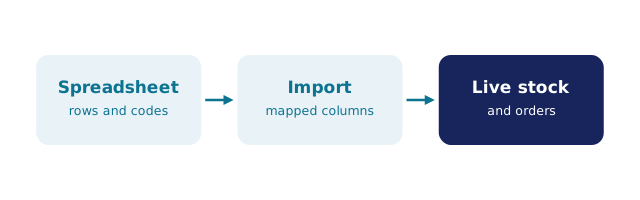
Yes, absolutely. BSimple can import your existing inventory data from spreadsheets, and our team helps you set up the system to match your current workflows. The transition is typically smooth, and you'll see immediate benefits in terms of automation and accuracy.

How does Xero integration help with inventory management?

Xero integration means your inventory movements automatically sync with your accounting records. Stock adjustments, sales, and purchases update in real-time, eliminating manual journal entries and ensuring your balance sheet is always accurate for GST compliance and financial reporting.

Is BSimple suitable for small wholesale businesses just starting out?

Yes, BSimple is designed for SMBs of all sizes. Whether you're managing 50 SKUs or 5,000, the system scales with you. You pay for what you use, so there's no unnecessary complexity or cost when you're starting out.

Can I manage multiple warehouse locations with BSimple?

Yes, BSimple supports multi-location inventory management. You can track stock across different warehouses, set up inter-location transfers, and view consolidated reporting across all locations — something that's nearly impossible with spreadsheets.

How does BSimple handle stocktakes and inventory reconciliation?

BSimple includes dedicated stocktake management features with mobile support for barcode scanning, automatic variance detection, and cycle counting capabilities. This makes physical counts faster and more accurate than manual spreadsheet reconciliation.

Does BSimple support customer ordering portals?

Yes, BSimple includes a customer ordering portal where your wholesale customers can place orders, check real-time stock availability, and track their orders. This reduces administrative work and improves customer experience significantly.