
Guide / apps
Inventory management apps — what to demand before installing
An app that shows quantities is a viewer; an app that runs inventory keeps shared truth, welcomes scanners and guards bad entries. What to demand, browser versus native, and BSimple's answer.
The key facts
- The demand list: live shared truth (not per-device copies), scan-friendly input, guardrails on bad entries, movement history behind every number.
- Browser beats native for teams: nothing to install, every device a terminal, updates that arrive — BSimple is deliberately browser-based.
- The boundary: no offline mode claimed, no proprietary hardware — a connection is required, stated plainly.
- Pricing shape: $180/$250/$399 AUD monthly with the app as the full product — trial it with your products.
- 01The key facts
- 02What an inventory app must actually deliver
- 03Browser app or native app?
- 04BSimple's answer, stated plainly
What an inventory app must actually deliver
Shared live truth. The office, the warehouse and the phone all read and write the same record — quantities update as movements happen, for everyone simultaneously. An app storing per-device copies is a viewer with sync anxiety; the live-record standard is the baseline.
Scan-friendly input. The most frequent action — recording a movement — should be the fewest keystrokes: keyboard-mode scanners type into focused fields, and the record resolves each code to a movement. The scanner pairing is where apps earn the word "inventory".
Guardrails. Selling below zero, keying 100 for 10, adjusting without a reason — blocked or flagged structurally, not punished by a stern policy. The control layer is what separates apps from viewers.
History. Every number explainable: the movement behind any quantity, with actor and timestamp. Audits, counts and disputes all resolve from it.
Everything else — dashboards, charts, integrations — is depth on those four. The four-jobs guide is the checklist.
Browser app or native app?
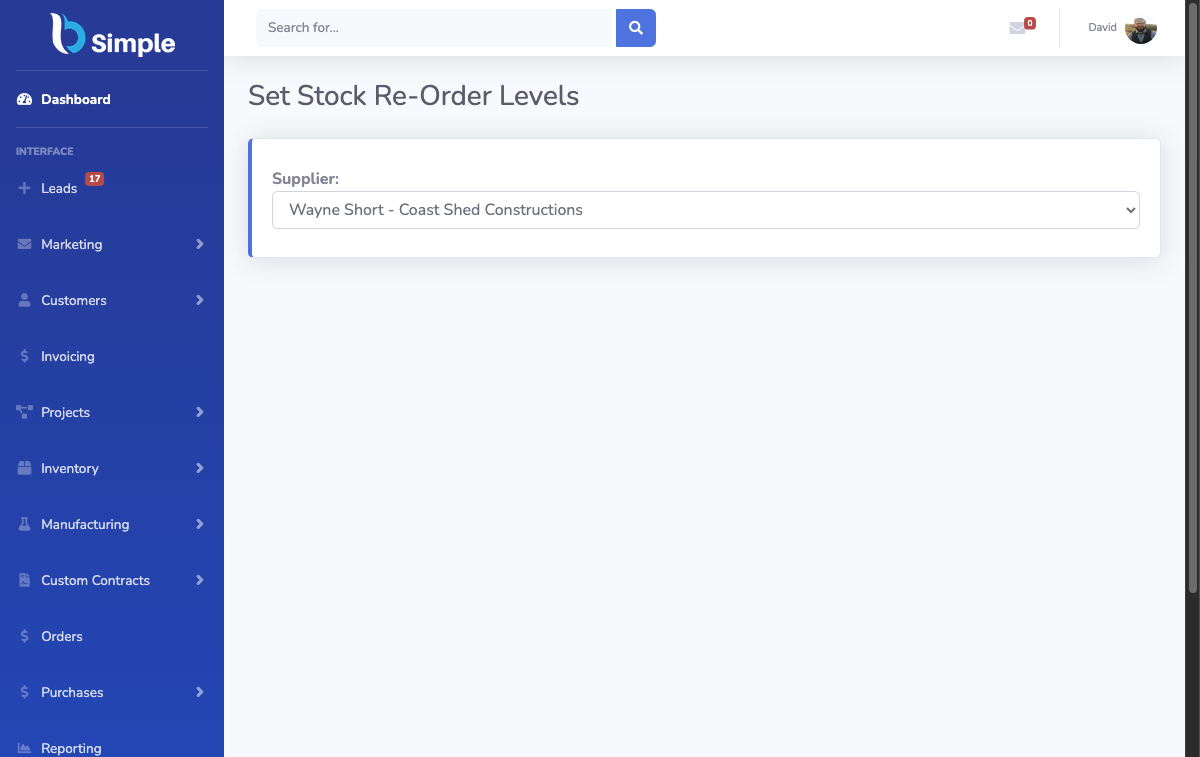
Native apps earn their keep where device hardware leads: camera-scanning at volume, offline capture in genuinely disconnected sites, platform-specific features. For inventory management as most businesses run it, the browser wins on the things teams feel daily: nothing to install (a new tablet is a terminal in seconds), updates that arrive without app-store delays, one URL for every role and site, and no per-device licence maze. BSimple is deliberately browser-based — the same screens on office desktops, warehouse tablets and phones, with standard scanners pairing without ceremony.
The honest trade: a browser app needs a connection (the offline question is the exception worth measuring), and deeply integrated device features are limited. For shared live truth — the whole point — those trades favour the browser.
BSimple's answer, stated plainly
We build BSimple, so weigh that: there is no native app — the browser product is the app, by design, and it runs the demand list above: shared live truth across locations, scan-friendly fields, negative-inventory guardrails, movement history behind every quantity, plus purchasing, order-to-invoice and customer portals on the same record. Invoices push to Xero or MYOB (US integrations rolling out). Plans run $180/$250/$399 per month AUD with no free tier — the trial is the full product, your products loaded, so the demand list is tested on your data before any commitment. The order-app companion applies the same demands to the order-management side.
Frequently Asked Questions
Is there a BSimple mobile app?
No native app — the browser product runs on phones, tablets and desktops with nothing to install. The trade (connection required, no deep device integration) is stated rather than hidden.
What is the best inventory management app for small business?
The one that passes the demand list on your data: shared live truth, scanner-friendly input, guardrails, history. Test two or three in the same week with real products — the stage guide narrows the field first.
Do inventory apps work offline?
Some native ones do, with sync-conflict trade-offs; browser apps like BSimple need a connection, stated plainly. Measure your real outages before designing around offline — the honest test decides.
What hardware does BSimple need?
Any device with a browser; keyboard-mode USB or Bluetooth scanners pair without ceremony. No proprietary hardware is required or sold — the scanner budget stays yours.
What does a serious inventory app cost?
BSimple is $180/$250/$399 per month AUD with the whole product in every plan. Free apps exist below that — check what they gate (users, history, integrations) before your data forms the dependency.

BSimple