People
Customer profiles, notes and commercial context

Business records / continuity
Keep the business record understandable, recoverable and useful when the next decision depends on its history.
Start your free trial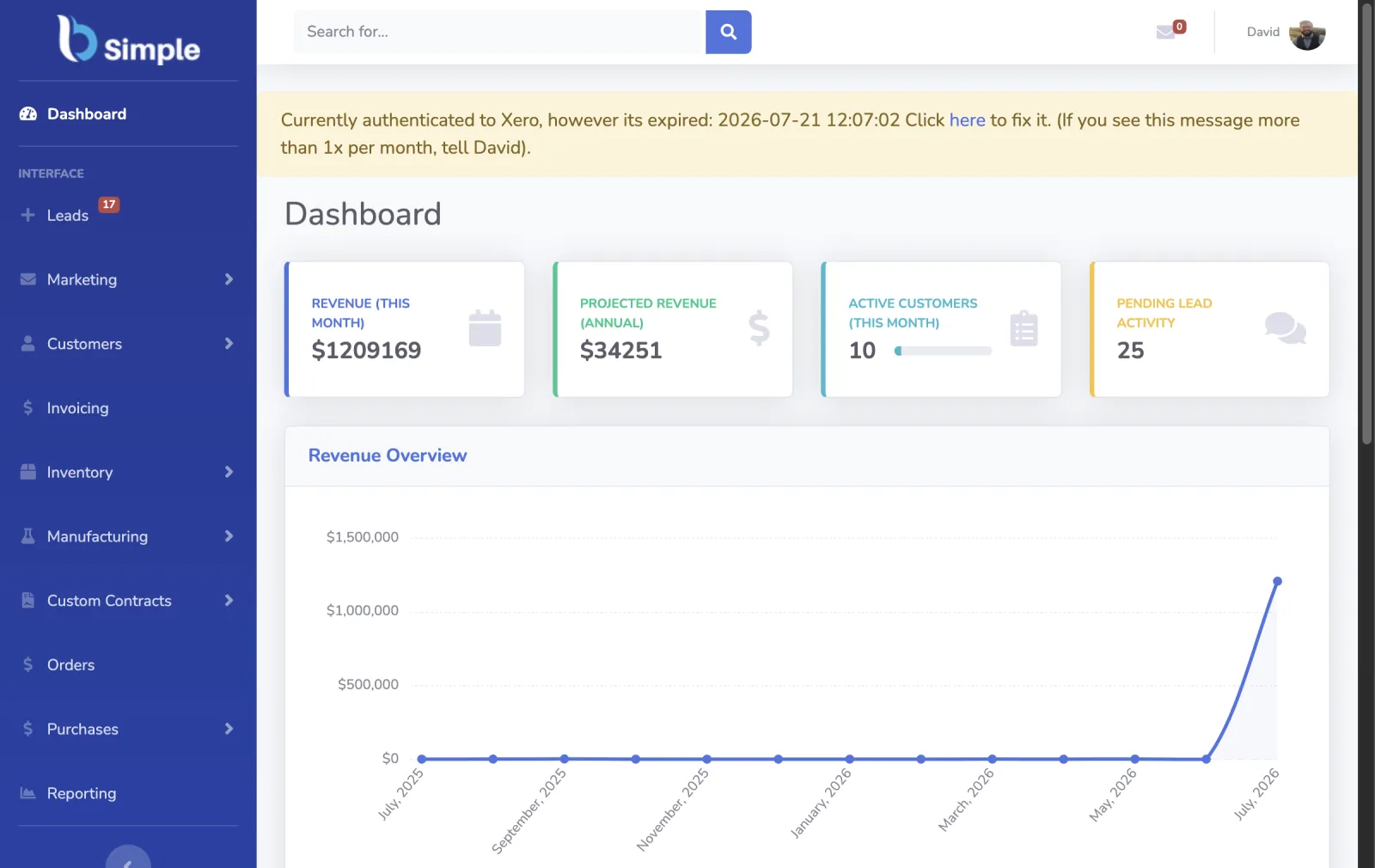
01 / record anatomy
Customer profiles, notes and commercial context
Products, SKUs, suppliers and stock detail
Orders, prices, invoices and delivery history
Reports that explain what changed and why
02 / ownership readiness
Thinking about a future sale makes the value of good records concrete. Customer profiles, special pricing, detailed inventory, supplier lists and past order history help another owner understand how the business actually operates.
If you are thinking of selling in the future, then consider some of the following ideas; putting the foundations in place for an easy change in ownership, building detailed customer profiles (past, present and future) with full notes, up to date detailed customer order pages including any special pricing, detailed inventory listings, list of suppliers and past order history as well as any special pricing discounts that the business currently receives.
Start building a clearer record03 / continuity questions
Can another owner understand customers, pricing, suppliers and order history without reconstructing it from memory?
Can the team reach the records and continue trading if a provider, account or relationship becomes unavailable?
Can a mentor or coach trace an operational result back to the records that produced it?
What if your current provider has a data breach and you quickly need to access your data so you can continue trading - what sort of export tools are available? Can you easily transition to another platform?
04 / advisory usefulness
A mentor or coach can do more with operational evidence than with an accounting total alone. Ask which customers arrived, what attracted them, which products are moving and where the process is losing time.
What detailed reports do you have from your existing business processes that you could use to get some assistance from a business mentor or coach? They are more interested in operational reports, not just accounting and compliance reports from your accounting platform (ie. Xero). What new customers have been acquired in the last 6 months? What mediums attracted them to the business (ie. whats working/what isn't). These types of questions really force you to jump into the data and start building additional detail in to the type of information you keep, when you collect it and what you do with it.
05 / the BSimple boundary
BSimple is designed to remove multiple manual data-entry points. When the customer order, invoice and product delivery lifecycle stay connected, a reporting idea can be tied back to the records that explain it.
BSimple loves data. One of the core pillars we attempt to solve for our customers is the removal of multiple manual data entry points. This is in particularly true for extraction of data for use in things like reports. Our customers come to us with a reporting idea, and we bring it to life inside the BSimple portal. BSimple injects itself into the heart of the business and really captures the businesses entire customer order through to invoice and product delivery lifecycle. This gives BSimple a unique ability to report on all facets of the business.
Why this matters
What even is business data management?
Excellent place to start the discussion is at the fundamental business process. The core function of a business is to provide goods and services with external parties at a price that is profitable. So from this very basic model, we have a number of players and items involved as well as a well-formed process that needs to be followed.
The players are "the business", the "consumer", the "items" involved in the transaction.
The process is the act of creating an invoice which forms a basic contract between "the business" and the "consumer" for the sale of the "item(s)". This includes the price as well as any tax involved.
This is the core set of business data. Depending on the nature of the business and products that you sell, this data can be more useful or potentially unimportant. When you purchase an item at a grocery store, the exact same process is being followed, however there is no detailed customer information collected by the grocery store (unless you are scanning a rewards card, in which case there is an extremely detailed profile being built). An invoice is generated in the form of a receipt which also includes the payment information.
Now that we have those fundamentals sorted, let's start asking some critical questions about Data Management.
Why do I care about Business Data Management?
We have 3 quick reasons that should compel you to pay attention to your data and business processes.
Keep the record usable