
Guide / home services
Home service business software — the stock-side truth
Trades that visit homes live on two records: the job and the parts. What an operations record genuinely covers — van stock, installations, warranty history — and the scheduling it leaves to field-service tools.
The key facts
- Home services = field-service software territory for scheduling, quoting and job cards; BSimple is deliberately not that.
- The stock side is real: parts in vans, equipment installed at customer sites, warranty and service history — an operations record covers these well.
- BSimple's projects layer fits installs: reserve items without consuming stock, install and consume on invoice approval, history per customer job.
- Boundary stated: no technician dispatch, no quoting/CRM, no GPS — and no claim of integrations with field-service suites.
- 01The key facts
- 02What home service businesses actually need from software
- 03Where BSimple fits for a home service business
- 04The test for the stock side
What home service businesses actually need from software
Two records, usually kept by two tools. The job record — bookings, technician schedules, quotes, job cards, customer communication — is field-service software's territory, and for most home services it is the first purchase. The stock-and-parts record is the one that quietly bleeds money when missing: what is in each van, what was consumed on which job, what to reorder, and which equipment installed at which customer is due for attention.
The failure pattern is familiar: vans as private stockpiles, parts charged but untracked, warranty disputes settled by memory, and a parts room whose quantities are a rumour. The van-as-location pattern and the trade-installation pattern are the same machinery HVAC, plumbing and electrical businesses need.
Where BSimple fits for a home service business
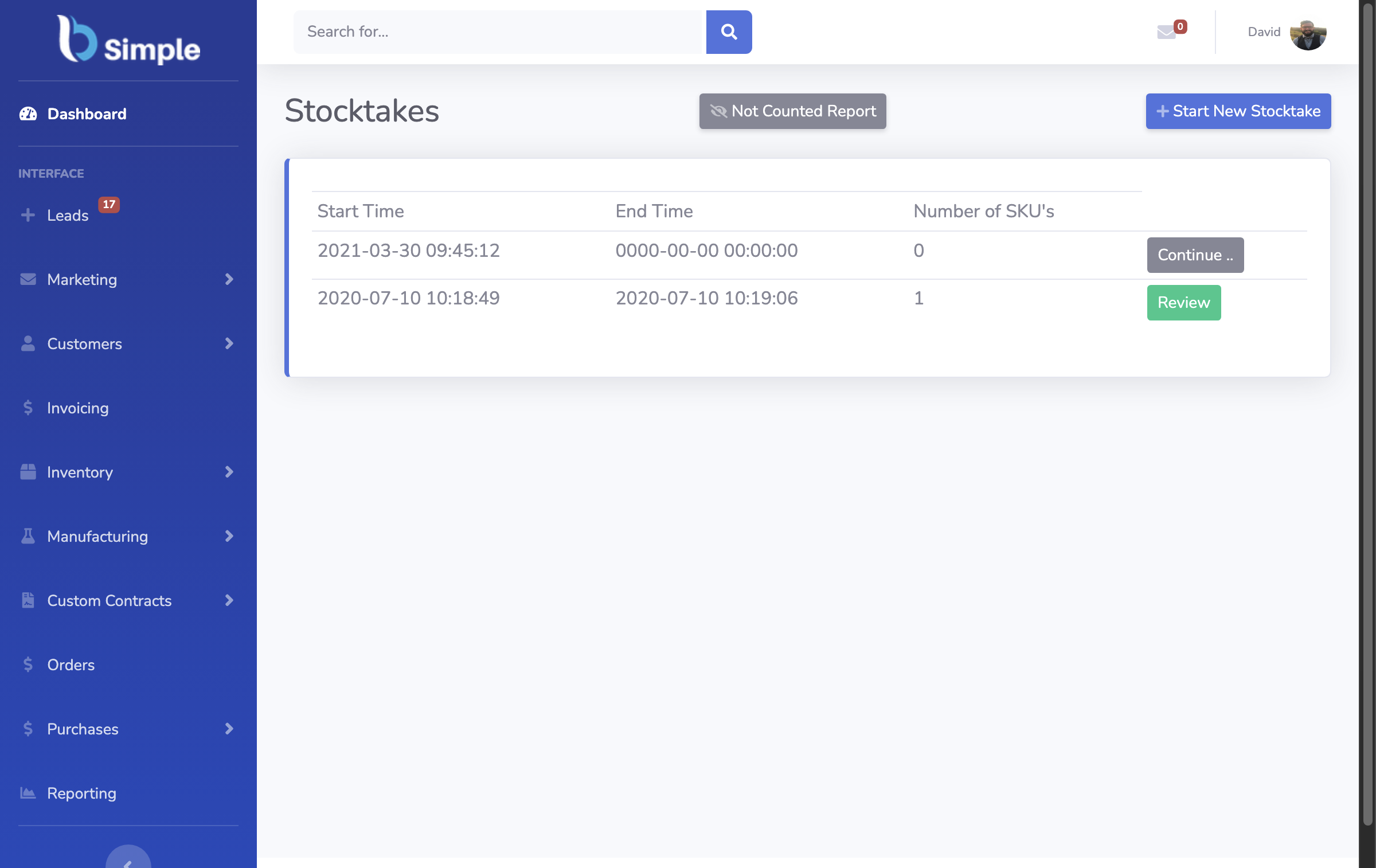
We build BSimple, so weigh that. It runs the stock-side record: vans as locations with real, visible quantities and recorded transfers; parts consumed against jobs with a transaction history; the projects layer for installations — group inventory and on-site assets under a customer: reserve items without consuming stock, install and consume on invoice approval, keep warranty and service history per job; and purchasing from demand so the parts room triggers reorders before the shelf empties. Invoices push to Xero or MYOB (US integrations rolling out); plans run $180/$250/$399 per month AUD.
Stated plainly, what it does not do: technician scheduling and dispatch, quoting and job cards, customer-facing booking, GPS. If those are the burning need, a field-service platform is the right first buy — and the stock record it usually lacks is where BSimple slots in beside it, without claiming a formal integration we have not built. The bakery variant and the HVAC case show the same shape in adjacent trades.
The test for the stock side
On the trial: set up two vans and a store, move parts between them, run one installation at a test customer — reserve, install, consume on invoice — then ask the record six months of questions: what went into that van, what did that customer's job consume, what needs reordering this week. If the answers come in minutes, the stock side is solved; pair it with whichever field-service tool runs the diary. The service-contractor angle covers the wider business-management question for trades.
Frequently Asked Questions
Is BSimple field service management software?
No — no scheduling, dispatch, quoting or job cards, stated plainly. It is the operations record for the stock and installations side, which field-service tools typically lack and trades typically lose money on.
Can we track what is in each technician's van?
Yes — vans are locations holding real quantities; transfers between store and van are recorded movements visible to everyone. Restocking becomes an audit, not an argument.
How does warranty and service history work?
Through projects: equipment installed at a customer is grouped under that customer with its full transaction history — what was installed, when, which parts were consumed since. It is record truth rather than a maintenance-scheduling calendar.
Does BSimple integrate with ServiceM8/Jobber/similar?
We make no claimed integrations with specific field-service products. The record is reachable via export and its public REST API, but the honest answer on any pairing is: ask us directly about your stack rather than trust a features page.
What does it cost for a small service crew?
$180/$250/$399 per month AUD with vans, projects and reorders in the core. If the crew is one person with slow parts movement, start cheaper — the stage-based guide is the honest path.

BSimple