
Guide / hardware retail
Inventory software for a hardware shop
Hardware retail is stock truth at counter speed: screws by the hundred and ladders by the single, a warehouse out the back, trade accounts that order the same list every fortnight. What matters — and the POS boundary, plainly.
The key facts
- The hardware-shop problem set: boxes-versus-singles truth, back-warehouse and shopfront as separate locations, trade accounts on repeat, and slow movers that quietly eat shelf space.
- What BSimple runs: live multi-location quantities, multi-level units, reorder levels, purchase orders with GST-inc/ex-GST reconciliation, and wholesale ordering portals.
- Stated plainly: BSimple is not a counter POS — no till, no retail checkout. Retail shops run a POS for sales and BSimple as the stock record behind it.
- Accounting boundary: invoices push to Xero and MYOB (US integrations rolling out); compliance stays with the accountant.
- 01The key facts
- 02The four problems every hardware shop knows
- 03Where BSimple fits — and the counter boundary
- 04Testing it against your shelves
The four problems every hardware shop knows
Boxes and singles. Trade customers buy a box of fifty; walk-ins buy three. When the box and the singles are different records, quantities drift until a stocktake betrays everyone. Multi-level stock — a box that contains units of the same product — is the fix, and it is core BSimple, not an add-on.
Two locations in one building. The shopfront and the back warehouse hold different quantities of the same item, and "check out the back" is a stock answer that should come from the screen. Locations that each hold real, visible quantities end the pilgrimage.
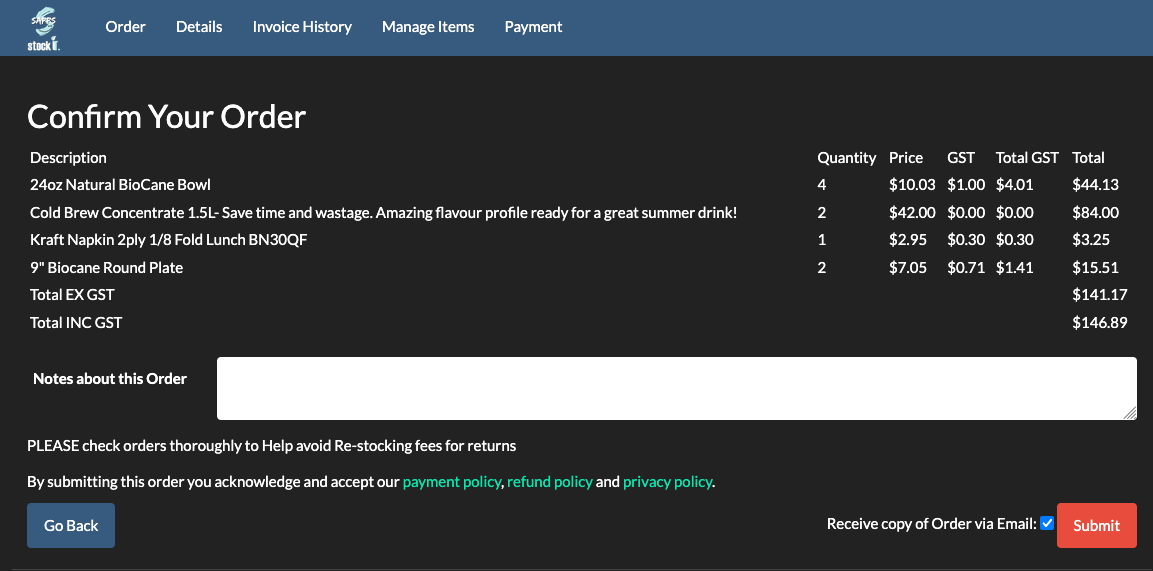
Trade accounts on repeat. The builder who orders the same list every fortnight at trade pricing is a relationship worth software: a per-customer portal with their own product list and pricing, on a unique link, turns the phone call into an order you did not have to take.
Slow movers. Hardware accumulates items that sell twice a year but cost money and shelf space. A reorder view built on par levels makes overstock visible monthly rather than at the January clean-out.
Where BSimple fits — and the counter boundary
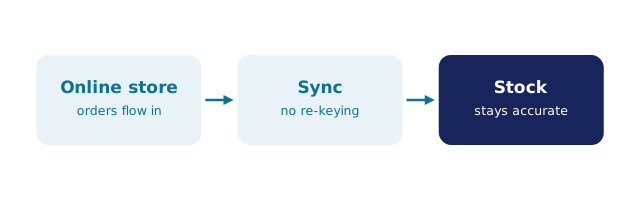
We build BSimple, so weigh that. For a hardware shop, BSimple is the stock-and-orders record: live quantities across locations, boxes and singles on one record, purchase orders that reconcile with GST-inc/ex-GST pages, supplier price-variance flags, and stocktakes that do not require closing the shop. Trade wholesale is its strongest gear — hardware businesses that supply other tradies fit the construction-supply pattern directly.
The boundary, plainly: no counter POS. Selling at the counter needs a till — take cards, print receipts, run a register — and BSimple deliberately does not do it. The common pattern is a retail POS at the counter with BSimple holding the stock truth both sides of the wall, or a wholesale-focused hardware business running BSimple alone with orders arriving through portals. The POS-boundary page explains the division, and the warehouse angle covers the back-of-shop side.
Testing it against your shelves
Bring three real cases to a trial: a product you sell boxed and single, the trade customer with the fortnightly list, and last year's worst overstock line. Run all three — sell down the box in singles, have the builder order through a portal, check the reorder view on the slow mover. The trial is the full product; an afternoon answers the fit question better than any feature grid.
Frequently Asked Questions
Can BSimple run my shop counter?
No — it is deliberately not a POS. Counter sales need a till; BSimple holds the stock record the till should agree with. Some hardware shops pair exactly that way; wholesale-heavy shops often run BSimple alone with portal ordering.
How does box-vs-single stock work?
Multi-level stock: a box is a level containing units, so selling fifty singles reduces the same record the boxes draw from. Quantities stay true whichever way the customer buys — the classic hardware drift point, fixed at the record.
Can trade customers see their own pricing and order themselves?
Yes — each customer gets a unique portal link with their own product list and pricing, no passwords. They order, the order lands in your flow, and stock is checked against the live record rather than the counter's memory.
Does it handle supplier invoices with GST correctly?
Purchase orders reconcile with GST-inc and ex-GST pages, and supplier invoices can be split or joined to match how goods arrived. The accounting handoff itself is Xero and MYOB, with US integrations rolling out.
What does it cost for a small hardware shop?
Plans are $180/$250/$399 per month AUD with core features in every plan — no module fees for stock, portals or purchasing. Whether it earns that depends on your volumes; the trial is how you find out without a sales call.

BSimple