
Guide / construction
Inventory software for construction businesses
Construction stock lives in three places — the store, the site, the ute — and dies in the gaps. What a record must hold, what BSimple covers, and the job-costing boundary stated plainly.
The key facts
- The construction problem set: materials split across store, sites and utes; consumables that evaporate; tools that migrate; installed work that needs history.
- BSimple's coverage: sites and vans as locations, transfers recorded, projects grouping installed assets per customer with service history, reorders for the store.
- Stated plainly: no estimating/quantity takeoff, no job-costing timesheets, no progress-claiming — construction management software is a different category.
- Accounting boundary: invoices push to Xero and MYOB (US integrations rolling out); compliance stays with the accountant.
- Context: the full inventory system holds the wider system, this page one stop in it.
- 01The key facts
- 02Where construction inventory actually goes wrong
- 03What BSimple covers — and the construction boundary
- 04The test on your own materials
Where construction inventory actually goes wrong
The three places stock lives. The store or yard (bulk materials, fixtures, fasteners), the site (materials delivered ahead of the work, "temporarily"), and the ute (the parts and consumables that quietly become the technician's private stock). When the three are not one record, shrinkage is invisible until the job costing reveals it — too late. Sites and vans as locations with recorded transfers is the fix: the van pattern and the site-materials pattern are the same machinery trade businesses use.
Installed work needs history. A builder's warranty question is an inventory question: which batch of fixtures went into that job, when, and what else from the same delivery. Projects that group installed assets under a customer — reserve without consuming, install and consume on invoice approval, history retained — answer it from the record.
Consumables walk. Screws, silicone, blades: low value each, enormous value in aggregate. Par levels and reorder views keep the ute and the store stocked without the Friday guesswork.
What BSimple covers — and the construction boundary
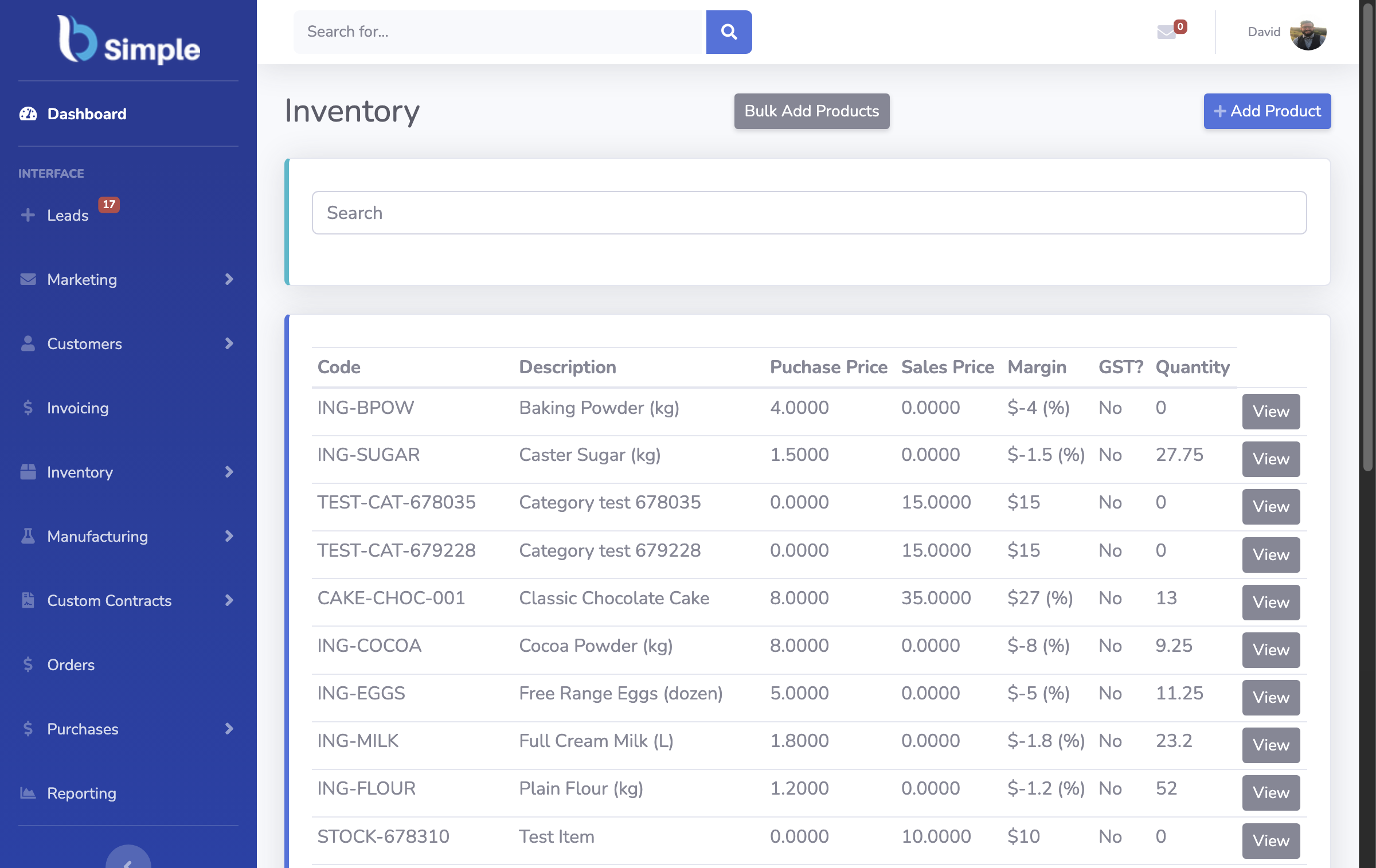
We build BSimple, so weigh that. Covered: live quantities across yard, sites and vehicles; recorded transfers (materials to site, returns to store); reorder levels and purchase orders with supplier reconciliation (GST-inc/ex-GST); batch tracking where product origin matters; the projects layer for installations; invoices pushed to Xero and MYOB with payment status mirroring back — US accounting integrations rolling out.
Not covered, stated plainly: quantity takeoffs and estimating, job-costing timesheets, progress claiming and construction-specific compliance — construction management software is its own category and often the right first purchase for builders. BSimple pairs with it as the stock-and-materials record, without claiming a formal integration we have not built. The HVAC trade case and the home-services pattern show the same shape in adjacent trades.
The test on your own materials
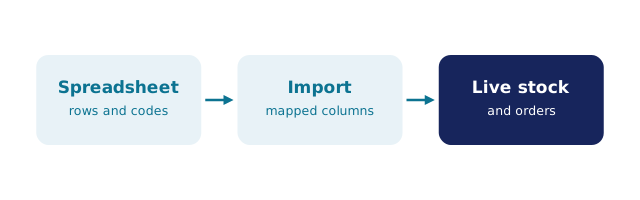
On the trial: set up a store, one site and one ute; move materials to the site; run one installation under a test customer — reserve, install, consume on invoice; then ask the record three questions: what is at that site, what did that job consume, what needs reordering this week. If the answers are minutes, the record fits your operation; if they are workarounds, better to know before the busy season.
Frequently Asked Questions
Does BSimple handle materials across multiple sites?
Yes — sites, yard and vehicles are locations holding real quantities; movements between them are recorded transfers with history. What is at each site stops being a phone call.
Can we track tools and equipment, not just materials?
Yes — tools as non-depleting asset records with locations and custody history, alongside flowing materials; projects group installed equipment under a customer with lifetime history.
Does BSimple do job costing and estimates?
No — estimating, takeoffs and timesheet-based job costing are construction-management territory, stated plainly. BSimple records what was consumed and invoiced; the costing layer sits with your construction tooling.
Can site foremen update stock from their phones?
Yes — browser-based, so any phone or tablet on site records receipts, usage and transfers against the live record. Nothing to install; a connection is required (the offline trade-offs apply honestly).
What does it cost?
$180/$250/$399 per month AUD with locations, projects and reorders in every plan. The trial runs your materials and one job before any commitment.

BSimple