
Guide / counter and record
Inventory management software and POS
A POS sells; an inventory record knows what is left to sell. Products claiming to be both usually do one well and one badly. Here is how the two systems should meet — and BSimple's honest place at that boundary.
The key facts
- POS is the counter: fast transactions, payments, receipts, shift closes. It is a sales interface, not a stock record.
- Inventory management is the record: quantities across locations, purchasing, batches, stocktakes — the truth the till draws down against.
- The failure pattern: "POS with built-in inventory" that knows it sold two but not how many were there.
- BSimple's position: no counter till, said plainly — the record behind the counter, with clean boundaries to POS, Shopify and the books.
- 01The key facts
- 02Two systems, one boundary — drawn correctly
- 03How BSimple sits against a POS
- 04Choosing without the two-in-one trap
Two systems, one boundary — drawn correctly
Point of sale earns its place at the counter: speed, payment methods, receipts, end-of-day reconciliation, staff shifts. It is optimised for the thirty seconds of a transaction. Inventory management is optimised for everything the till cannot see: live quantities across the shop, the stockroom and the second location; purchase orders raised from demand; batch and expiry tracking; stocktakes that keep the counts honest; and the history behind every unit — received when, from which supplier, sold to whom.
The boundary between them is one question: when a sale happens, where does the quantity go down? In a clean setup the POS records the sale and the inventory record deducts it — immediately, not at end-of-day sync. Products that claim to be both systems in one usually deliver a till with a stock report attached: quantities updated at sale, yes, but nothing underneath — no purchasing, no batches, no locations, no stocktake discipline. That is the trap this search usually leads to.
How BSimple sits against a POS
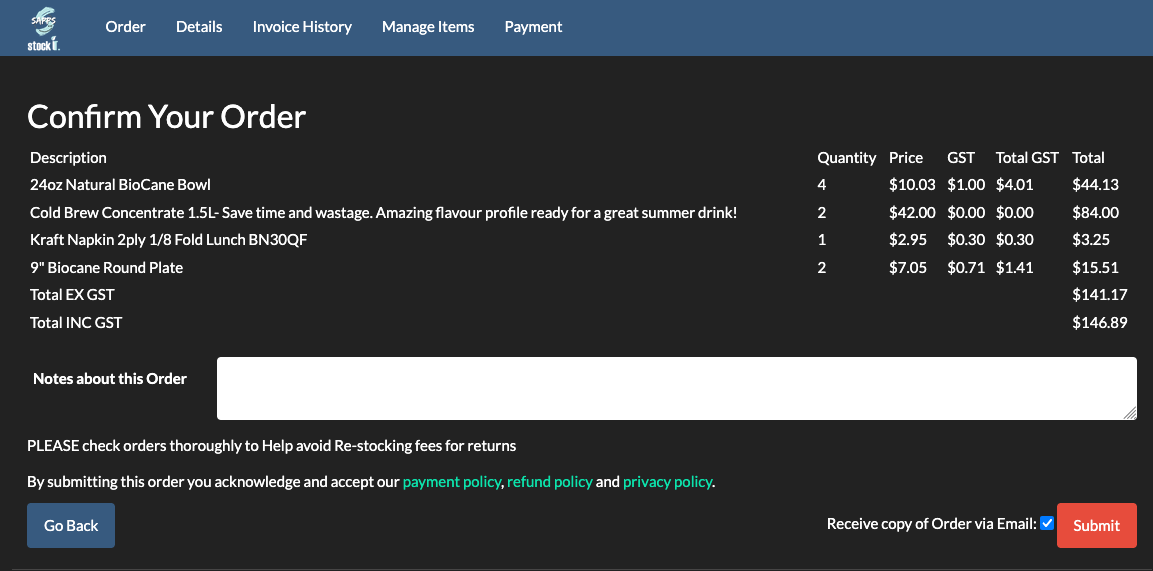
We build BSimple, so weigh that: it does not run a counter, and this page will not pretend otherwise — walk-in retail transactions need a POS. What BSimple provides is the record that makes the till honest: live quantities across every location, multi-level stock, batch and expiry traceability, purchase orders raised from demand against reorder levels, stocktakes (EOFY and cycle counts), and supplier reconciliation with GST handling. Approved invoices push to Xero or MYOB with payment status mirroring back; US accounting integrations are rolling out. Where the "counter" is online rather than in person, Shopify orders import by webhook into the same record; and for wholesale buyers, the customer ordering portal replaces the till conversation entirely — their own products and pricing through a secret link.
Plans run $180/$250/$399 per month AUD with everything in the core plans. Inventory and POS, compared in retail context and free POS-adjacent inventory tools cover the boundary from other angles.
Choosing without the two-in-one trap
- Score the counter on counter things. Payment flow, speed, staff logins, refunds. If your current till is good, replacing it to gain a mediocre stock module is a loss.
- Score the record on record things. Ask to see purchasing from demand, a stocktake, and a batch trace — the features a till-shaped product never has.
- Test the boundary. Sell an item at the till; how fast does the record reflect it, and can it handle the till being offline? The trial covers the record side on your real products.
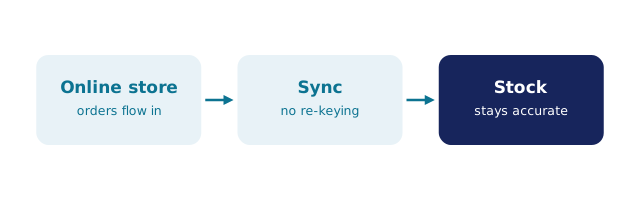
- Remember online is a counter too. Multi-channel stock truth is where most retailers feel the gap first — one record behind both counters beats two systems reconciling weekly.
Retail business management, the wider view maps the whole split for shop-based businesses, and the inventory management pillar shows the full record.
Frequently Asked Questions
Is BSimple a POS system?
No — there is no counter till in BSimple, deliberately. Walk-in transactions need a POS; BSimple is the record behind it: quantities, purchasing, batches, stocktakes and invoicing.
Can BSimple connect to our existing POS?
The record and the till can sit side by side with a clean boundary — the test is whether quantities in BSimple stay true through a trading week that includes till sales. For specific POS integrations, ask us directly rather than assuming; honesty about connections is the point here.
Why do POS products with "inventory" disappoint?
Because they deduct at the till and stop there — no purchasing from demand, no locations beyond the shop, no batches, no stocktake workflow. They record what the counter sold; they do not manage what the business holds.
We sell in-store and online — what is the right setup?
One record behind both: till for the counter, Shopify (imported by webhook in BSimple's case) for online, and live quantities underneath so the channels stop competing for the same units.
What does BSimple cost?
Starter $180, Professional $250 and Organisation $399 per month (AUD), everything in the core plans. The trial runs the record against your real products before any decision.

BSimple