
Guide / retail, without the till
Retail business management software, honestly
Most retail software sold under this name is a till with extras. The missing half is the record behind the shop — stock, purchasing, wholesale supply and the books. Here is the honest split, and where BSimple does and does not belong in it.
The key facts
- Two systems hide behind the name: point-of-sale (the counter) and business management (the record). Retail needs both; vendors usually sell one.
- BSimple does not run a counter: no POS till, and we will not pretend otherwise.
- Where BSimple fits retail: the record behind the store — multi-location stock, purchasing, Shopify order import, customer portals for wholesale buyers, accounting handoff.
- Who it suits: retailers who also wholesale, manufacture or import, and online stores whose stock truth lives outside the storefront.
- 01The key facts
- 02The till and the record are different jobs
- 03Where BSimple fits in a retail operation
- 04Choosing without the all-in-one trap
The till and the record are different jobs
Point-of-sale software is built for the counter: fast transactions, payments, receipts, shift reconciliation. It is genuinely important, and if your day is walk-in customers, a good POS is non-negotiable. But a till does not answer the questions that decide whether a retail business survives: what is on hand across the shop and the stockroom and the second location, what is on order and when it lands, what each supplier actually charged versus quoted, what the wholesale buyers should order next month, and what the books received at the end of it. Those are record questions — and they are where spreadsheets quietly take over between the till and the accountant.
Software sold as "retail business management" usually leans one way or the other. Knowing which way before you buy saves the discovery that your "all-in-one" manages neither half well.
Where BSimple fits in a retail operation
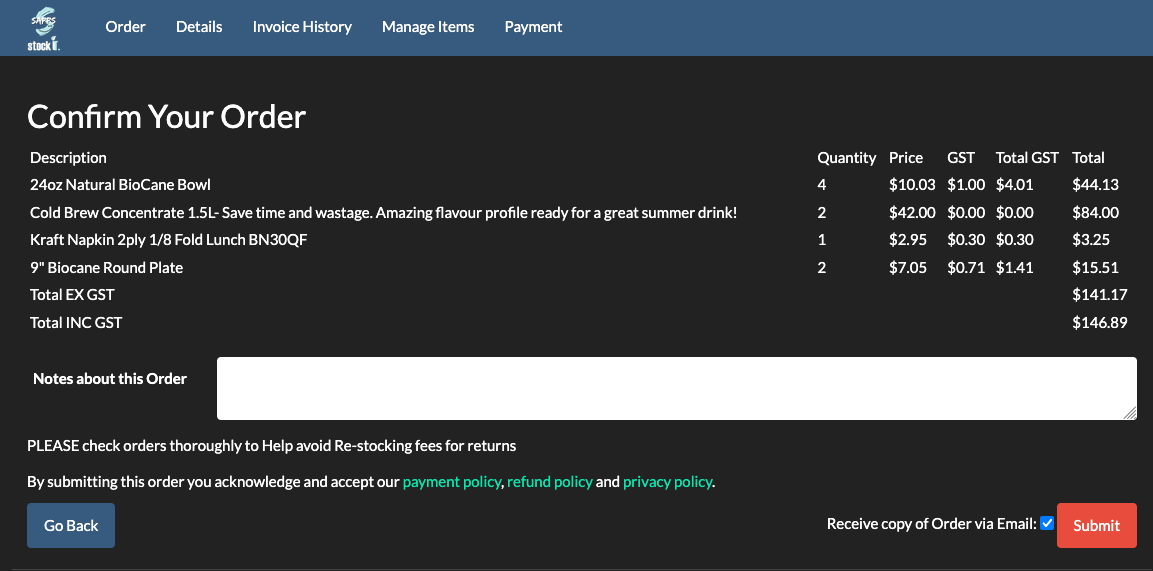
We build BSimple, so weigh that. It is not a till. It is the operations layer behind retail: live quantities across locations, reorder levels that raise purchase orders from demand, multi-level stock where products nest into packaging, batch tracking where provenance matters, and online orders — Shopify imports by webhook — flowing into the same record as everything else. Approved invoices push to Xero or MYOB with payment status mirroring back; US accounting integrations are rolling out. Plans run $180/$250/$399 per month AUD with everything in the core plans.
The retailers who fit best are the ones the pure-POS tools underserve: a store that also manufactures or imports what it sells, a retailer supplying other stores through the customer ordering portal, an online shop whose stock truth must hold across channels. For the counter itself, pair BSimple with the POS you already run — the boundary is clean. Inventory software for retail stores and inventory with POS, compared honestly cover this split from the inventory side.
Choosing without the all-in-one trap
- Name the counter and the record separately. Score the POS on counter speed and payments; score the record on quantities, purchasing and the books. One vendor rarely wins both.
- Ask where the till leaves off. "Syncs with POS" is good — but ask what happens to stock the POS missed, and who reconciles the gaps.
- Check the channels. If you sell online as well as in-store, one record across both is the difference between managing stock and discovering it.
- Test with your stock, not the demo data. The free trial with your real catalogue and a real week beats any matrix.
Small business software solutions sets this choice inside the wider stack, and the inventory management pillar shows what a complete record covers.
Frequently Asked Questions
Is BSimple a POS system?
No. There is no counter till in BSimple — walk-in transactions need a point-of-sale system. BSimple runs the record behind the counter: stock, purchasing, wholesale and online orders, invoicing and the accounting handoff.
Can BSimple work alongside our existing POS?
Yes, as the record the POS feeds and draws from — the boundary is clean because the two systems answer different jobs. The honest test is whether quantities in BSimple stay true through a trading week that includes your POS sales.
We sell online and in-store — does BSimple help?
The online side is covered directly: Shopify orders import by webhook into the same record as everything else, so the store and the shop floor stop competing for the same units. The counter stays with your POS.
We also supply other retailers — is that a fit?
That is wholesale, and it is BSimple's home ground: each buyer gets a portal with their own products and pricing, orders flow into the standard pick-pack-invoice path, and purchasing keeps the supply side honest.
What does it cost?
Starter $180, Professional $250 and Organisation $399 per month (AUD), every feature in the core plans — no separate charge for the portal, production or batch features.
BSimple