
Guide / the category
Enterprise software management tool
The phrase covers everything from genuine integrated suites to repackaged spreadsheets. What an enterprise software management tool should actually hold, the tests that separate real from marketing — and BSimple's corner of the category.
The key facts
- The definition: software that integrates core business functions — stock, orders, purchasing, finance — into one system of record, rather than a collection of tools that disagree.
- The tests that matter: where the record lives, whether state is visible without digging, and whether the accounting handoff finishes without re-keying.
- The honest segmentation: "enterprise" is a stage, not a badge — the tool should match the business's operational stage, not its ambition.
- BSimple's corner: the wholesale-operations layer — inventory, orders, purchasing, production on one record, from $180/month AUD, deliberately not an ERP.
- Context: the full inventory system holds the wider system, this page one stop in it.
- 01The key facts
- 02What the tool should actually hold
- 03The tests that separate real from marketing
- 04BSimple's corner of the category
What the tool should actually hold
Strip the category marketing and an enterprise software management tool earns the name by holding one record across the functions that spend or make money: live stock across locations, orders as stateful records through fulfilment, purchasing raised from demand and reconciled against receipts, and a clean handoff to the accounting system. Around that record sit the working surfaces — lists that carry their own state, forms that refuse bad data, reports that answer "what needs action" rather than "what happened last quarter".
The category's honest dividing line is not feature count but record count. A suite that holds stock, orders and purchasing as one truth with an audit trail qualifies, however modest its interface. Five tools connected by exports do not, however enterprise the pricing — the enterprise-software landscape maps that distinction in detail.
The tests that separate real from marketing
The race test. Two users take the last unit at once — the record must resolve to one sale and one clean rejection, at the database level, not by optimism.
The cancellation test. A reserved order cancels; the stock must return to promiseable immediately, with no phantom allocations left behind. The failure paths are where implementations live or die.
The handoff test. One invoice reaches the accounting system with tax codes intact, and payment status mirrors back — count the manual steps, because that count is the tool's true operating cost.
The adoption test. Time-to-first-real-order in days, not months, at the small-to-mid scale. Implementation weight that the operation cannot absorb is a tax collected before any benefit arrives. The operations-tools examples show what passing looks like in practice.
BSimple's corner of the category
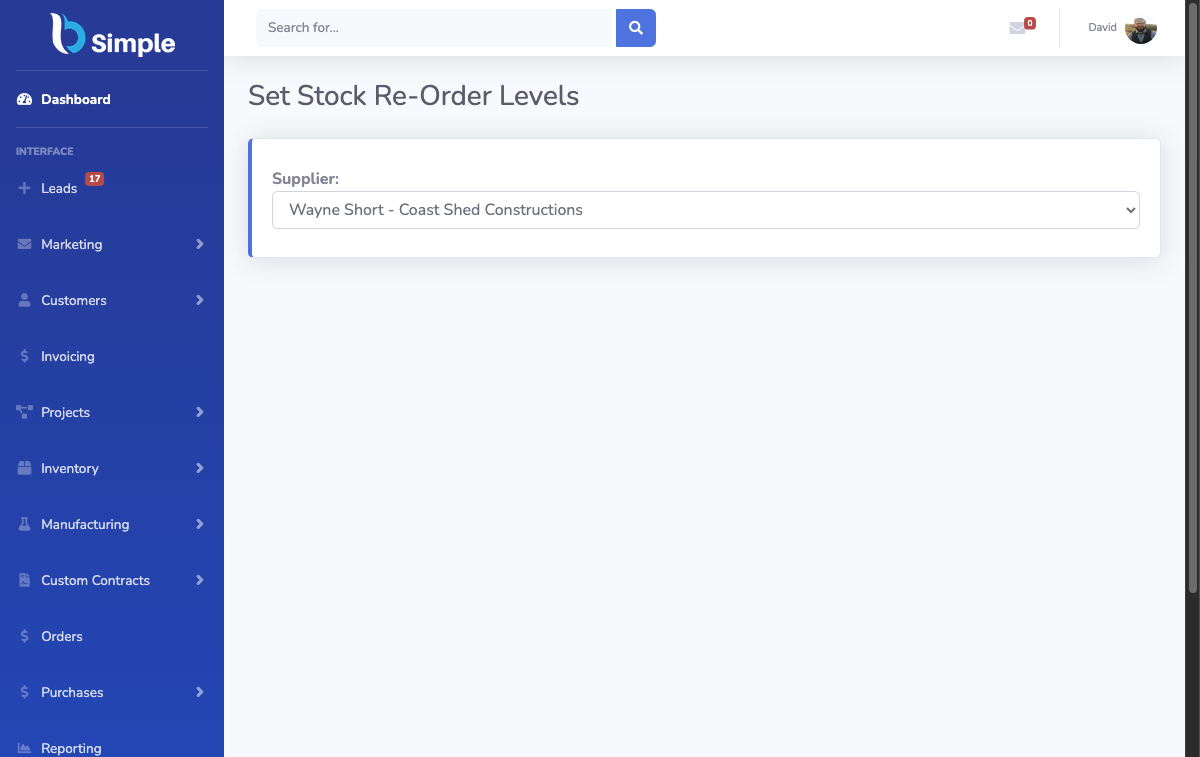
We build BSimple, so weigh that: it is an operations tool for wholesale, manufacturing, distribution and trade businesses — live multi-location inventory, batches and traceability, recipes and production runs, purchasing with variance flags, customer ordering portals, orders through pick-and-pack to invoices in Xero or MYOB (US integrations rolling out), plus a public REST API and MCP endpoint. It is deliberately not an ERP: no HR, no payroll, no MRP scheduling — the subjects that mark the enterprise-suite border.
Pricing matches the positioning: $180/$250/$399 AUD monthly, every feature in the core plans, and the trial as the full product — so the four tests above can be run on your own products before anything is spent. For the stage above this one, the ERP boundary describes what changes; for the stage below, the honest advice is a disciplined spreadsheet until the record must be trusted by a second person.
Frequently Asked Questions
What is an enterprise software management tool?
Software that holds core business functions — inventory, orders, purchasing, finance handoff — as one integrated record, rather than tools joined by exports. The category ranges from genuine suites to repackaged spreadsheets; the record is the test.
How is it different from basic inventory software?
Breadth and integration: inventory software keeps the stock record; an enterprise tool connects that record to orders, purchasing and accounting so the functions cannot disagree. The connection — one record, not exports — is the difference that matters.
What should I test before buying one?
Four things: the race for the last unit, the cancelled reservation, the invoice-to-accounting handoff, and time to your first real order. All four run on a trial with your own products in an afternoon.
Does my business need an "enterprise" tool?
It needs the record, whatever the label. Businesses at the wholesale-operations stage need stock truth, purchasing discipline and order flow; the enterprise-suite subjects — HR, payroll, MRP — wait for scale that most businesses never reach.
What does BSimple cost?
$180/$250/$399 AUD monthly with every feature in the core plans — no module paywalls. The trial is the full product, so the category's claims can be tested on your data rather than trusted on its marketing.
BSimple