
Guide / choosing a vendor
What do business solutions companies actually sell?
"Business solutions" covers software vendors, consultancies and implementation partners. Here is how the landscape breaks down — and how to choose who to buy from.
The facts about business solutions companies
- The label hides four trades: software vendors, consultancies, implementation partners and managed service providers.
- What you are really buying varies: a product, advice, configuration labour, or someone to call when it breaks.
- The strongest signal of a good vendor is a plain statement of who the product is for and where it stops.
- Software vendors with published pricing respect small businesses; quote-only pricing is a size signal in both directions.
- BSimple is a software vendor, not a consultancy — operations software for product businesses, from $180/month (AUD), Australian-built and supported.
- The full picture: how the inventory record works is the hub page for everything above.
- 01The facts about business solutions companies
- 02The four kinds of company behind the label
- 03How to judge a solutions company in twenty minutes
- 04Matching the vendor to the problem
- 05Where BSimple sits in the landscape
The four kinds of company behind the label
Software vendors build and sell a product — the licence, the updates, the support line. BSimple is one of these. The product either fits your workflow or it does not; no amount of consulting changes that.
Consultancies sell judgement: process reviews, system selection, transformation roadmaps. Valuable when the problem is genuinely unknown; expensive when the problem is a stockroom that cannot keep count.
Implementation partners configure and migrate. Essential for ERP-scale projects; for SMB systems, the vendor's own onboarding is usually enough — a red flag if it is not.
Managed service providers run your IT — hosting, security, helpdesk. Adjacent to the software decision, not part of it.
Knowing which you need prevents the classic mistake: paying consultancy rates to solve what a fourteen-day trial would have answered.
How to judge a solutions company in twenty minutes
Read the boundaries first. A vendor who states plainly who the product fits — trade, size, integrations — and where it stops is telling you the truth somewhere checkable. Vagueness ("solutions for every business") is the cheapest marketing to print and the most expensive to act on. Our definition guide is an example of the genre: it draws the ERP line even though it costs us some searches.
Ask who answers the phone. Product knowledge at the support line is worth more than a bigger feature grid. Local presence matters for hours and context — an Australian vendor understands BAS time and EOFY stocktakes without explanation.
Ask what happens after the sale. Training, migration help, and who owns your data if you leave. Then check pricing is published: the comparison of business management options exists precisely because too many vendors hide theirs.
Matching the vendor to the problem
Different problems point to different trades. If the problem is operational — orders re-keyed, stock oversold, invoices retyped — buy software, and buy it from a vendor who serves your industry. If the problem is organisational — nobody agrees on the process, three systems compete for the same job — advice first, software second; buying a tool to settle an argument usually settles nothing. If the problem is scale, the honest answer may be a bigger platform with an implementation partner, priced and planned accordingly.
For product businesses in wholesale, manufacturing, distribution and trade, the operational problem is the common one — which is why operations-first software is where the search usually lands. The business software overview maps that category, and the operations examples page shows the patterns in practice.
Where BSimple sits in the landscape
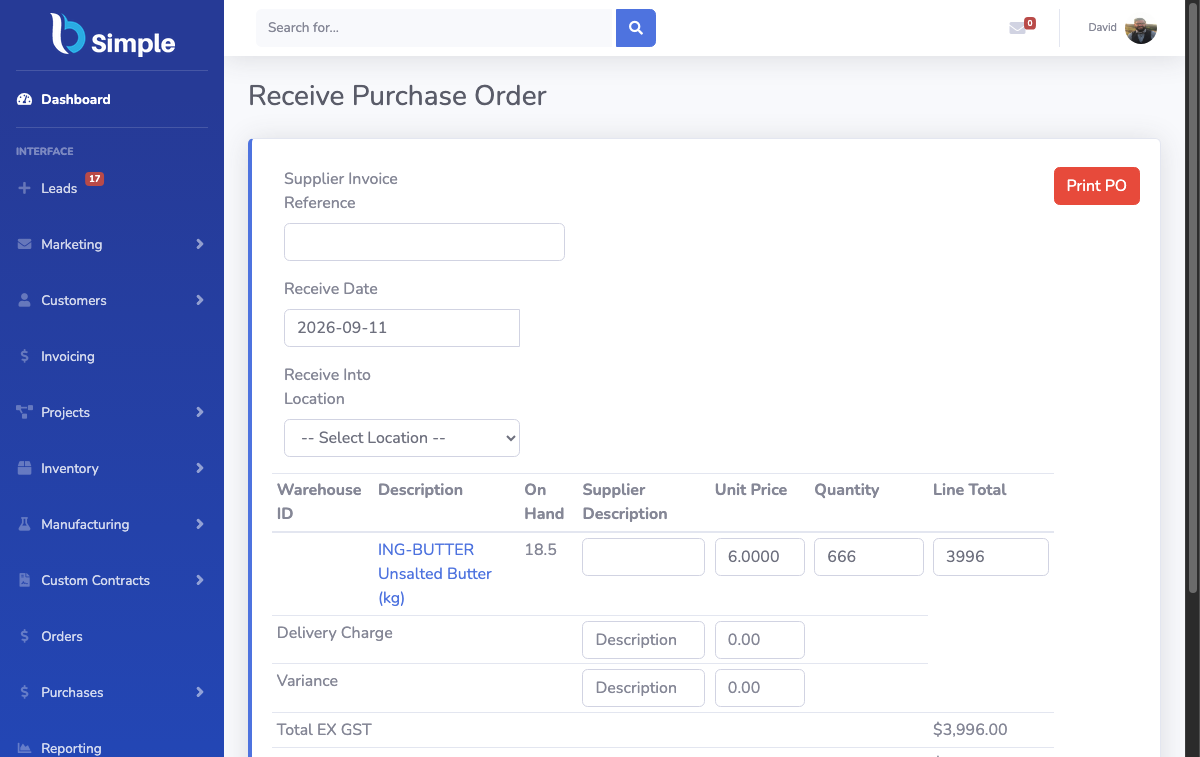
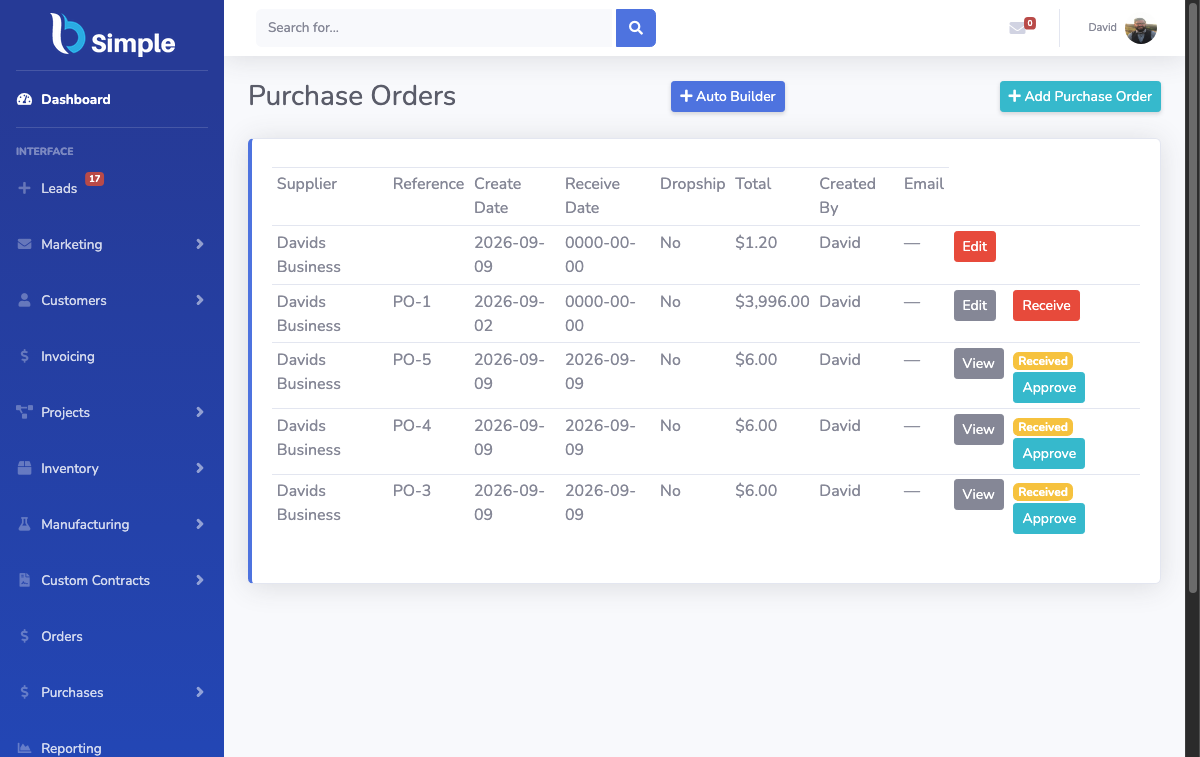
We build BSimple, so weigh that. We are a software vendor — not a consultancy or an agency — selling one product: business management software that runs inventory, orders, purchasing, invoicing and a customer portal on one record, with accounting handed to Xero or MYOB. Australian-built, cloud-based, priced publicly from $180/month (AUD), with a free trial instead of a sales gauntlet. The business data management page shows the product in motion.
The boundaries we state to every buyer: no HR or payroll, no MRP scheduling, no built-in storefront, and no on-premise edition. If your problem is process advice, hire a consultant — genuinely. If your problem is that the operational core of a product business runs on spreadsheets and inboxes, start the trial and let the product answer.

Frequently Asked Questions
What does a business solutions company do?
Depending on the company: builds and sells software, advises on processes and systems, configures and migrates platforms, or runs IT as a managed service. The label alone tells you little — ask which of the four trades they actually practice.
How do I choose between a consultancy and a software vendor?
By the problem. If the workflow is understood but manual, buy software — a trial answers the fit question directly. If the workflow itself is unclear or contested, buy advice first; software purchased to settle a process argument rarely does.
Why does published pricing matter so much?
It respects your time and signals who the product is sized for. BSimple publishes plans from $180/month (AUD); quote-only pricing usually means enterprise sales motions, where a small business pays for the sales process as well as the product.
What questions should I ask before signing with any vendor?
Who supports us after go-live, what does migration involve, where does the product stop, who owns the data if we leave, and can we trial with our own products first. Vendors who answer all five plainly are rare and worth shortlisting.
Is BSimple a business solutions company?
In the narrow sense — a software vendor solving one operational problem well. We do not sell consulting hours or run your IT; we build and support operations software for product businesses, and the free trial is how we suggest you judge that claim.
BSimple