
Guide / for students
A business management systems course — what it should cover
A syllabus for the topic: the records a business keeps, the models that keep them true, the seams between systems — and the hands-on component no course should skip.
The key facts
- The syllabus spine: the records a business keeps (money, stock, orders, people), the models that keep them true, and the seams between systems.
- The models worth teaching: movements over totals, order state machines, reorder maths, audit and attribution — all testable in exercises.
- The hands-on component: build a small movement-based record, or trial a real product on real data — observation alone does not teach this domain.
- BSimple in a course: a worked example of the operations record — the trial is free for coursework, though BSimple itself is commercial.
- 01The key facts
- 02The syllabus spine
- 03The hands-on component — and the assignment that works
The syllabus spine
Module 1 — the records. What truths a business keeps: money (accounting), stock and orders (operations), people (HR), demand (channels). The module teaches the category map and why one-record-per-truth beats one-mega-system.
Module 2 — the models. The movement model (append-only facts, derived quantities), order state machines, reorder points and safety stock, batch genealogy and traceability. These are the ideas that make systems trustworthy — the class-diagram material and the ER reasoning are the formal versions.
Module 3 — the seams. Accounting ↔ operations handoffs (one-way reviewed documents, status mirroring back), channel ↔ operations (webhook intake, idempotency), people ↔ operations (attribution and roles). The seams are where implementations actually fail — the boundary design is the worked example.
Module 4 — measurement. Accuracy, fill rate, adjustment frequency, cycle time — the KPI set and the cadence that keeps measurement alive.
The hands-on component — and the assignment that works
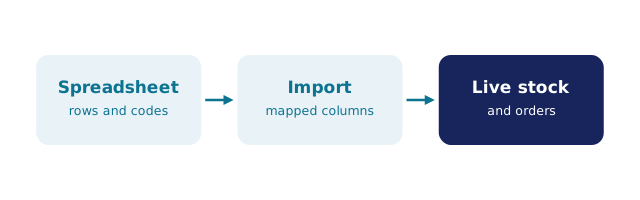
Observation does not teach this domain; recording does. The assignment that works: run a real record for a month — a spreadsheet movements log for a small business or student society, with a weekly count and a variance-explanation report. Every concept in the syllabus appears: the movement model (as architecture), counting (as discipline), the seams (as the bookkeeper asking questions).
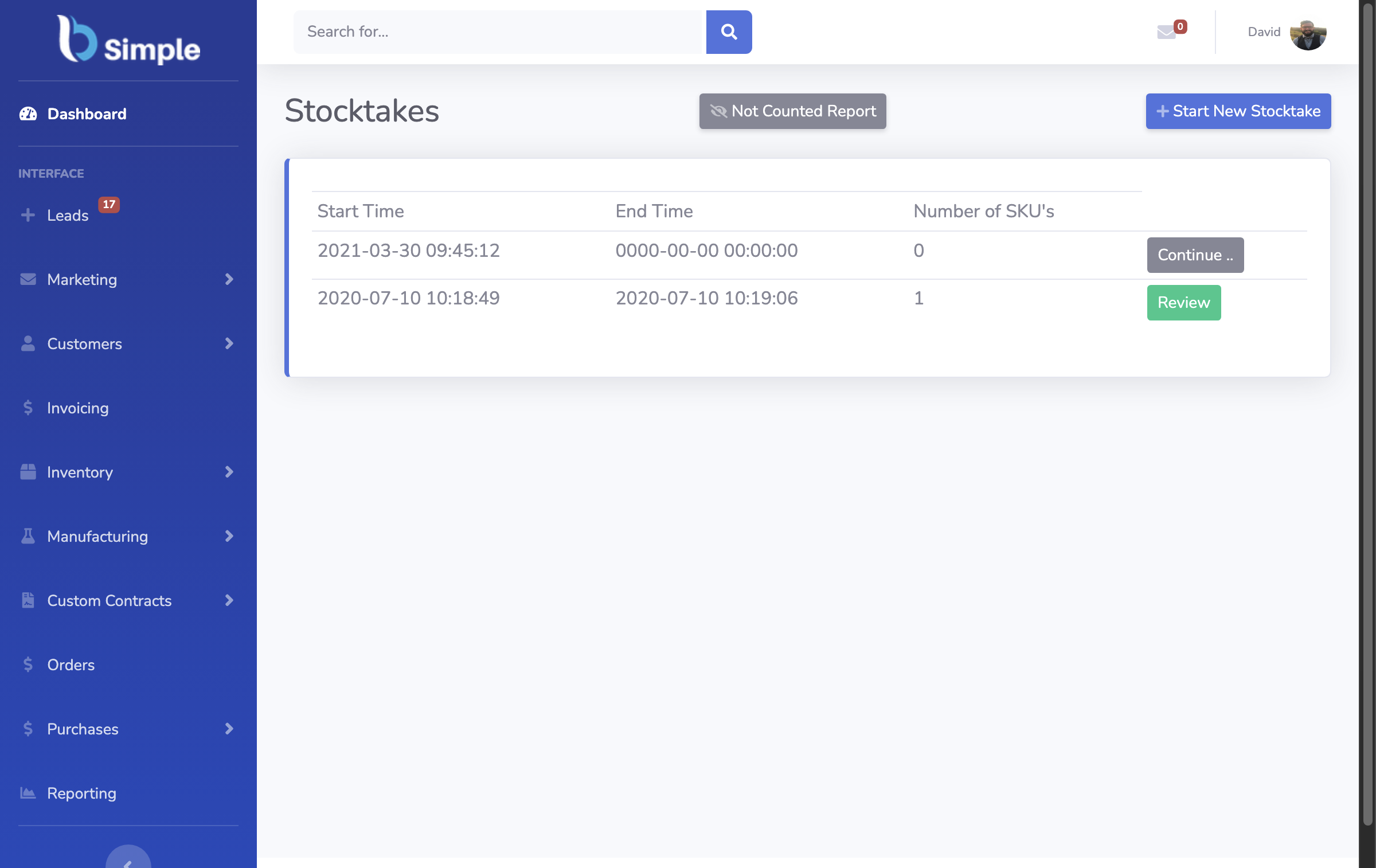
For the software module, trial a real product with real data instead of reading vendor pages — load products, run orders and counts, and grade the four-question test. BSimple offers its full product free for exactly this (the trial), as do most vendors in the category; the coursework value is identical whichever you use, and the comparison between two trials teaches more than either alone. The questionnaire page provides the evaluation instrument.
Frequently Asked Questions
What does a business management systems course cover?
The records a business keeps, the models that keep them true (movements, state machines, reorder maths), the seams between systems, and the measurement that keeps them honest — with a hands-on record-keeping component, which is where the learning actually happens.
Do I need to code to study business management systems?
No — the concepts are testable in spreadsheets and trials. Coding helps builders understand constraints; buyers and analysts need the model literacy (movements, states, seams) more than syntax.
Is BSimple available for coursework?
Its trial is the full product and free, which is what coursework needs — the software is commercial, not open source, and the trial licence terms should be checked for publication use.
What is the single most important concept in the domain?
Movements over mutable totals: recording every change of quantity as an attributable fact. It underpins audit, concurrency, traceability and every honest report — and it is the concept tutorials most often skip.
How should the course be assessed?
On a working record plus a variance report, not on feature vocabulary. A month of honest record-keeping — with the variances explained — demonstrates more competence than any exam answer.

BSimple