Best Order Management Software For Shopify Connected to Your Workflow
Best Order Management Software For Shopify connected to BSimple's inventory and order management. Automatic syncing, real-time updates, seamless Xero integra...
- Seamless Xero integration syncing orders, inventory, and financial data automatically for complete accounting accuracy
- Real-time inventory tracking across multiple sales channels preventing overselling and negative stock situations
- Customer ordering portals allowing wholesale buyers 24/7 access to stock levels and order placement capabilities
- Automated purchase order generation triggered by stock levels with intelligent reorder point calculations
- Negative inventory tracking and stocktake management tools simplifying EOFY reconciliation and GST compliance
- Multi-channel order consolidation bringing Shopify, wholesale, and direct sales into one unified system
- Supplier management and purchase order tracking ensuring supply chain visibility and cost control
Finding the best order management software for Shopify is crucial for wholesale, manufacturing, and distribution businesses looking to scale efficiently — see also our Inventory Management Software for the full picture, while our order management software guide covers the bigger picture and order management software for Shopify digs into the Shopify-specific setup. When you're running a Shopify store alongside wholesale operations, you need more than just basic order tracking. You need a system that understands your business model, integrates seamlessly with your existing tools, and actually saves you time instead of creating more admin work.
The challenge most Australian SMBs face is that Shopify works brilliantly for taking orders, but it doesn't handle the complexities of managing inventory across multiple channels, automating purchase orders to suppliers, or syncing financial data with your accounting system. That's where a dedicated order management solution comes in. The right software bridges the gap between your Shopify storefront and your backend operations, ensuring orders flow smoothly from customer purchase through to fulfilment and financial reconciliation.
Whether you're a Sydney coffee roaster selling wholesale beans online, a Melbourne brewery managing Shopify orders alongside hospitality accounts, or a distribution business juggling multiple sales channels, you need order management software that works with your workflow, not against it. BSimple has been built specifically for Australian businesses like yours, with features designed around how wholesale and manufacturing operations actually work in practice.
Why Shopify Alone Isn't Enough for Wholesale Operations
Order management software for Shopify does far more than simply organise your orders. It's the nervous system connecting your customer-facing storefront to your warehouse, suppliers, and accounting systems. When integrated properly, it eliminates manual data entry, reduces picking and packing errors, and gives you real-time visibility into what's happening across your entire operation.
For wholesale businesses particularly, Shopify alone creates a significant limitation: it doesn't track inventory across multiple sales channels, it can't automatically generate purchase orders when stock runs low, and it certainly won't sync your orders directly to Xero for accounting purposes. This means you're either manually entering data multiple times (error-prone and time-consuming) or you're using disconnected systems that don't talk to each other.
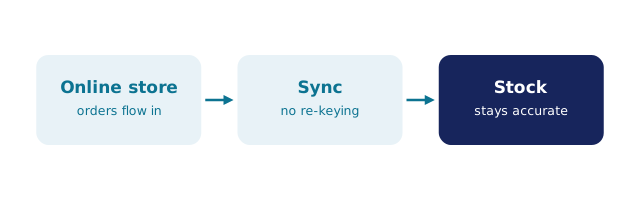
The best order management software for Shopify solves these problems by creating a unified workspace where orders, inventory, and financial data all flow together. Imagine receiving a Shopify order in the morning, having your system automatically check stock levels across your warehouse, generate a purchase order to your supplier if needed, and then sync the entire transaction to Xero by end of business — all without you touching a keyboard. That's not fantasy; that's what modern order management actually does.
For Australian businesses managing EOFY stocktakes or GST compliance, this integration becomes even more valuable. You're not scrambling to reconcile Shopify data with your accounting records because they're already synchronised. Your stock counts are accurate because negative inventory tracking prevents overselling, and your financial reporting is clean because every order flows through your system of record.
Real-time Inventory Visibility and Control
Real-time inventory visibility is where order management software truly earns its place in your tech stack. When you're selling through Shopify, a marketplace, and direct wholesale channels simultaneously, inventory management becomes genuinely complex. Without proper software, you risk overselling — a customer orders through Shopify, but you've already committed that stock to a wholesale account. The customer gets disappointed, you get a refund, and your reputation takes a hit.
BSimple's approach to inventory management prevents this through real-time synchronisation. Every time an order comes in through Shopify, stock levels update instantly across all your sales channels. If you only have ten units of a product and you're selling through three different channels, the system ensures that once those ten units are committed, no other channel can sell them. This is particularly important for manufacturing businesses where production runs are scheduled weeks in advance — you can't afford to oversell and then scramble to manufacture extra stock.
The negative inventory tracking feature is equally important. Sometimes you need to allocate stock for specific wholesale customers or reserve inventory for upcoming orders. Rather than pretending stock doesn't exist, BSimple lets you track negative inventory, so you know exactly what's spoken for and what's actually available. This prevents the chaos of double-booking and gives you accurate visibility into your true available stock.
For stocktake management during EOFY, this real-time visibility becomes invaluable. Instead of conducting a massive physical count and then trying to reconcile it with your system (which inevitably shows discrepancies), you're continuously counting and adjusting. By the time EOFY arrives, your stocktake is largely complete, your GST records are accurate, and you're not burning the midnight oil trying to get your books in order.
Customer Ordering Portals That Actually Work
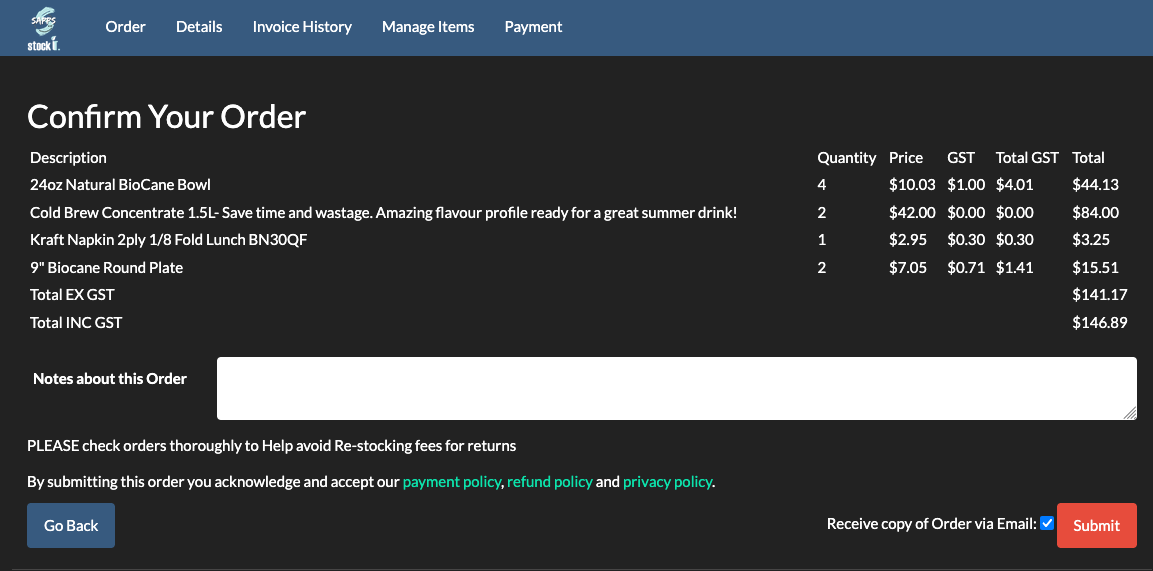
Customer ordering portals represent a significant shift in how wholesale businesses operate. Rather than managing orders through emails, phone calls, and spreadsheets, your wholesale customers log into a portal, see current stock levels, place orders, and track deliveries themselves. This sounds simple, but it fundamentally changes your business operations.
When a Melbourne brewery can log into your customer portal at 11 PM and place an order for their next day's delivery, you're operating 24/7 without increasing your staff. When they can see real-time stock levels and know exactly what's available, they stop calling you asking about availability. When they can track their order status and expected delivery, support requests drop dramatically. This is automation that actually matters because it reduces friction in your customer relationships.
BSimple's customer ordering portal integrates directly with your Shopify data and inventory system. Your customers see the same stock levels you see; there's no discrepancy between what the portal shows and what you can actually deliver. They can set up recurring orders for regular products, reducing the number of individual transactions you process. They can even upload their own purchase orders, which the system can automatically convert into your internal orders.
The financial benefits are real. You're reducing manual order processing time, minimising order errors (customers enter their own details), and improving cash flow because orders are processed faster. For wholesale businesses operating on thin margins, these efficiency gains compound quickly. A Sydney coffee roaster managing fifty wholesale accounts through a portal instead of manual emails saves hours every single week — time that can be spent on growing the business rather than processing orders.
Automated Purchase Orders and Supply Chain Efficiency
Automated purchase order generation is where order management software starts paying for itself. Most wholesale and manufacturing businesses operate on a simple principle: when stock drops below a certain level, you need to reorder from your supplier. Without automation, this means someone manually checking stock levels, working out what to order, emailing suppliers, and tracking responses. It's tedious, error-prone, and it's exactly the kind of task that computers excel at.
BSimple automates this entire process. You set reorder points for each product based on your sales velocity and supplier lead times. When stock drops to that level, the system automatically generates a purchase order to your nominated supplier. You review it, adjust quantities if needed, and send it — all within seconds rather than hours. For businesses with hundreds of SKUs, this is genuinely transformative.
The intelligence goes deeper than simple thresholds. The system factors in your sales trends, upcoming orders, and supplier lead times to calculate optimal order quantities. If you're a manufacturing business with seasonal demand, it learns those patterns and adjusts reorder points accordingly. If you have a supplier with a four-week lead time and another with one week, it accounts for that difference. This is just-in-time inventory management that actually works in practice, not just in theory.
Integration with Xero means these purchase orders automatically flow into your accounting system. Your supplier invoice matches your purchase order, your stock receipt updates your inventory, and your accounts payable records are automatically created. For Australian businesses managing GST compliance, this audit trail is invaluable. You've got complete visibility into your supply chain costs, and your financial records are accurate and complete.
Frequently Asked Questions
Can BSimple order management software integrate with my existing Shopify store?
Yes, BSimple integrates directly with Shopify, automatically syncing orders, customer data, and inventory levels. When you receive a Shopify order, it flows into BSimple for processing, picking, packing, and dispatch. Your stock levels update in real-time across both systems, preventing overselling.
How does BSimple connect to Xero for accounting?
BSimple syncs directly with Xero, automatically creating invoices, purchase orders, and inventory adjustments. Your orders flow from Shopify through BSimple to Xero, creating a complete audit trail. This is particularly valuable for EOFY stocktakes and GST compliance, as all financial records are automatically reconciled.
What's the difference between order management and inventory management software?
Order management focuses on processing customer orders from placement through delivery. Inventory management tracks stock levels, locations, and movements. BSimple combines both, so your orders automatically update your inventory, and your inventory visibility informs order processing decisions.
Can I use BSimple for wholesale and Shopify sales simultaneously?
Absolutely. BSimple manages multiple sales channels in one system. Your wholesale portal, Shopify store, and direct sales all feed into unified inventory and order processing. This prevents overselling across channels and gives you complete visibility into your entire business.
How does negative inventory tracking work in BSimple?
Negative inventory tracking lets you allocate stock for specific customers or reserve inventory for upcoming orders without hiding it from your system. You see exactly what's committed versus what's available, preventing double-booking and improving accuracy in your order fulfillment.
Does BSimple help with EOFY stocktakes and GST compliance?
Yes. Real-time inventory tracking, continuous stocktake management, and complete Xero integration mean your records are accurate throughout the year. By EOFY, your stocktake is largely complete, and your GST records are already reconciled, significantly reducing end-of-year admin burden.
What kind of businesses benefit most from order management software?
Wholesale distributors, manufacturers, and businesses selling through multiple channels benefit most. If you're managing Shopify alongside wholesale accounts, or coordinating orders with production schedules, order management software eliminates manual processes and prevents costly errors.