
Guide / evaluating vendors
Choosing between inventory software vendors
The vendor landscape is loud; the evaluation process is quiet. Here is the sequence that separates fit from marketing — with BSimple judged by the same rules it recommends.
The short answer
- Shortlist by category first — spreadsheets, free tools, POS-attached, SMB systems, ERPs — then by vendor inside the right category.
- Trial with your own data, not the vendor's demo set; three trials is the honest ceiling.
- Run the same tests on every vendor: the one-record demo, the accounting handoff, the exceptions, year-two cost, the exit.
- BSimple welcomes that process — the free trial is your data, your workflow, your verdict.
- Context: the full inventory system holds the wider system, this page one stop in it.
- 01The short answer
- 02The evaluation sequence that works
- 03Support and references, weighed honestly
- 04Where BSimple fits
The evaluation sequence that works
Pick the category before the vendor. A wholesale or distribution business evaluating POS tools has skipped a step; the categories sort first, vendors second — the inventory software list covers that layer. Shortlist three. Enough to compare, few enough that trials stay distinct in memory. Trial with your own data. Demo catalogues are choreographed; your real products, real quantities and real orders expose what choreography hides. Score the same five tests every time, because memory inflates whichever vendor demoed last.
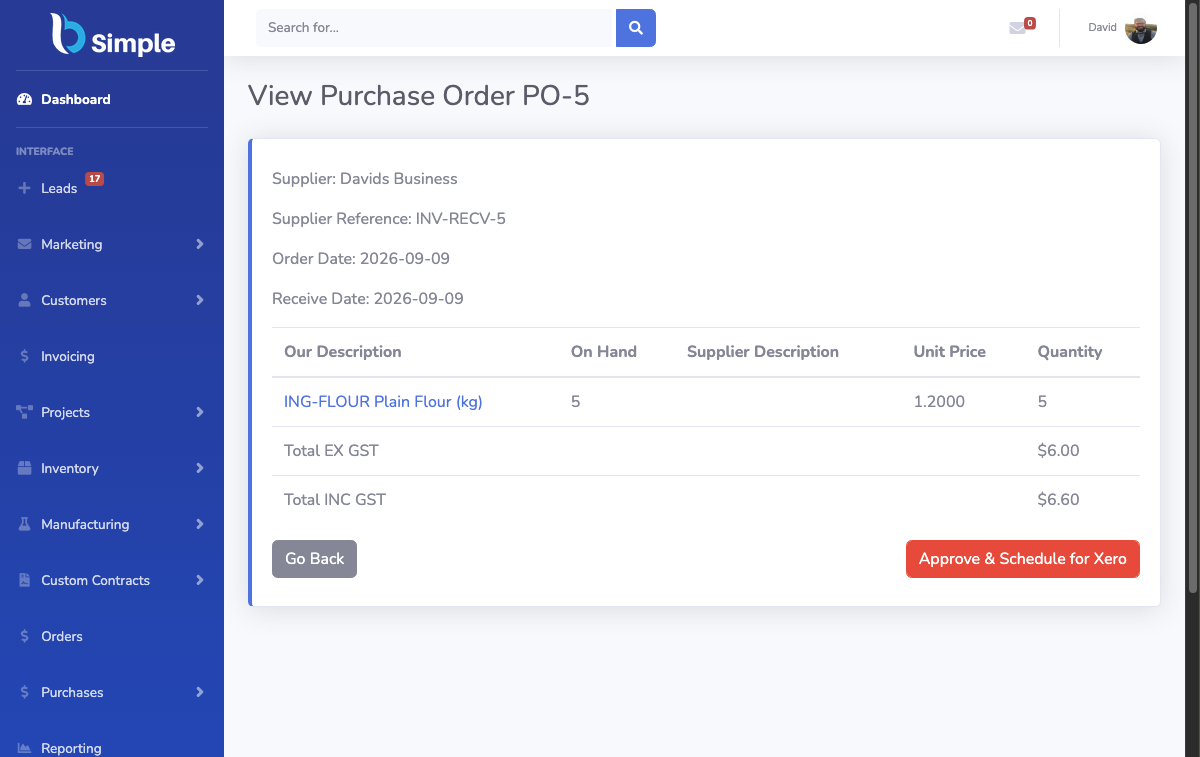
The five tests: the one-record demo (stock, orders and invoices as one record — ask them to show, not assert); the accounting handoff (invoices push on approval, payment status mirrors back — watch it live); the exceptions (partial shipment, backorder, cancellation — the workflow's honesty lives here); the year-two bill (licences, users, modules, metered extras — BSimple's is the plan price, with SMS the only metered extra at $0.20 a segment); and the exit (can you export products, customers and history in a usable format — a vendor confident in its product answers instantly).
Support and references, weighed honestly
Test support before you are a customer: a pre-sales question sent through the real channel measures response time and depth — the same channel you will use in year one. Ask who answers: people who run the product or a queue that escalates. Australian businesses should weigh Australian hours; a 3am ticket reply from the other hemisphere is worth exactly what it costs. Treat vendor references as data, not proof — every reference is a hand-picked success. Weight independent signals higher: the public API and its scopes (BSimple publishes read projections for suppliers, locations, PAR, reorder, stocktakes, purchase orders and transfers), the quality of documentation, and whether the roadmap answers to customers or to a quarterly story.
None of this replaces the trial. It orders the shortlist so the trial measures the right things.
Where BSimple fits
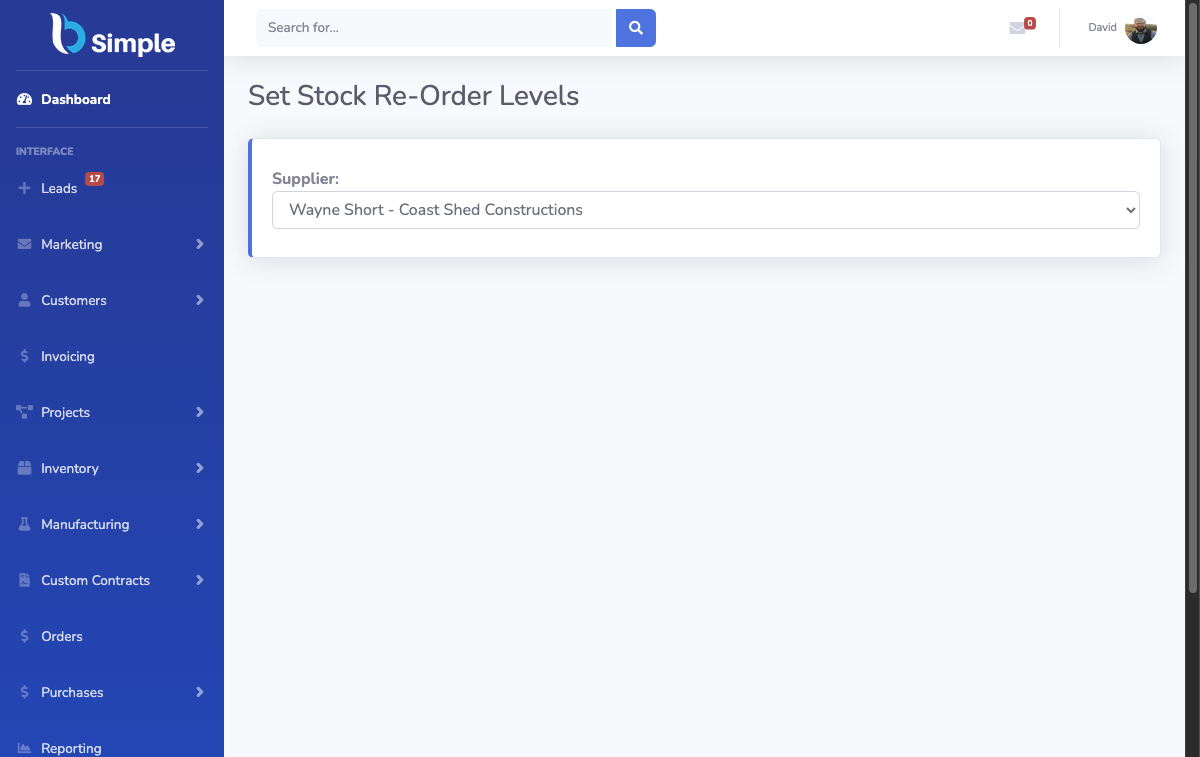
We build BSimple, so weigh that — and then run the process on us anyway. The category is SMB business management for wholesale, manufacturing, distribution and trade businesses: one live record across stock, orders, purchasing and invoicing, a customer ordering portal, batch and lot traceability, recipes and production in the core plans, accounting handed to Xero or MYOB with US integrations rolling out, from $180/month (AUD). The vendors-and-companies landscape maps where we sit among the four kinds of company, and the stock software list frames the alternatives.
Where we lose on purpose: if you need ERP breadth, retail POS or HR in-suite, we are not your vendor — and the process above will tell you that quickly, which is its job.
Frequently Asked Questions
How many vendors should we trial?
Three. Two leaves you deciding between alternatives rather than against criteria; four or more and the demos blur into each other. Three, scored on the same five tests with your own data, produces a decision you can still defend a year later.
What is the most important question to ask a vendor?
"Show me one record across stock, orders and invoices." The answer separates architecture from assembly: vendors with one record demonstrate it in seconds; vendors with synced modules start explaining integration schedules — which is where the reconciliation labour in year two comes from.
How do we compare prices honestly?
Price year two, all in: base plan, per-user or per-transaction extras, module add-ons, and the labour the gaps leave behind. BSimple prices plans from $180/month (AUD) with recipes, portal and batch tracking included; SMS is metered at $0.20 per segment. Flat and legible beats cheap and contingent.
Is BSimple harder to evaluate because you build it?
It is exactly why to run the process: our bias is declared, so the trial carries the weight. Load your own products, run the exceptions, check the export, price year two. We would rather be chosen by a tested decision than a good first meeting — the tested customers are also the ones who stay.

BSimple