
Guide / the discipline, defined
What is inventory and stock management?
Two names, one discipline: keep the physical stock true and the commercial decisions honest — quantities accurate, buying deliberate, selling deliverable. Here is the whole picture.
The short answer
- Stock management is the physical half: quantities on hand, movements recorded, counts verified — the guardrails.
- Inventory management is the commercial half layered on top: what to buy, what stock is worth, what sells and what sits.
- They are one discipline on one record — split them and the two views drift into arguments.
- BSimple runs both for small-to-medium product businesses, from $180/month (AUD).
- 01The short answer
- 02The physical half: stock management
- 03The commercial half: inventory management
- 04Where BSimple fits
The physical half: stock management
Stock management keeps the shelf and the record saying the same thing. Its verbs: receive — goods counted in against the purchase order that brought them; move — transfers between locations with a trail; pick — orders taking units from real quantities; count — stocktakes and cycle checks that verify rather than discover; protect — negative-stock guardrails so impossible promises cannot be recorded. Its output is trust: a quantity you can act on without checking the shelf first.
The failure mode is drift — a record that was right at the last count and wrong since. That is why the physical half is a habit, not an event: movements recorded at the moment they happen, counts run often enough that drift never compounds. The stock management definition covers this half in system terms.
The commercial half: inventory management
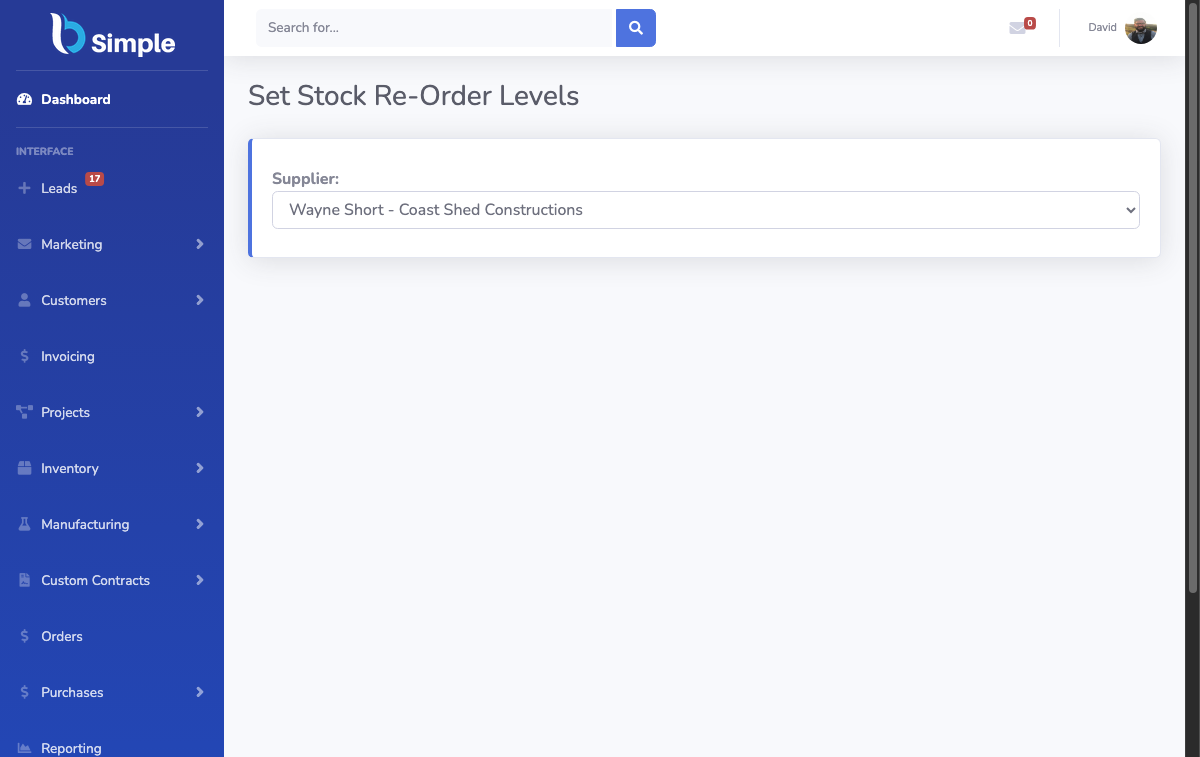
Inventory management makes the stock pay. Its verbs: buy deliberately — reorder and par levels turning demand into purchase orders, supplier invoices reconciled; sell deliverably — orders promising only what allocation allows, delivery dates grounded in the record; value honestly — knowing what the stock is worth, which lines earn their shelf space and which tie up cash; account cleanly — invoices carrying the record into Xero or MYOB, payment status returning.
The two halves are one discipline because they read the same numbers. A commercial decision made on drifted quantities is a guess; a physical count without the commercial layer is tidiness without direction. Software exists to keep both halves on one record — the vocabulary page separates the terms, and the inventory management overview shows the record in practice.
Where BSimple fits
We build BSimple, so weigh that. It runs both halves for small-to-medium wholesale, manufacturing, distribution and trade businesses: live multi-location quantities with guardrails, movement history behind every number, counts from any phone browser — and reorder levels, purchase orders from demand, a customer ordering portal, batch traceability, invoicing to Xero or MYOB on the same record. Plans start at $180/month (AUD), and the free trial tests the discipline against your own stock.
The boundary, plainly: not an ERP — no HR, payroll or MRP scheduling — and not a replacement for the accounting system. The software types guide shows where it sits among the categories.
Frequently Asked Questions
Is there a difference between inventory and stock?
In practice the words swap freely, and most systems use both. If a line helps: stock leans to goods on hand; inventory includes everything owned for sale — in transit, work in progress. The discipline is identical either way: true quantities, deliberate buying, deliverable selling.
Which comes first, physical or commercial?
Physical — nothing commercial survives a record nobody trusts. Reorder levels are meaningless if quantities drift; customer promises are guesses. Get receiving, movements and counts honest first, and the commercial layer (levels, purchasing, valuation) has something true to stand on.
How often should stock be counted?
Often enough that drift never compounds: cycle counts by section on a rolling basis, with the EOFY count as confirmation. The phone-browser counts in BSimple exist because the habit only holds if counting takes minutes in the aisle rather than days at the end of the year.
Can we manage both halves in a spreadsheet?
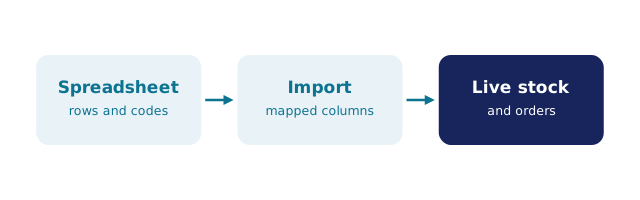
The physical half, briefly, for one person. The commercial half needs levels, allocation, purchasing and the accounting handoff — which is workflow, and workflow is what a spreadsheet cannot hold. The honest sequence is spreadsheet until the first structural failure, then a system like BSimple.

BSimple