
Guide / definitions
Inventory, and inventory management software, defined
Inventory is the stock a business owns with the intention to sell. Inventory management software is the system that keeps one live record of it. Here is the full meaning, plainly.
The short answer
- Inventory is everything a business owns for sale or for making what it sells — finished goods, components, packaging, and goods in transit.
- Inventory management is keeping the right stock in the right place at the right quantity — buying, storing, moving, counting and selling it deliberately.
- Inventory management software is the system that keeps one live record of all of it: quantities, locations, movements, values — connected to orders, purchasing and accounting.
- BSimple is such a system, built for wholesale, manufacturing, distribution and trade businesses from $180/month (AUD).
- 01The short answer
- 02What inventory means — the two senses worth separating
- 03What the software actually does with the word
- 04Where BSimple fits
What inventory means — the two senses worth separating
The accounting sense: inventory is an asset on the balance sheet — stock valued at whatever it cost, waiting to become revenue. This is the sense your accountant works with, and at year end it must reconcile to a physical count.
The operations sense: inventory is the stuff on the shelves, in the vans, on the production floor and on the water — each unit somewhere, each movement a decision made about it. This is the sense your warehouse team works with, daily.
Software matters because the two senses are the same objects described differently, and keeping them aligned by hand is the reconciliation treadmill every growing business discovers. A system that holds one record serves both senses at once: the shelf quantity and the balance-sheet value are two views of the same data. The fuller inventory explainer takes this apart further, and the stock management definition covers the operational sibling.
What the software actually does with the word
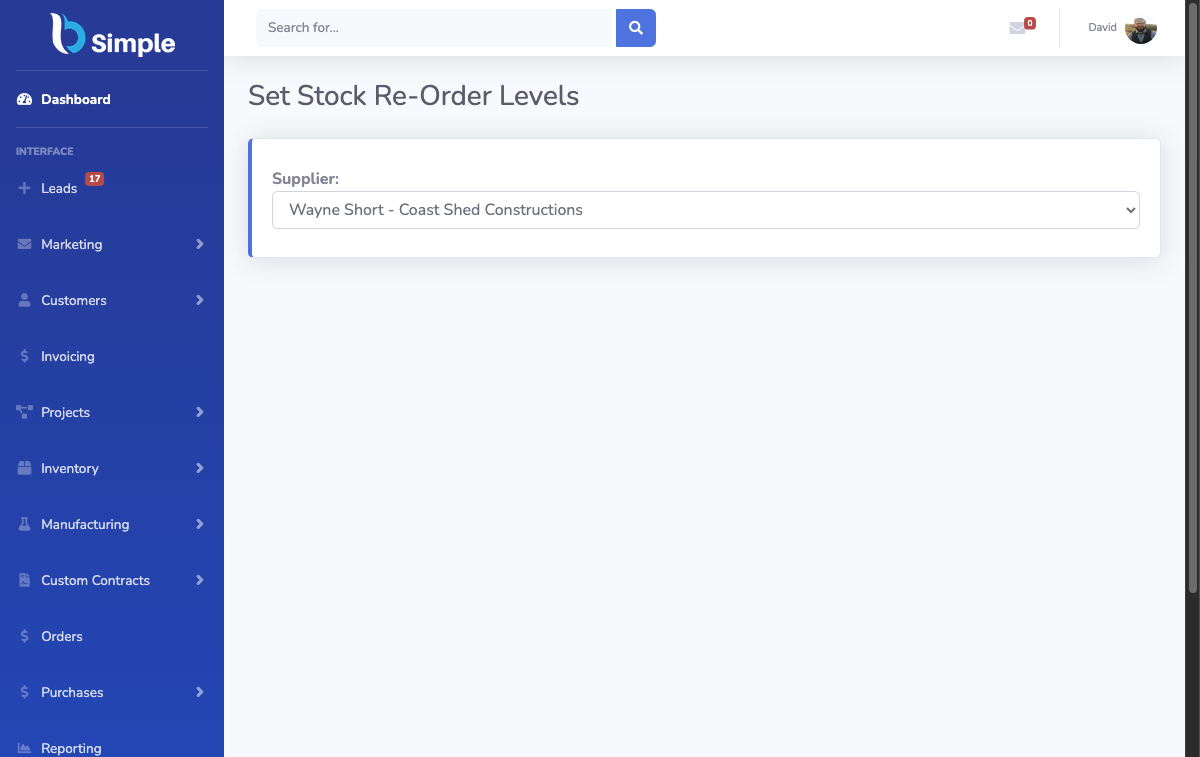
"Inventory management software" names a category, and the meaning is best given by verbs. It records: every unit received, picked, transferred, adjusted — with who and why. It enforces: quantities that cannot go negative unnoticed, reorder levels that turn demand into purchase orders, counts that verify rather than discover. It connects: orders allocate from the same record purchasing feeds, and invoices carry the same numbers into Xero or MYOB.
A tool that records but does not enforce is a list. A tool that records and enforces but does not connect is an island, and islands mean re-keying. The meaning of the category, honestly, is all three verbs on one record — and any product doing fewer should be named differently.
Where BSimple fits
We build BSimple, so weigh that. It is inventory management software in the full sense above for small-to-medium wholesale, manufacturing, distribution and trade businesses: live quantities across locations, multi-level stock, batch and lot tracking with use-by dates, reorder and par levels, stocktakes from any phone browser, orders and purchasing on the same record, accounting handed to Xero or MYOB. Plans start at $180/month (AUD), and the free trial is where the definition stops being abstract.
The boundary, as ever, stated plainly: BSimple is not an ERP — no MRP scheduling, no HR or payroll — and it does not replace your accounting system. For the adjacent definitions, inventory management defined gives the broader discipline, and the inventory management overview shows the practice.
Frequently Asked Questions
What is the difference between inventory and stock?
In practice, none — most businesses use them interchangeably, and so do most systems. If a distinction is drawn, "stock" leans to the goods on hand and "inventory" to everything owned for sale, including goods in transit and work in progress. Software worth buying answers to both senses with the same record.
Is inventory management software the same as an ERP?
No. ERP bundles inventory with finance, HR, production scheduling and more, with the administration to match. Inventory management software does the stock-and-orders job properly and hands accounting to Xero or MYOB rather than replacing it. For a product business below enterprise scale, the lighter category is usually the correct one.
Why does inventory need software at all?
Because the two senses of inventory — shelf and balance sheet — drift apart the moment humans maintain them separately. Software keeps one record that both senses read, enforces reorder and count discipline, and connects the stock to orders and accounting. The alternative is reconciliation labour that grows with the business.
What does inventory management software cost?
BSimple starts at $180/month (AUD) with everything included — no separate module costs for recipes, batches or the portal. Free tools exist and suit the smallest operations; the honest comparison is licence against the reconciliation labour the free option leaves behind.

BSimple