
Guide / definition
Inventory management software: a working definition
Defined plainly: software that keeps one live record of stock, enforces discipline on it, and connects it to orders, purchasing and accounting. Here is the test that separates real products from lists.
A definition you can test against
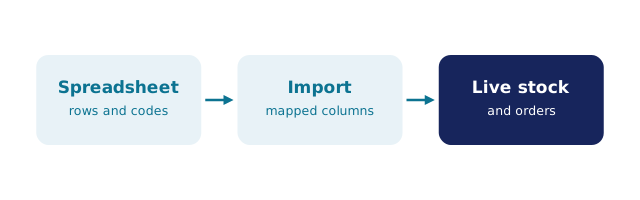
- Record: every unit received, sold, moved or counted lives in one shared, live record — quantities by product, location and level.
- Enforce: the record has rules — quantities that cannot go negative unnoticed, reorder levels, counted-and-verified stock.
- Connect: orders, purchasing and invoicing read and write that same record, and accounting receives the result.
- The one-line version: inventory management software is the shared, live, rule-bound record of a business's stock and everything that touches it.
- 01A definition you can test against
- 02Why each part of the definition earns its place
- 03The adjacent categories, and why they are not this
- 04Where BSimple fits
Why each part of the definition earns its place
Live is what disqualifies the spreadsheet: a sheet is a record, but a stale one — corrected at counts, edited in conflict, silent about what is promised. Shared disqualifies the personal tracker: if it lives on one person's laptop, the business has a diary, not a system. Rule-bound separates real software from a shared sheet with more columns: negative-stock guardrails, reorder triggers, count reconciliation are capabilities, not habits. Connected is where most tools fail the definition — a stock record that orders and purchasing do not write to directly means someone re-keys, and re-keying is where truth goes to die.
The definition is deliberately functional rather than feature-based. Feature lists describe products; this describes the job. A product meeting all four parts is inventory management software. A product missing one is something adjacent — a tracker, a list, an island. What the term means day to day covers the same ground from the vocabulary side.
The adjacent categories, and why they are not this
Spreadsheets record but do not enforce or connect. Asset trackers record and enforce but for things that never sell — no orders, no purchasing, no accounting handoff. POS systems connect sales to stock but only through their own channel. ERPs meet the definition and then keep going — finance, HR, MRP scheduling — at a cost and complexity that is the right answer only above a certain scale.
The definition helps in demos, too. Ask a vendor to receive stock against a purchase order, allocate it to an order, pick it, and trace the movement three months later — without leaving the product. Products that meet the definition perform the whole chain; products that do not will hand you back to a spreadsheet at some step. The stock management definition walks that chain in detail.
Where BSimple fits
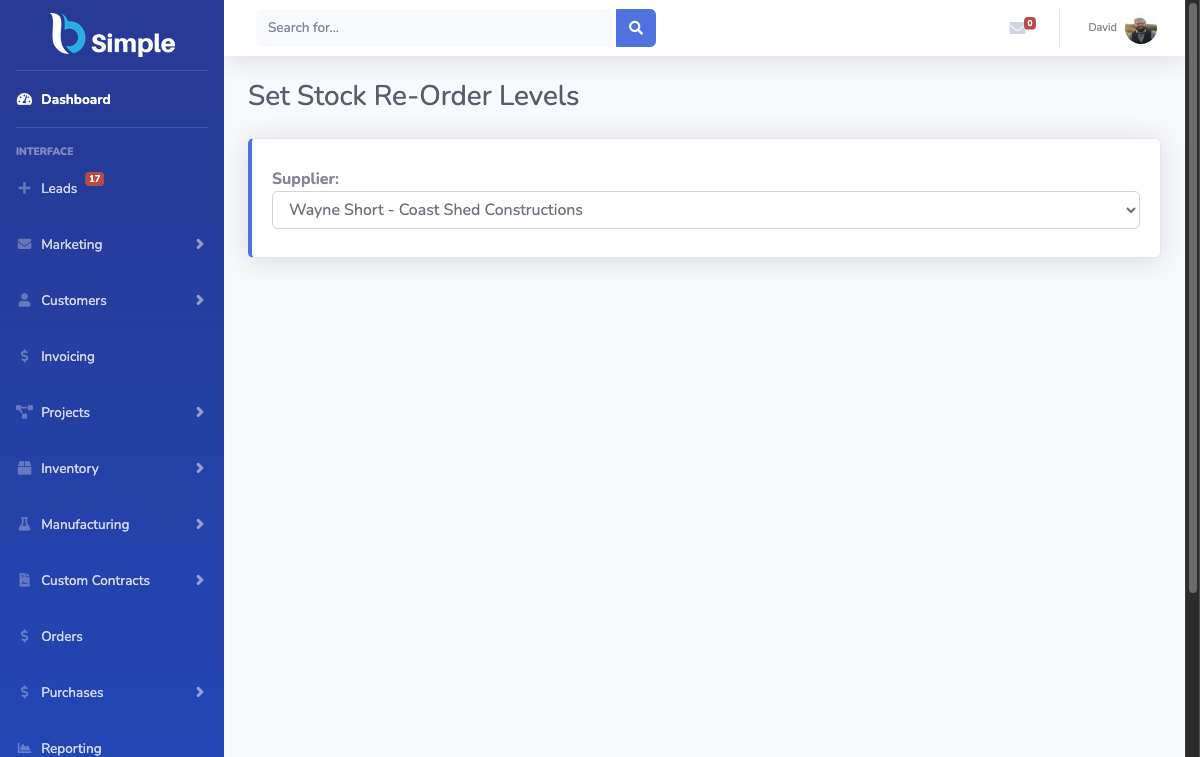
We build BSimple, so weigh that. It meets the definition as described: a live, shared, rule-bound record — multi-location quantities, multi-level units, batch and lot tracking, reorder and par levels, negative-inventory guardrails — connected to orders (including a customer ordering portal), purchasing and invoicing, with accounting handed to Xero or MYOB and US systems rolling out. From $180/month (AUD), with a free trial to run the demo chain above against your own products.
The boundary: BSimple is not an ERP and does not replace the accounting system — the definition ends at the handoff. For the wider discipline, the inventory explainer covers the practice, and the inventory management overview shows the system.
Frequently Asked Questions
Is a spreadsheet inventory management software?
By the definition, no — it records but does not enforce or connect. That is not an insult; a spreadsheet is an honest tool for one person at small volume. It becomes a problem only when a business needs allocation, purchasing and shared live quantities and keeps hoping a sheet will provide them.
What is the difference between inventory management and inventory control software?
The labels overlap heavily in practice. If a distinction helps: control is the enforce layer — guardrails, reorder levels, counts — while management includes the connect layer: orders, purchasing, invoicing, accounting handoff. Under that reading, control software is a subset, and most SMEs need both, which is why one record is the sensible purchase.
Does the definition include manufacturing features?
Not inherently — production (recipes, bills of materials, batches) is an extension that consumes and creates inventory. Businesses that make what they sell need the extension; businesses that only buy and sell do not. BSimple includes recipes, production runs and batch tracking in every plan, so the extension is there when the business needs it.
How do I test a product against this definition?
Run the chain: receive against a purchase order, allocate to an order, pick and pack, invoice to accounting, then ask for the movement history of one unit afterwards. Any step that exits to a spreadsheet or requires re-keying fails the connect test — and the vendor will usually show you exactly where during the demo.

BSimple