
Guide / fundamentals
What is business mgmt? The casual question, answered properly
Business management is the work of coordinating people, processes and records so the business runs without heroics. What the function involves, and the software that supports it.
The key facts
- Business management ("mgmt") is the function: coordinating people, processes and records so the business runs predictably without heroics.
- It spans four truths: people and their work, the money, the stock and orders, and the decisions between them.
- "Business mgmt software" is the tooling for those truths — each tool keeps one truth; the category map sorts them.
- BSimple keeps the stock-and-order truth for wholesale, manufacturing, distribution and trade — from $180/month AUD, trial free.
- 01The key facts
- 02The definition, without jargon
- 03The four truths business management keeps
- 04BSimple's slice of the function
The definition, without jargon
Business management is the ongoing work of making a business run predictably: coordinating people (who does what, with what authority), running processes (how orders, purchases and payments flow, the same way each time), keeping records (what is true about stock, money and commitments), and deciding (what to buy, make, price and stop). The abbreviation "mgmt" hides nothing sinister — it is the same discipline whether spelled out or squeezed.
The tell of good business management is the absence of heroics: questions answered by records instead of memory, exceptions with history instead of mystery, and a week that repeats without a fire drill. The system view — people plus processes plus software — is the structure behind the function.
The four truths business management keeps
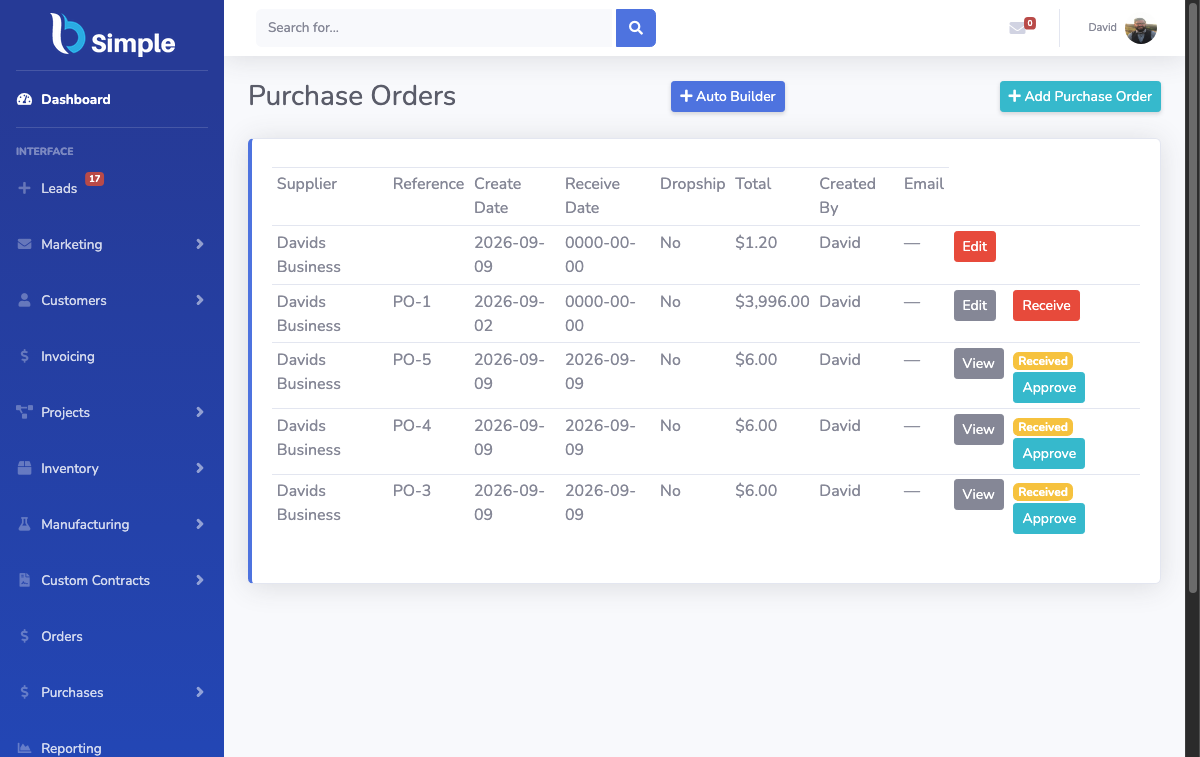
People. Who does what, who may change what, who knows the plan. Tools: rosters, task lists, HR systems. Money. What was earned, owed and paid; taxes and compliance. Tools: accounting platforms (Xero, MYOB). Stock and orders. What exists, what is promised, what to buy — the operational truth that goods businesses live or die by. Tools: operations systems — BSimple's category. Decisions. What the records mean and what to do next. Tools: reports and dashboards — and, underneath them, the other three truths being true.
The function fails in a recognisable order: first decisions go blind (no records), then processes diverge (everyone has their own way), then people compensate with heroics. Software supports the repair, but the function — the coordination — is the substance. The definitions page covers the software side; the four-jobs map covers the stock truth in depth.
BSimple's slice of the function
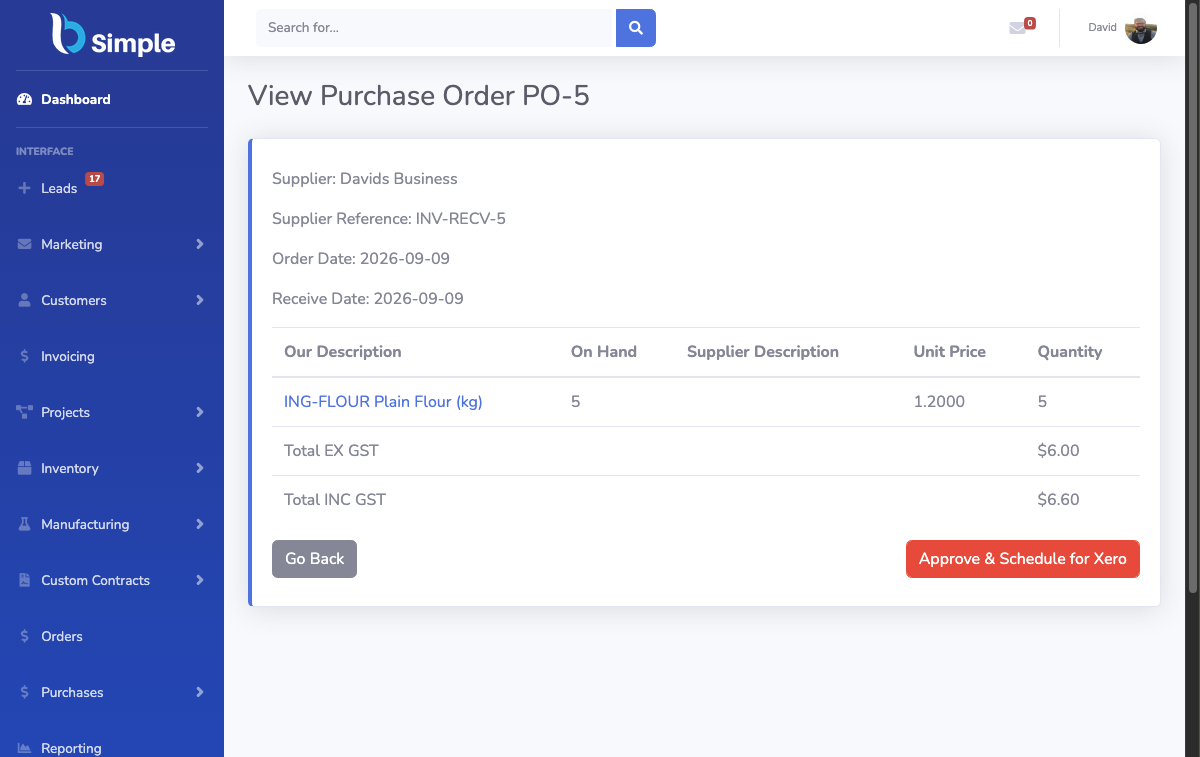
We build BSimple, so weigh that: it keeps the stock-and-order truth for wholesale, manufacturing, distribution and trade businesses — live multi-location quantities, multi-level units and batches, purchasing from demand, order-to-invoice, customer portals, production with recipes and traceability. It deliberately does not keep the people truth (no HR or payroll) or the money truth (Xero and MYOB own the books; US integrations rolling out). The slice is deliberate: one truth kept deeply beats four kept shallowly. Plans run $180/$250/$399 per month AUD with the trial as the full product — and if "business mgmt" was a casual search before a decision, the trial is the fastest way to make it concrete.
Frequently Asked Questions
What does business management mean?
Coordinating people, processes and records so the business runs predictably — answering questions from records instead of memory. The software supports it; the function is the coordination itself.
What is business management software?
The tooling that keeps the records: accounting platforms for money, operations systems for stock and orders (BSimple's category), HR tools for people, reporting for decisions. The category map sorts them.
Is business management the same as an MBA?
No — the MBA is a qualification about the discipline; business management is the daily practice. The overlap is vocabulary, and the practice is learned mostly by running records well.
What does BSimple manage?
The stock-and-order truth: quantities across locations, batches, purchasing, orders through fulfilment to invoice. Not people, not books — deliberate boundaries, stated on every page of this site.
How do we start improving business management?
Pick the failing truth first — usually stock — and get one record kept honestly for a month. The trial demonstrates the software version of that record on your products; the habit is the part no software supplies.
BSimple