
Guide / business management systems
What is a BMS in business?
In a business context, BMS means business management system — software that keeps stock, orders, purchasing and invoicing on one record. Here is what it covers, and what it is not.
The facts about BMS in business
- BMS = business management system: the software layer that runs a company's day-to-day operations.
- Do not confuse it with a building management system — the same acronym controls air-conditioning and lighting in facilities management.
- A business BMS usually covers: inventory, orders, purchasing, invoicing, customer records and reporting.
- Accounting usually stays separate: the BMS hands invoices to Xero or MYOB rather than replacing them.
- BSimple is a BMS for product businesses — wholesale, manufacturing, distribution and trade — on one record, from $180/month (AUD).
- It is deliberately not an ERP: no MRP scheduling, HR or payroll inside the system.
- Where it fits: this page is one branch of the inventory management guide.
The definition — and the one mix-up worth avoiding
A business management system is the control centre for running a company's operations: the place where stock levels, customer orders, purchase orders, invoices and the day's numbers live together. Instead of the order living in an inbox, the stock count in a spreadsheet and the invoice in the accounting system, a BMS keeps one record that every step works from.
The mix-up: in facilities and construction, BMS stands for building management system — HVAC, lighting, access control. If your search landed here from that world, there is no connection beyond the acronym. In business software, the term means the system that manages the business, not the building.
- 01The facts about BMS in business
- 02The definition — and the one mix-up worth avoiding
- 03What a business management system actually covers
- 04How a BMS relates to accounting and ERP
- 05Where BSimple fits as a BMS
What a business management system actually covers
Coverage varies by vendor, but the operational core is consistent:
- Inventory. Live quantities across locations, reorder levels, stocktakes, and often batch or expiry tracking for regulated goods.
- Orders. From capture (portal, phone, online store) through picking and packing to dispatch — with status visible to staff and customers.
- Purchasing. Purchase orders raised from what stock actually needs, goods receipts that update quantities on arrival.
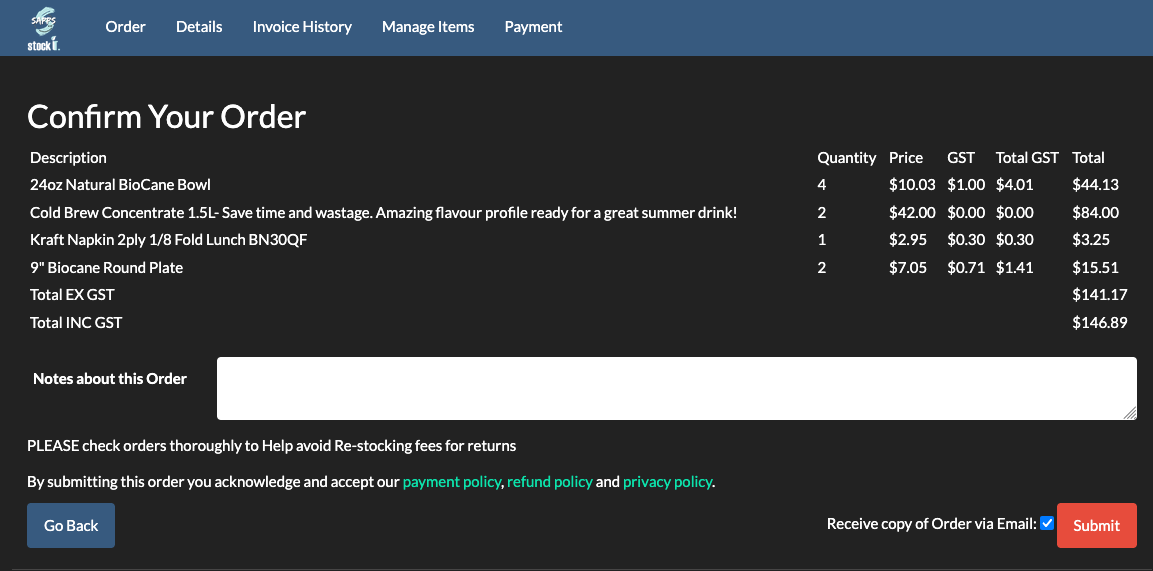
- Invoicing. The checked order becomes the invoice without re-entry, and payment status mirrors back from the accounting system.
- Reporting. Order, invoice and stock values in one dashboard, so decisions come from the same numbers the warehouse uses.
Around that core, products differ: some add production and recipes, some add customer portals, some add project or asset tracking. Our definition guide to business management software goes deeper on the category.
How a BMS relates to accounting and ERP
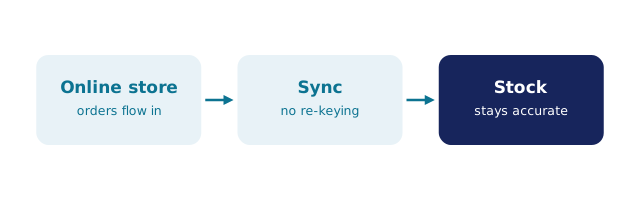
The healthy pattern for a small-to-medium product business is a split: the BMS runs operations, the accounting system stays the system of record. Invoices push from the BMS to Xero or MYOB, payment status mirrors back, and nobody re-keys anything. This keeps compliance where the accountant works while operations stays fast.
An ERP, by contrast, tries to absorb everything — finance, HR, manufacturing scheduling — and brings implementation projects and administrators with it. The BMS approach is deliberately lighter: BSimple's business data management page shows the split in practice, and the business software definition guide draws the ERP boundary precisely. A BMS is right when you need operations done properly without the ERP overhead.
Where BSimple fits as a BMS
We build BSimple, so weigh that. It is a business management system for Australian and international wholesale, manufacturing, distribution and trade businesses: inventory, orders, purchasing, invoicing and a customer ordering portal on one record, with recipes and batch production, projects and assets, and the Xero or MYOB handoff. Shopify orders import by webhook into the same flow, and a public REST API exposes stock and purchasing data to other tools. The free trial lets you test it with your own products in an afternoon.
The boundaries are stated rather than implied: no HR or payroll, no MRP scheduling, no built-in online storefront — BSimple syncs Shopify orders instead of replacing it, and accounting compliance stays in your accounting system. If you need those absorbed into one suite, an ERP is the honest answer; if you need the operations core done well, that is exactly the job.
Frequently Asked Questions
What does BMS stand for in business?
Business management system — software that runs a company's operations such as inventory, orders, purchasing, invoicing and reporting on one record. The same acronym means building management system in facilities contexts, which is an entirely different product.
Is a BMS the same as ERP software?
No. An ERP aims to run everything — including finance, HR and scheduling — for larger organisations. A BMS covers the operational core and integrates with specialist systems (like Xero or MYOB for accounting), which keeps it lighter, faster to adopt and cheaper to run.
Does a BMS replace Xero or MYOB?
No, and it should not try. Accounting compliance — tax, BAS, payroll — belongs in the accounting system. A BMS like BSimple pushes approved invoices across and mirrors payment status back, so both systems stay accurate without double entry.
What size business needs a BMS?
Typically small-to-medium product businesses — a handful to a few dozen staff — where orders arrive daily and more than one person touches the stock record. Below that, spreadsheets are usually fine; above it, ERP territory begins. BSimple is sized for that middle ground.
How much does business management software cost?
SMB systems publish prices: BSimple plans start at $180/month (AUD) with all operational features included and a free trial to test the fit. ERP suites cost multiples more and are usually quoted only after a sales process.
BSimple