What Is An Order Management System Trading Explained Simply
- Real-time inventory validation prevents overselling and stock allocation conflicts across multiple channels
- Automated picking lists and warehouse workflows accelerate order fulfilment and reduce picking errors
- Seamless Xero integration eliminates manual data entry and ensures financial accuracy for EOFY compliance
- Customer ordering portals provide self-service access, reducing administrative overhead and improving transparency
- Negative inventory tracking and just-in-time capabilities optimise working capital and production planning
- Comprehensive order tracking and customer notifications enhance satisfaction and reduce support enquiries
- Advanced reporting on order patterns, customer performance, and bottlenecks drives strategic business decisions
Welcome to our guide on what is an order management system trading — see also our Order Management System for the full picture. An order management system (OMS) is essentially the nerve centre of any wholesale, manufacturing, or distribution business. It’s the software that captures, processes, and tracks every order from the moment a customer places it through to final delivery. Think of it as your digital order conductor, orchestrating everything from customer requests to warehouse picks to invoicing.
For Australian businesses operating in competitive markets — whether you’re a Sydney coffee roaster managing wholesale accounts, a Melbourne brewery distributing across multiple states, or a manufacturing SMB juggling dozens of daily orders — an OMS isn’t a luxury. It’s the backbone that keeps operations running smoothly without constant manual juggling. Instead of spreadsheets, phone calls, and email chains that eat up your team’s time, a proper order management system automates the heavy lifting. Orders flow in from multiple channels, get validated against your stock levels, trigger picking and packing workflows, and generate the paperwork your customers need.
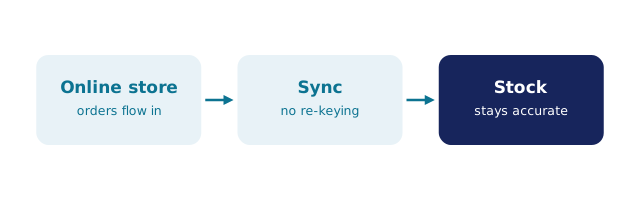
The beauty of modern order management systems is that they integrate seamlessly with your existing tools. Most Australian businesses are already using Xero for accounting, so having an OMS that talks directly to Xero means your order data automatically syncs with your financial records. No double entry, no reconciliation headaches at EOFY. You capture the order once, and it flows through your entire business — inventory updates, customer records, financial reports, everything.
In this guide, we’ll walk you through what an order management system actually does, why it matters for your business, and how it can transform the way you handle trading operations. Whether you’re currently drowning in manual processes or looking to scale your existing operation, understanding how an OMS works is the first step toward smarter, faster order fulfilment.
Understanding Order Management Systems for Trading
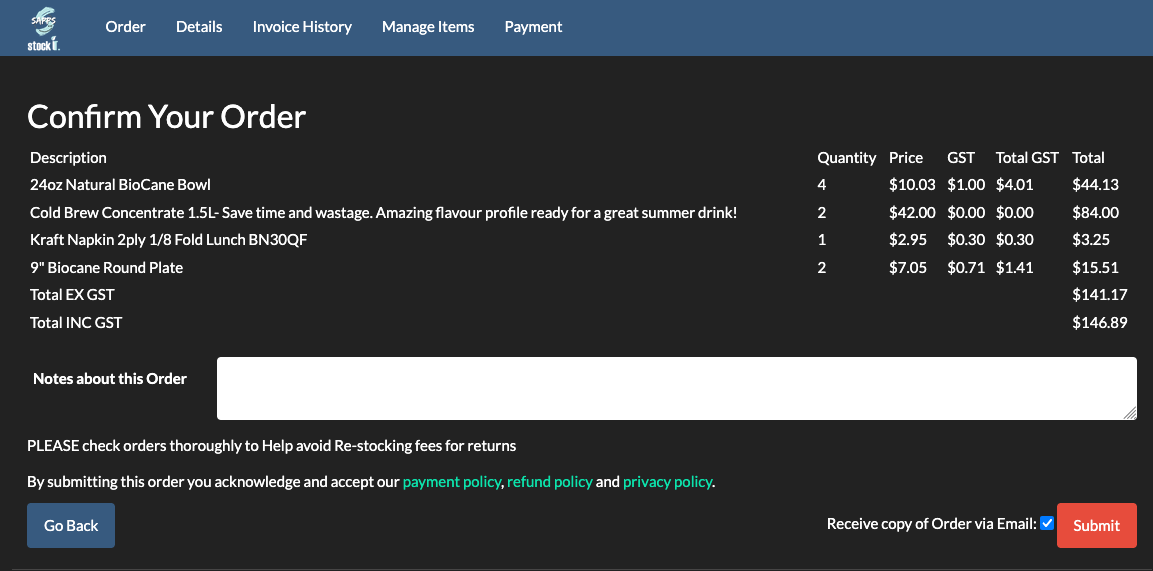
Let’s break down what happens inside an order management system, because understanding the mechanics helps you see why it’s worth implementing. When a customer places an order — whether through your website, a customer portal, email, or phone — the OMS captures that request and immediately checks it against your current inventory. If you’ve got stock, it reserves those items. If you don’t, the system can flag a backorder or alert you to the shortage so you can make a quick decision about what to do next.
This inventory validation step is absolutely crucial for wholesale and distribution businesses. A Melbourne brewery distributor might receive orders from 20 different venues across a single day. Without an OMS managing stock allocation, you could easily promise the same cartons to multiple customers or oversell your limited stock. The system prevents that chaos by providing real-time visibility into what’s actually available to sell. For manufacturing businesses, this is equally important — you need to know whether you can commit to a customer’s requested delivery date based on your current production capacity and raw material availability.
Once an order is validated and confirmed, the OMS generates picking lists for your warehouse team. Instead of hunting through your facility looking for items, your staff get a prioritised list telling them exactly what to grab, where to find it, and which order it belongs to. This speeds up fulfilment dramatically. Many systems also support batch picking — combining multiple orders into a single warehouse run — which further improves efficiency. After items are picked and packed, the OMS tracks the shipment, generates tracking information, and can automatically notify your customer when their order is on the way.
The reporting side of an OMS is equally powerful. You get visibility into order status at any moment, which orders are delayed, which customers are your top performers, and where bottlenecks exist in your process. For Australian SMBs managing seasonal demand — like businesses that see spikes around Christmas or EOFY — this data helps you plan staffing and inventory more intelligently. You can see patterns in what sells, when it sells, and to whom, which informs better purchasing decisions and reduces waste.
Integration and Connectivity Benefits
The real power of an order management system for trading businesses comes when it connects to your other business tools. Xero integration is particularly valuable for Australian companies because it means your orders automatically flow into your accounting system. When you confirm an order in your OMS, it creates the corresponding invoice in Xero without manual data entry. This is especially important around EOFY when your finance team is under pressure — having automated order-to-invoice workflows means fewer errors and faster reconciliation.
Beyond Xero, a comprehensive OMS should integrate with your inventory management, customer relationship management (CRM), and shipping platforms. This creates a connected ecosystem where information flows seamlessly. When stock levels change, your OMS knows about it and can prevent overselling. When a customer contacts you about an order, your CRM shows their full history. When you’re ready to ship, your OMS connects directly to courier APIs to generate labels and track packages. For a Sydney coffee roaster managing wholesale accounts across the city, this integration means one team member can handle the entire order process instead of juggling five different systems.
One feature that’s particularly useful for manufacturing and distribution is the inventory management system integration that allows negative inventory tracking. This might sound counterintuitive, but it’s incredibly practical. Sometimes you need to fulfil an urgent customer order even though you’re temporarily out of stock — you’ll receive new inventory next week. Rather than losing the sale, the system lets you commit to the order and tracks the negative balance, automatically alerting you to prioritise that stock when it arrives. This flexibility is often the difference between keeping a major customer happy and losing their business.
Customer ordering portals are another game-changer for wholesale businesses. Instead of managing orders via email or phone, you can give your customers access to a self-service portal where they can browse your catalogue, check stock availability, place orders, and track shipments. This reduces the administrative burden on your team and improves the customer experience. Your customers get transparency into what’s available and when they can expect delivery, which builds trust and reduces support enquiries. For recurring orders — like a cafe ordering coffee beans weekly — the portal can even support automated reordering, making the process frictionless for both sides.
Operational Transformation and Compliance
Implementing an order management system transforms how your team works day-to-day. Instead of spending hours manually processing orders, your staff can focus on customer service, problem-solving, and growth activities. A distribution business that previously needed two full-time people just to manage order entry and tracking might find that one person can handle the same volume with an OMS in place. That’s not about cutting jobs — it’s about redirecting human effort toward higher-value work.
For manufacturing businesses, an OMS helps bridge the gap between sales and production. When a customer places an order, the system can automatically generate a production order or purchase order for raw materials, depending on your setup. This just-in-time inventory approach reduces the amount of capital tied up in stock while ensuring you can still meet customer demand. A business that previously held three months of inventory might optimise down to one month, freeing up cash for other investments. The stocktake management features also make your periodic counts faster and more accurate, reducing the disruption to normal operations.
The compliance side is worth mentioning, especially for Australian businesses managing GST and other regulatory requirements. When your OMS integrates with Xero, all orders are automatically captured with the correct tax treatment. You’ve got a complete audit trail showing when orders were placed, what was promised, what was delivered, and what was invoiced. This is invaluable if you’re ever audited or need to dispute a customer claim about what they ordered. It also simplifies your EOFY process because your order records and financial records are automatically reconciled.
Customer satisfaction improves measurably with an OMS in place. Orders are fulfilled faster and more accurately because there’s less room for human error. Customers get tracking information automatically, so they’re not constantly calling to ask where their order is. If there’s an issue — like a partial shipment or delay — your team can communicate proactively rather than reactively. For wholesale businesses where customer retention is critical, these improvements in service quality directly impact your bottom line. Customers who have a smooth, transparent ordering experience are more likely to remain loyal and increase their order volume over time.
Frequently Asked Questions
What’s the difference between an order management system and inventory management?
An order management system focuses on processing customer orders from placement through delivery. Inventory management tracks stock levels, movements, and availability. They’re complementary — your OMS uses inventory data to validate orders, while inventory management tracks what’s been allocated and sold. A complete solution integrates both functions seamlessly.
Can an order management system handle multiple sales channels?
Yes, that’s one of the key advantages. A modern OMS can accept orders from your website, customer portal, phone, email, and even third-party marketplaces, consolidating them into a single workflow. This prevents overselling across channels and gives you unified visibility into all your trading activity.
How does an OMS improve accuracy in order fulfilment?
By automating picking lists, validating inventory in real-time, and tracking items through the warehouse, an OMS eliminates manual errors. Customers receive correct orders consistently, reducing returns and complaints. The system also prevents picking the wrong items or quantities through guided workflows.
Is an order management system suitable for small Australian businesses?
Absolutely. SMBs actually benefit most because they typically lack dedicated resources for order processing. An OMS automates repetitive work, freeing your team to focus on customer relationships and growth. Cloud-based solutions are affordable and scalable, so you only pay for what you use.
How does OMS integration with Xero benefit my business?
Direct Xero integration eliminates double data entry, reduces errors, and ensures your financial records match your order records. Orders automatically create invoices, GST is calculated correctly, and your EOFY reconciliation becomes straightforward. This saves your finance team significant time.
Can an order management system handle backorders and partial shipments?
Yes, sophisticated OMS platforms manage backorders, split shipments, and partial fulfilment scenarios. You can set policies for how to handle stock shortages, automatically notify customers of delays, and track what’s outstanding so nothing falls through the cracks.
What reporting insights does an OMS provide for trading businesses?
You get visibility into order volume, fulfilment times, customer patterns, product performance, and revenue trends. This data helps you identify your best customers, spot seasonal trends, optimise inventory levels, and make informed decisions about pricing and product mix.