
Guide / trading
Order management system in trading
"Trading" here has two honest readings: the finance meaning (routing market orders) and the trade meaning — businesses that buy, hold and resell. The finance pointer comes first; this page then covers what a trading business needs from order management.
The key facts
- First, the disentangling: in finance, a trading OMS routes buy/sell orders to markets — a different industry, covered separately. In commerce, a trading business buys, holds and resells — and that is the reading this page develops.
- The trading-business pattern: supplier → stock → customer, with margin living in the spread and the risk living in the stock record.
- The order flow: customer order → allocation against live stock → (backorder → supplier PO) → pick, pack → invoice → payment mirrored from the books.
- BSimple's fit: built for exactly the trade pattern — wholesale, distribution, import-export — from $180/month AUD with a full-product trial.
- The wider flow: how order management works maps the full path this page is part of.
- 01The key facts
- 02If you meant the finance meaning
- 03The trading business: where the orders live
- 04The trading-specific risks the system must hold
- 05Choosing the system for a trading business
If you meant the finance meaning
An order management system in trading is the broker-and-fund software that places, routes and tracks buy/sell orders on financial markets — pre-trade compliance checks, exchange connectivity, fill tracking and the regulatory audit trail. It shares a vocabulary with business order management (orders as stateful records) and nothing else. The finance-versus-business explanation covers it honestly, and the rest of this page will not pretend to.
The trading business: where the orders live
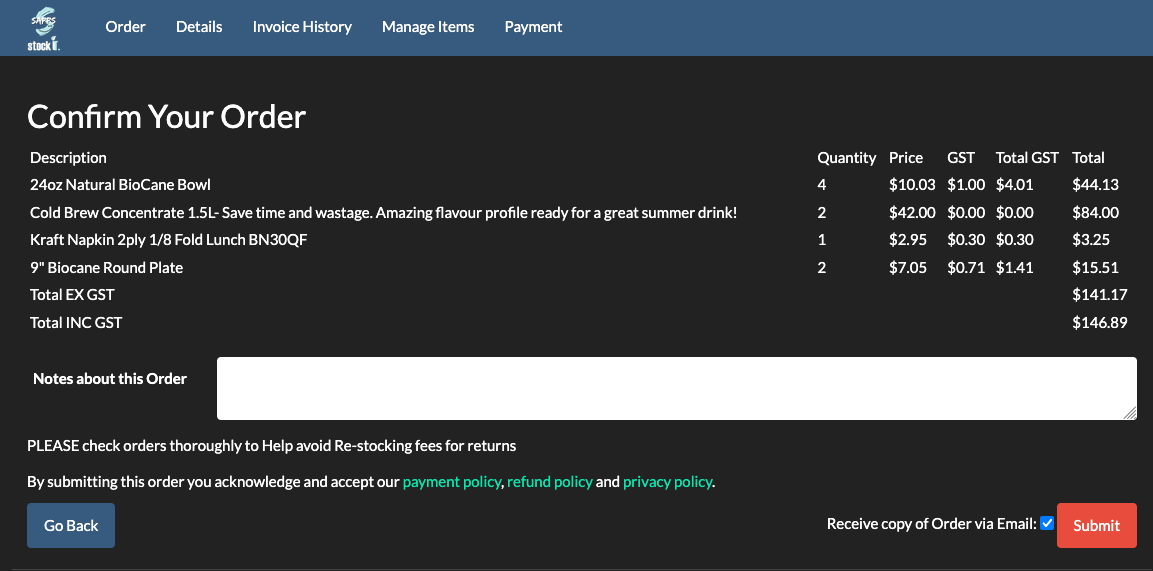
A trading business — importer, wholesaler, distributor — makes its margin in the spread between supplier and customer, and keeps its risk in the stock record. The order flow that protects the margin: a customer order arrives (through their portal with their pricing, or keyed once by staff); stock is allocated against live quantities — reserved, not deducted, so the promise cannot double-sell; shortfalls become backorders that feed supplier purchase orders rather than hopeful promises; picking and packing run from the same record; the invoice is approved deliberately — stock deducts, and the document lands in the accounting system with tax codes intact; payment status mirrors back.
Each arrow removes a re-keying step, and each re-keying step removed is both an error removed and a wage-hour returned. That is the whole economic case for an OMS in trading: the spread is thin, and the admin is a hidden tax on it.
The trading-specific risks the system must hold
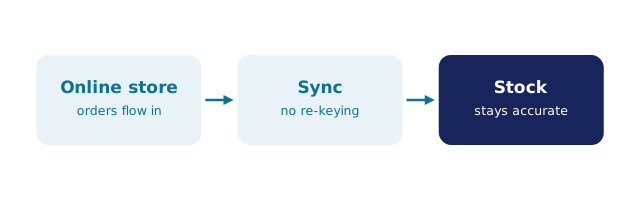
The oversell across channels — the same unit promised to two customers because two records disagreed. One record with reservations is the fix; guardrails catch what discipline misses. The currency-and-lead-time gap — stock on the water is not stock on the shelf, and on-order visibility with expected dates is what keeps promises honest while containers sail. The price drift — supplier invoices that quietly differ from agreed orders; variance flags hold the difference up for review instead of letting it erode the spread. The count drift — shrinkage discovered quarterly is shrinkage subsidised for a quarter; cycle counts with variances chased to causes keep the record honest weekly.
None of these are exotic — they are the standard failure modes of trade, which is why the order-management flow treats them as designed paths rather than exceptions.
Choosing the system for a trading business
The evaluation script: one real order through the whole flow — portal to pick to invoice to payment — then the ugly variants: the backorder, the partial, the cancellation after reservation. Then the seam: one invoice into the accounting system, manual steps counted. A system that survives the script is shortlisted; BSimple is built for exactly this pattern and submits to the same script — the trial is the full product on your own products, from $180/month AUD, with the inventory record underneath documented rather than promised.

Frequently Asked Questions
What is an OMS in trading?
In finance: software routing buy/sell orders to markets, with compliance checks and fill tracking — explained separately. In commerce: the system managing customer orders through allocation, fulfilment and invoicing for a business that buys, holds and resells — the subject of the rest of this page.
Why do trading businesses need an order management system?
Because the margin lives in the spread and the risk lives in the record: oversells, drift and re-keying are taxes on thin margins. An OMS holds one record — orders, stock, purchasing — and removes the relay where errors breed.
How are backorders handled in trading?
As designed state: the order line is reserved against an inbound purchase order with an expected date, the customer sees the promise, and the shortfall counts toward purchasing demand. Hope is not a fulfilment strategy; a record is.
What about goods in transit and containers on the water?
On-order visibility with expected dates is the requirement — stock promised to customers must reference arrivals the record knows about. Goods that exist only in an email chain are the reason promises break.
What does BSimple cost for a trading business?
$180/$250/$399 AUD monthly with all features in the core plans — no module paywalls. The trial runs one real order through the whole flow before anything is spent.
BSimple