Warehouse Management System Examples for Manufacturing Teams with Mobile Access

Warehouse Management System Examples designed for wholesale and manufacturing. Xero integration, customer portals, automated purchasing, and inventory contro...

Prefer to talk? Call 1300 980 598
  • Real-time inventory tracking across multiple warehouse locations with instant stock visibility
  • Mobile scanning and picking with barcode integration for accurate order fulfilment
  • Automated purchase order generation triggered by reorder points to prevent stockouts
  • Seamless Xero integration for automatic financial record updates and GST compliance
  • Customer ordering portals for 24/7 wholesale ordering and real-time stock availability
  • Negative inventory tracking for backorders and made-to-order business management
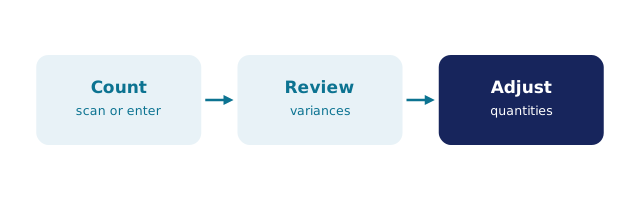
  • EOFY stocktake management with mobile scanning and real-time discrepancy reporting

Warehouse management system examples are everywhere in modern manufacturing, and understanding what actually works for your business is crucial — see also our Order Management System for the full picture of how inventory and orders connect. For a deeper look at the warehouse category, our warehouse management software guide is the perfect starting point, and you can compare more options in our list of warehouse software or review the leading warehouse software vendors. Whether you're running a Sydney coffee roastery managing bean stock, a Melbourne brewery tracking fermentation schedules, or a distribution centre coordinating hundreds of SKUs daily, the right WMS can transform how you operate. Real warehouse management isn't about fancy dashboards or enterprise jargon — it's about knowing what you have, where it is, and getting it to customers on time without tying up cash in dead stock. Australian SMBs in wholesale and manufacturing face unique challenges: managing EOFY stocktakes without disrupting operations, staying on top of GST compliance, dealing with seasonal demand spikes, and keeping costs lean. A solid warehouse management system handles the heavy lifting — tracking inventory in real-time, flagging low stock before you run out, automating purchase orders to suppliers, and giving your team mobile access so they're not chained to a desk. The examples we'll explore show how different businesses have solved these problems, and how cloud-based systems with Xero integration make the whole process seamless.

BSimple inventory management dashboard

Understanding Warehouse Management System Examples Today

When we talk about warehouse management system examples, we're really talking about practical solutions that solve everyday problems. Consider a mid-sized Australian distributor managing 2,000+ SKUs across multiple locations. Without a proper WMS, they're juggling spreadsheets, manual counts, and constant stock discrepancies. With a cloud-based system, they get real-time visibility across warehouses, automated reorder points that trigger purchase orders before stock runs dry, and mobile scanning so staff can pick and pack accurately from any location. This isn't theoretical — it's how businesses actually operate today. Another common example is the manufacturing business that produces custom components. They need to track raw materials, work-in-progress inventory, and finished goods separately. A good WMS handles this complexity, showing exactly where materials are in the production cycle, what's ready to ship, and what needs to be ordered. The beauty of modern systems is they integrate directly with your accounting software. With Xero integration, every stock movement automatically updates your financial records, eliminating manual data entry and the errors that come with it. You get accurate cost of goods sold, better profit visibility, and less stress at tax time. Many Australian businesses also use their WMS to power customer ordering portals, letting wholesale clients place orders 24/7 and check stock availability in real-time. This reduces customer service inquiries and speeds up the sales cycle significantly.

Enquire Now

BSimple inventory control software

How Different Industries Use Warehouse Management Systems

Let's look at some specific warehouse management system examples that show how different business types benefit. A wholesale coffee roaster in Sydney might use a WMS to manage green bean inventory, track roasting batches, and coordinate shipments to cafes across NSW and Victoria. They need to know exactly how much inventory they have at each roast level, automate reorders from their suppliers in Indonesia, and manage customer orders through a portal so café owners can place repeat orders without calling. The system tracks expiry dates, manages lot numbers for traceability, and generates picking lists that staff access via mobile devices on the warehouse floor. Another example is a manufacturing business producing industrial fasteners. They operate with just-in-time inventory principles, meaning they keep minimal stock and rely on frequent supplier deliveries. Their WMS manages this by setting precise reorder points, automatically generating purchase orders when stock hits thresholds, and tracking negative inventory (backorders) so they know what's been promised but not yet delivered. This approach minimises cash tied up in inventory while ensuring they can still fulfil customer orders promptly. A third example is an Australian brewery managing both raw materials (hops, grain, yeast) and finished goods (kegs, cans, bottles) across multiple storage conditions. Their WMS tracks temperature-sensitive items, manages batch numbers for quality control, and coordinates logistics with their distribution partners. The inventory management system integrates with their Xero accounting, so every production run automatically adjusts material costs and finished goods values. These examples show that warehouse management isn't one-size-fits-all — it's about choosing a system flexible enough to match your specific business model.

More features

BSimple order management interface

Mobile Access and Automation in Modern WMS

Mobile access is one of the biggest game-changers in modern warehouse management system examples. Gone are the days when warehouse staff had to walk back to a desk terminal to update inventory. Today, they scan barcodes on their phone or tablet, and stock levels update instantly. This matters enormously for accuracy and speed. A distribution centre might process 500 orders daily — without mobile access, pickers would waste hours walking back and forth. With mobile WMS, they scan items as they pick them, the system guides them through the warehouse efficiently, and orders are ready to ship within hours. This also reduces picking errors significantly. Australian businesses doing EOFY stocktakes benefit massively from mobile WMS functionality. Instead of printing inventory lists and manually ticking items off, staff use mobile devices to scan products and record counts in real-time. Discrepancies appear immediately, so you can investigate and resolve them before finalising your financial records. This makes stocktakes faster, more accurate, and less disruptive to operations. Another mobile advantage is customer portal integration. Wholesale customers can place orders through a portal, and your warehouse team sees those orders instantly on their mobile devices. They pick and pack immediately, and customers get their goods faster. The automated purchasing features are equally powerful. When stock hits a reorder point, the system automatically generates a purchase order to your supplier, eliminating the manual step and reducing the risk of stockouts. For businesses managing multiple suppliers, the system can be configured to choose the best supplier based on price, lead time, or other criteria. This is particularly valuable for Australian manufacturers sourcing materials both locally and internationally, where lead times vary significantly and cash flow matters.

Create a free account

BSimple purchase order workflow

Integration, Portals, and Analytics Features

When evaluating warehouse management system examples for your business, integration with your existing tools is critical. Most Australian SMBs use Xero for accounting, so a WMS that syncs seamlessly with Xero eliminates duplicate data entry and keeps your financial records accurate. Every stock movement — purchases, sales, adjustments, stocktakes — flows directly into Xero, updating your balance sheet and profit and loss statement automatically. This is invaluable for GST compliance, since your stock values feed directly into your tax calculations. Beyond Xero, consider how the WMS handles customer portals. If you're a wholesaler or manufacturer selling to other businesses, a customer ordering portal transforms the buying experience. Customers log in, see real-time stock availability, place orders, and track shipments — all without contacting your team. This reduces customer service workload and creates a more professional impression. The purchasing order management features should also be robust. You need to track purchase orders to suppliers, receive goods, match invoices, and manage payment terms. A good system handles this workflow smoothly, reducing invoice discrepancies and improving supplier relationships. Negative inventory tracking is another important feature, particularly for made-to-order or build-to-order businesses. If a customer orders something you don't currently have in stock, the system can flag this as a backorder and automatically trigger a purchase order to your supplier. This prevents overbooking and gives you visibility into what's been promised but not yet delivered. Finally, consider reporting and analytics. A solid WMS provides insights into stock turnover, slow-moving inventory, supplier performance, and order fulfilment metrics. These insights help you make better decisions about what to stock, which suppliers to rely on, and where inefficiencies exist in your operation. For Australian businesses managing seasonal demand (think garden supplies before summer, or heating products before winter), these analytics help you plan inventory levels appropriately and avoid being caught short or overstocked.

Learn more

BSimple stocktake and inventory tracking

Frequently Asked Questions

What is a warehouse management system and why do Australian manufacturers need one?

A warehouse management system (WMS) is software that tracks inventory, manages orders, and coordinates warehouse operations. Australian manufacturers need one to reduce stockouts, minimise dead stock, improve accuracy, speed up order fulfilment, and maintain accurate financial records for EOFY and GST compliance.

How does Xero integration benefit my wholesale business?

Xero integration automatically syncs inventory movements with your accounting records, eliminating manual data entry errors. Stock purchases, sales, and adjustments flow directly into Xero, keeping your balance sheet accurate and simplifying tax time calculations and GST reporting.

Can a WMS help with just-in-time inventory management?

Yes. A WMS with automated reorder points and purchase order generation lets you maintain minimal stock while ensuring you can fulfil orders promptly. This approach reduces cash tied up in inventory and is particularly valuable for Australian manufacturers with tight cash flow.

What's the advantage of mobile warehouse management access?

Mobile access lets warehouse staff scan items, update inventory, and pick orders from anywhere in the warehouse using smartphones or tablets. This improves accuracy, speeds up operations, and makes EOFY stocktakes faster and less disruptive to your business.

How do customer ordering portals improve wholesale operations?

Customer portals let wholesale clients place orders 24/7, check real-time stock availability, and track shipments without contacting your team. This reduces customer service workload, speeds up the sales cycle, and creates a more professional buying experience.

What is negative inventory tracking and when would I use it?

Negative inventory tracking records orders for items you don't currently have in stock (backorders). It's useful for made-to-order businesses or when demand exceeds supply, giving you visibility into promised goods and triggering automatic purchase orders.

How does a WMS help with EOFY stocktakes?

A WMS with mobile scanning makes stocktakes faster and more accurate. Staff scan items in real-time, discrepancies appear immediately, and you can resolve them before finalising your financial records — reducing disruption and improving accuracy.