
Guide / inventory solutions
Which inventory management solutions actually drive growth?
No software skyrockets anything — but freeing cash, protecting service levels and reclaiming hours compounds fast. Here is what the top solutions share and how to choose.
The facts about top inventory solutions
- The top solutions share a skeleton: live quantities, reorder points, purchase orders, fulfilment workflow, accounting handoff, reporting.
- They differ on the growth lever they emphasise: multi-channel stock, production depth, or warehouse throughput.
- Growth comes from three mechanics: cash released from excess stock, sales protected from overselling, and hours returned to the team.
- "Skyrocket" is marketing; compounding is real — a few percent better on all three beats a flashy dashboard every quarter.
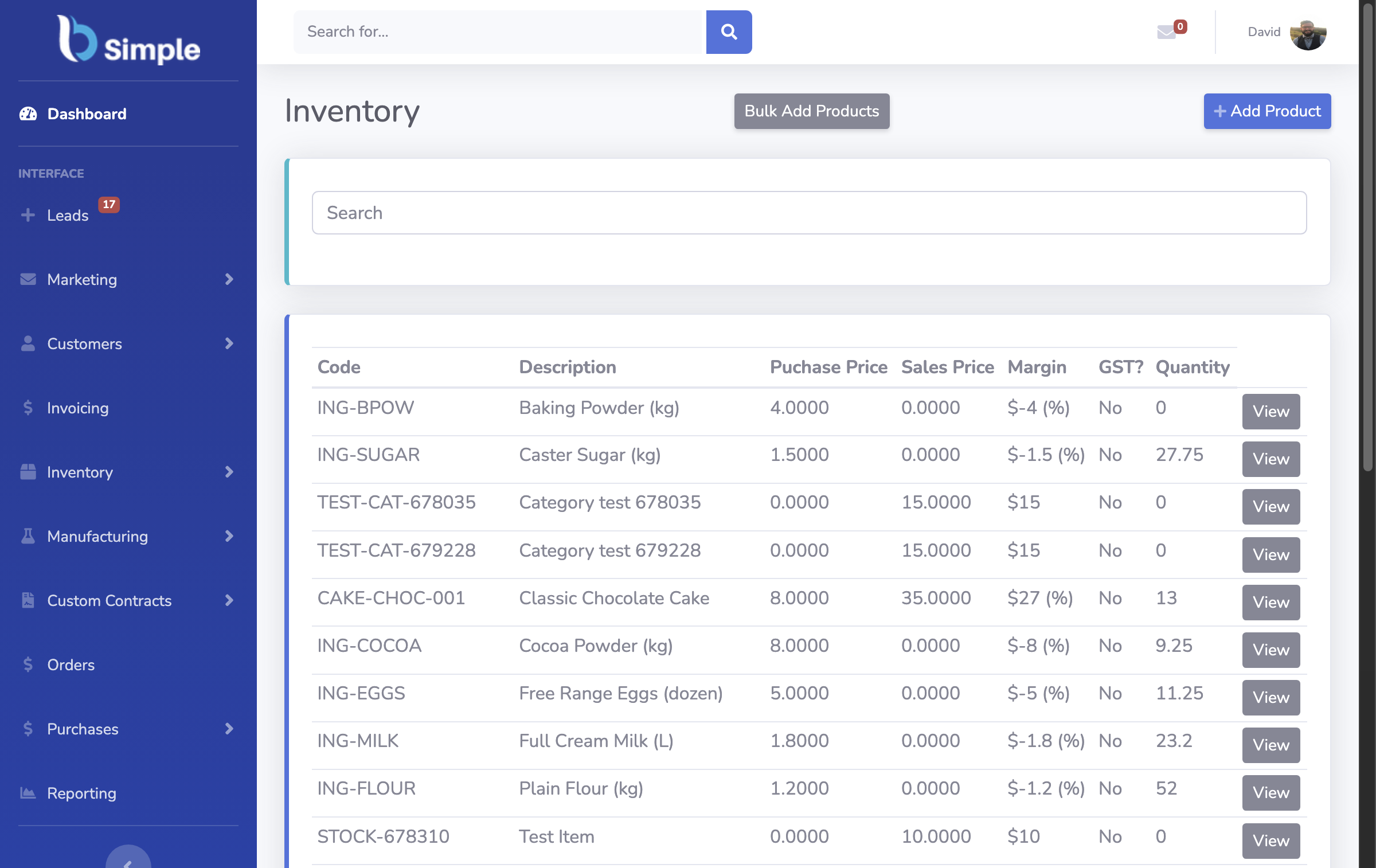
- BSimple is one of the SMB options: one record for inventory, orders, purchasing and invoicing, from $180/month (AUD) with a free trial.
What the top solutions have in common
Whatever the logo on the box, the leading inventory solutions converge on the same skeleton: quantities that update the moment stock moves; reorder or par levels that surface what needs buying; purchase orders and goods receipts that keep buying honest; a fulfilment path from order to packed box; invoices that reach the accounting system without re-entry; and reporting that shows stock value and turnover on one screen.
Beyond that skeleton, vendors emphasise different growth levers. Multi-channel tools focus on keeping stock true across stores and marketplaces. Production-focused tools deepen recipes, batches and traceability. Warehouse-focused tools optimise picking throughput. The right choice is the emphasis that matches your bottleneck — which is why "top" without context is a meaningless ranking. The stock software list breaks the skeleton into checkable capabilities.
- 01The facts about top inventory solutions
- 02What the top solutions have in common
- 03How inventory software actually drives growth
- 04How to pick from any top-solutions list
- 05The honest note on skyrocketing
How inventory software actually drives growth
Cash. Excess stock is money on shelves. Solutions with live turnover and slow-mover reporting show what to stop reordering; reorder points stop panic-buying the other direction. The effect is unglamorous and real: working capital shifts from duplicate stock to the next hire or the next line.
Service. Overselling and stockouts cost customers quietly — they rarely complain, they just stop ordering. One live record with negative-inventory guardrails means the promise a salesperson makes is the promise the warehouse can keep.
Time. Re-keyed orders, hand-reconciled invoices and shelf-by-shelf paper counts are hours. A system that runs order-to-invoice without retyping hands those hours back every week. Compounded across a year, that is capacity you did not have to hire.
That is the whole growth story, and it is enough. Any vendor promising more than cash, service and time is selling dashboard jewellery.
How to pick from any top-solutions list
Shortlist by bottleneck first: if stock lies across channels, weight multi-channel sync; if you make what you sell, weight recipes and batches; if orders pile up at dispatch, weight the pick-pack path. Then run one honest test per candidate — a real receipt, a real order, a real invoice into Xero or MYOB — and price the whole loop including the features hidden behind module fees.
Published pricing is part of the credibility test: plans from $180/month (AUD) with everything included are easier to compare than a quote process. The ecommerce-focused comparison covers the multi-channel branch, the manufacturing comparison the production branch, and the free trial is where your own products settle it.
The honest note on skyrocketing
This page exists because people search that phrase, so let us be direct: software does not skyrocket a business — decisions do, executed consistently. What inventory software does is remove the friction that taxes every decision: numbers nobody trusts, orders nobody can find, cash nobody can see. Remove the tax and growth gets easier to compound; that is the honest version of the promise.
We build BSimple, so weigh that. It is the SMB option on the list — Australian-built, cloud-based, sized for wholesale, manufacturing, distribution and trade businesses that have outgrown spreadsheets but not outgrown sense. If the skeleton above matches what you need and the growth mechanics match what you are chasing, the trial is a better judge than any top-list — including this one.
Frequently Asked Questions
What are the top inventory management solutions right now?
The leaders cluster by need: multi-channel commerce tools, production systems with recipes and batches, warehouse platforms, and SMB operations suites that cover the whole order-to-invoice loop. Rankings reshuffle constantly; the skeleton — live stock, reordering, handoff to accounting — does not.
Can inventory software really help a business grow?
Indirectly but measurably: it releases cash from excess stock, protects sales from overselling, and returns hours the team currently spends re-keying and counting. None of that is a growth strategy by itself — but every one of those makes the strategy you do have cheaper to execute.
How much do inventory solutions cost?
SMB suites publish prices: BSimple starts at $180/month (AUD) with all features included. Specialised warehouse and enterprise platforms cost more and usually quote after a sales process. Compare total cost against the three mechanics — cash, service, time — not the subscription alone.
Which solution is best for a business that sells online and wholesale?
One that treats both channels as the same stock. BSimple imports Shopify orders into the record that also runs the wholesale customer portal, so neither channel oversells the other — that single-design decision matters more than any feature comparison.
How quickly should results show up?
Time savings show within the first weeks the team stops re-keying. Stock accuracy follows the first full count against the live record. Cash effects appear over a purchasing cycle or two as reorder decisions improve. If nothing measurable moves in a quarter, the implementation — not the category — is the problem.
BSimple