
Guide / ecommerce inventory
What is the best inventory management software for ecommerce?
The best setup splits the job: the online store sells, the backend keeps the stock record true and drives fulfilment. Here is how to judge the tools — and where BSimple fits.
The facts about ecommerce inventory software
- Ecommerce platforms are not inventory systems. Shopify is a great shopfront; its stock view thins out the moment wholesale, assemblies or multiple channels appear.
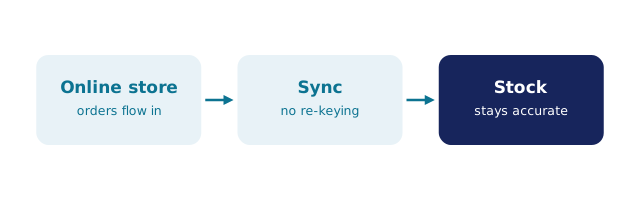
- The architecture that works: store sells → orders flow to the backend → stock and fulfilment live on one record → invoices reach the accounting system.
- Overselling is the failure to beat: the channel taking orders must read the same live quantities the warehouse picks from.
- BSimple does not run storefronts. It imports Shopify orders by webhook, handles pick/pack and stock, and leaves invoicing between Shopify and your accounting system.
- BSimple plans start at $180/month (AUD) with a free trial.
- The wider system: inventory management end to end maps the whole record this page sits in.
- 01The facts about ecommerce inventory software
- 02What "best" has to mean when you sell online
- 03The honest architecture question: where should inventory live?
- 04Where BSimple fits — and where it deliberately does not
What "best" has to mean when you sell online
The store takes orders around the clock; the test is what happens next. Best-in-class setups have four properties. One live record: every channel — online store, phone orders, B2B portal — reads and writes the same quantities. Automatic order flow: online orders arrive without anyone exporting a CSV, and delivery slips and picking follow from the same record. Receiving that keeps up: purchase orders raised from demand, goods receipted against the same record the store reads. Accounting without re-entry: invoices and payments reconcile in Xero or MYOB, not in a spreadsheet at month end.
A tool missing the first property will oversell during your next promotion; missing the last, it will cost you a weekend every BAS quarter. Those two failures — more than any feature checkbox — are what the "best" question is really asking about.
The honest architecture question: where should inventory live?
If you sell only direct-to-consumer from one store, with no wholesale and no assemblies, your ecommerce platform's native inventory may genuinely be enough — a simple free setup alongside it might be all you need. The backend earns its keep when complexity arrives: wholesale customers ordering alongside online ones, kits or multi-level stock (boxes into cases), batch or expiry traceability, or a second channel where the same unit of stock is promised twice.
At that point the store should stop being the stock record. It stays the shopfront; the backend becomes the truth that every channel reads. Our Shopify-specific comparison covers the options that sit beside the store, and the Shopify order management guide walks the fulfilment flow.
Where BSimple fits — and where it deliberately does not
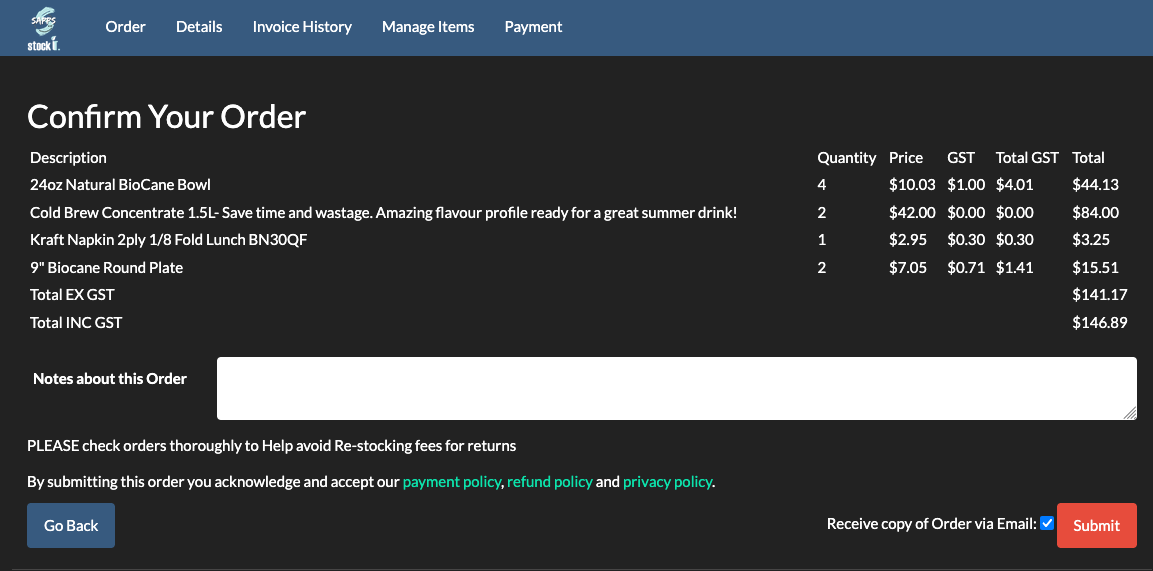
We build BSimple, so weigh that. It is not an ecommerce platform: there is no storefront, no product pages, no checkout. What it does is run the warehouse side of an online business — Shopify orders import by webhook into the same record used for everything else; delivery slips, picking and packing follow; stock stays true across online and B2B channels; and approved orders push to Xero or MYOB with payment status mirroring back. That suits product businesses selling online and off-line: wholesale plus web, trade counters plus Shopify.
Be equally plain about the boundary: if you are a pure B2C store wanting an all-in-one platform, BSimple will be half a solution — the shopfront stays in Shopify and invoicing stays between Shopify and your accounting system. If you have outgrown single-channel stock, start the free trial, connect your store, and watch a real order arrive, get picked and reconcile. Selling from India? The India-specific guide covers local considerations, and the Amazon seller guide covers that channel.
Frequently Asked Questions
Do I still need inventory software if I use Shopify?
Not always — single-channel sellers with simple catalogues can run on Shopify's native stock. You outgrow it when wholesale or trade orders mix with online ones, when stock needs batches or multi-level cases, or when a second channel appears. That is when a backend like BSimple, syncing orders from Shopify, becomes the stock record.
How does BSimple work with Shopify?
Shopify orders arrive in BSimple by webhook — no exports — into the same record used for phone and B2B orders. Your team picks and packs with delivery slips, stock updates live, and invoicing stays between Shopify and your accounting setup. BSimple deliberately does not duplicate the storefront.
Can inventory software prevent overselling?
Yes, when every channel reads the same live record — that is the whole point of keeping stock in the backend rather than in the store. BSimple adds negative-inventory guardrails so an oversell attempt is caught rather than silently accepted.
Does BSimple handle wholesale customers ordering online?
That is core territory: each customer gets their own ordering portal link with their own product list and custom pricing, so B2B buyers order like consumers — with stock and fulfilment running on the same record as your Shopify orders.
What does ecommerce inventory software cost?
Backend systems price per plan rather than per order: BSimple starts at $180/month (AUD) with all features included. Judge it against the cost of the alternative — oversold orders, manual re-entry between store and books, and stocktakes that never reconcile.
BSimple