
Guide / tasks vs operations
Free task management software — and where tasks meet stock
Free task tools are genuinely good for who-does-what-by-when. What they track well, what they cannot hold (quantities, movements, orders), and how the two tool types complement.
The key facts
- Free task tools are real: boards, lists and assignments for small teams, free-tier or open source — this page recommends them honestly.
- Tasks ≠ stock: a task tool holds who-does-what; it cannot hold quantities, movements, guardrails or order states.
- The seam: task tools run the work; an operations record runs the materials and promises — businesses past a certain volume need both.
- BSimple's boundary: not a task manager — the operations record ($180/mo AUD up, trial) with projects for installed assets, stated plainly.
- Context: the full inventory system holds the wider system, this page one stop in it.
- 01The key facts
- 02What free task management tools actually do
- 03Where tasks meet stock — the seam that matters
- 04BSimple's position, plainly
What free task management tools actually do
Task management software keeps the work record: boards and lists of who does what by when, with assignments, checklists, comments and due dates. Free tiers of the major tools are genuinely usable for small teams, and open-source options suit self-hosters — for coordinating jobs, launches and renovations, the free route is legitimate and this page will not talk it down. The sibling page on project management covers the timeline-heavy end, and the broader free-software map places task tools among the other free categories.
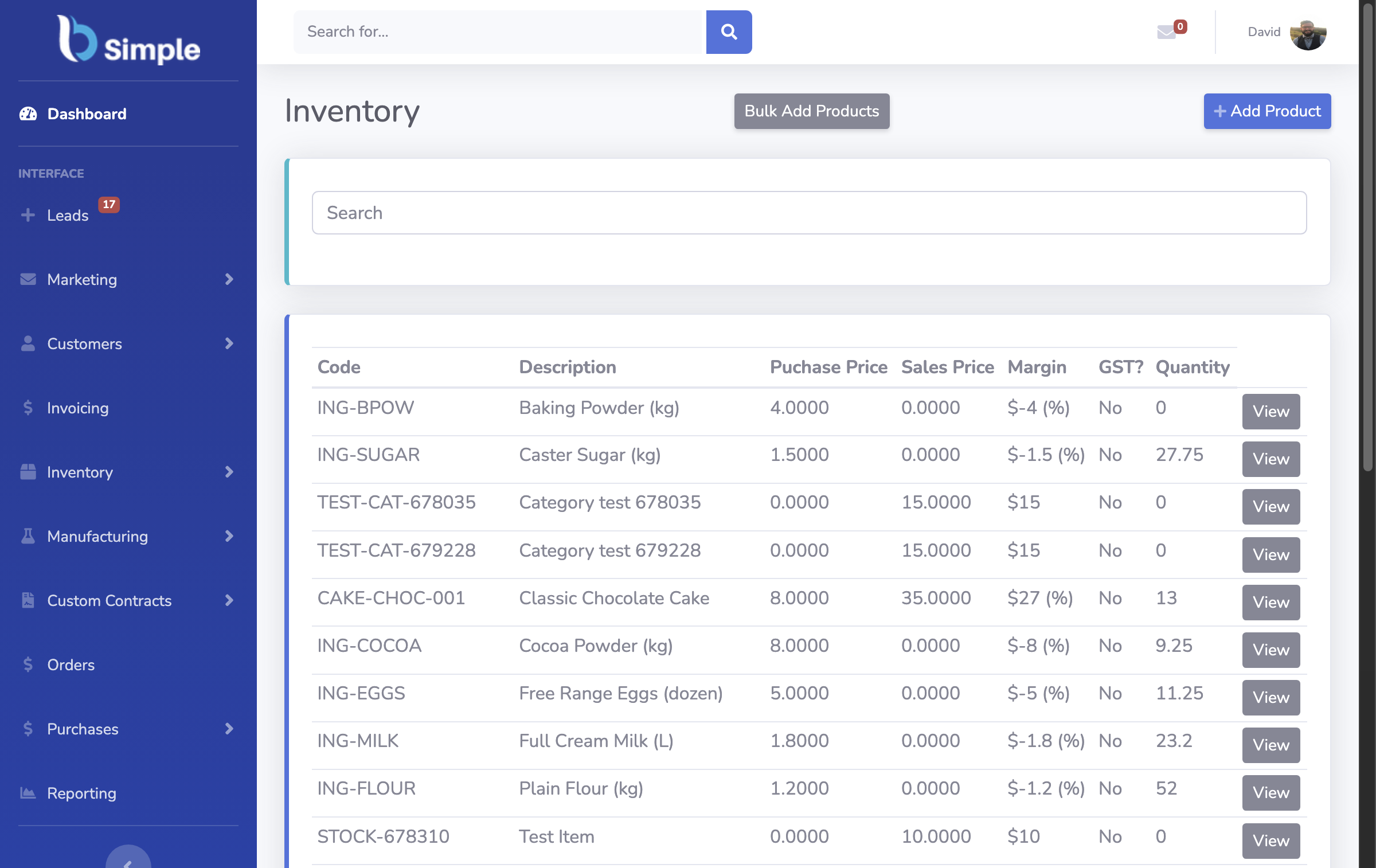
What task tools cannot hold is the other small-business truth: quantities and orders. A card saying "assemble 40 units" knows nothing about whether 40 exist, what was consumed by the last assembly, or what to reorder. The tasks-versus-operations distinction is where the two tool types part ways.
Where tasks meet stock — the seam that matters
Jobs that consume materials need both records talking to the same reality: the task says assemble the order, the record says these quantities exist, those were consumed, this needs reordering. When one tool is asked to do both, the failure is predictable — task lists become de facto stock registers, quantities go stale, and the reorder decision is a guess. The healthy seam: the task tool runs the work; the operations record runs the materials and promises; people bridge them by keeping each truth where it belongs.
BSimple's projects layer sits exactly on this seam from the record side: installed assets and consumed parts grouped under a customer with lifetime history — the trade-installation pattern — while the work stays in whichever task tool the team uses. No formal integration with specific task tools is claimed; the seam is stated rather than implied.
BSimple's position, plainly
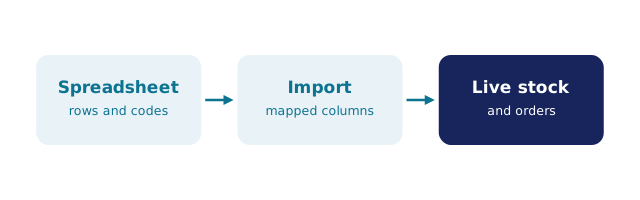
We build BSimple, so weigh that: it is not task management software — no boards, assignments or due dates. It is the operations record for wholesale, manufacturing, distribution and trade businesses: live multi-location quantities, batches, purchasing from demand, order-to-invoice, invoices pushed to Xero or MYOB (US integrations rolling out). Plans run $180/$250/$399 per month AUD with the trial as the full product. If the need is tasks, the free tools above are the honest answer; if the need is quantities and orders, the stage guide maps when the operations record earns its cost — and both tools coexist fine.
Frequently Asked Questions
Is there good free task management software for small business?
Yes — free tiers of the major tools and open-source options genuinely serve small teams. This page recommends them; BSimple is not one of them and does not pretend to be.
Can a task tool track inventory?
Badly — checklists hold tasks, not movements with guardrails and history. The moment quantities must be true across jobs and locations, an operations record is the tool that survives.
Is BSimple free?
No — paid from $180/month AUD with a full-product trial and no free tier, stated plainly. The free task tools above are listed because this page refuses to dress a trial up as a free product.
Do we need both a task tool and an operations record?
Past a certain volume, usually: tasks coordinate people, the record holds quantities and promises. Small operations with one owner can run on either alone — the stage guide maps when both arrive.
How do the two tools stay in sync?
By keeping each truth where it belongs: tasks reference jobs, the record holds quantities and states. Integration depth varies by tool — ask vendors directly about your stack, and test the operations side with the trial.

BSimple