
Guide / stock and the ledger
Stock management software with Xero: a working week
The stock system runs the week; Xero keeps the ledger. Here is how the two divide a real working week — and the one rule that keeps the boundary clean.
The short answer
- Monday to Friday belongs to the stock system: receiving, picking, counting, reordering — quantities moving all week.
- The ledger belongs to Xero: invoices arrive pushed, not typed; payment status returns mirrored.
- The one rule: quantities live in stock software, values live in Xero, and the invoice is the only bridge.
- BSimple runs that division — established Xero handoff, MYOB alongside, from $180/month (AUD).
- 01The short answer
- 02The week, as the two systems divide it
- 03The one rule, and what breaking it costs
The week, as the two systems divide it
Monday, the delivery: goods received against the purchase order in the stock system — quantities live by morning tea, variances visible the same day. Xero never sees a quantity; it will see the supplier bill when purchasing reconciles it. Tuesday, the orders: customers order through the portal and the phone; allocation comes from live stock; picks and packs run against the order. Wednesday, the invoices: approved orders push to Xero — line detail and GST intact — and payment statuses mirror back, so the office stops chasing money the ledger has already banked. Thursday, the buying: stock below reorder level signals demand; a purchase order goes to the supplier; the goods-receipt closes the loop next Monday. Friday, the count: a cycle count in the aisle from a phone; variances explained while the trail is fresh.
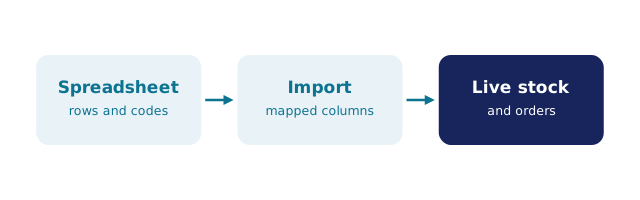
Every step writes to one operational record; only approved invoices and reconciled bills cross into Xero. That is the whole arrangement — the Xero integration page specifies it line by line.
The one rule, and what breaking it costs
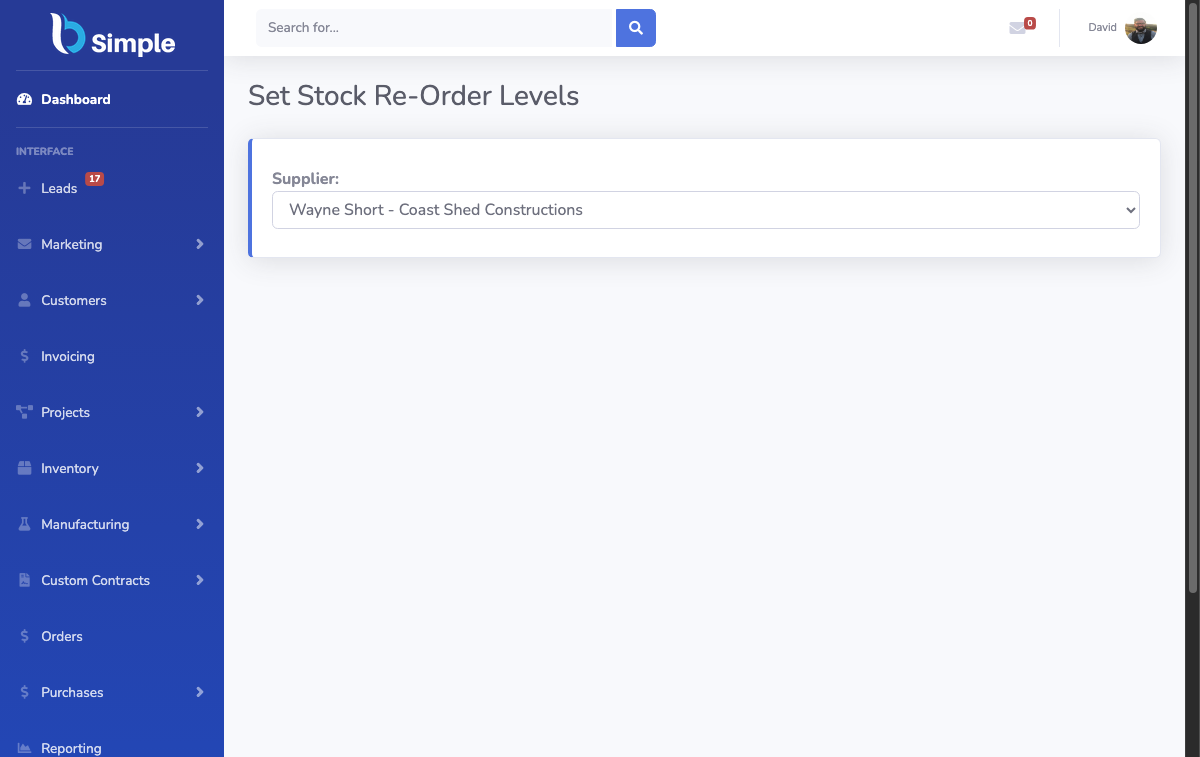
Quantities live in the stock system; values live in Xero; the invoice is the bridge. Break it by tracking stock inside Xero and the warehouse loses allocation, locations and counts. Break it by keeping a second ledger in the stock system and the bookkeeper inherits a reconciliation project. Businesses feel the temptation in both directions — does Xero have inventory management examines the first, the bookkeeping handoff the second.
Where BSimple fits, plainly: we build it, and it is the stock side of this arrangement for small-to-medium wholesale, manufacturing, distribution and trade businesses — live multi-location quantities, reorder levels, counts from any phone, batch tracking — with the Xero handoff as designed behaviour and MYOB alongside, US systems rolling out. From $180/month (AUD), with the free trial to run one real week. The best-for-Xero pairing guide weighs the choice, and the stock software list frames the alternatives.
Frequently Asked Questions
Does BSimple sync stock levels to Xero?
No — deliberately. Quantities stay operational in the stock system; the ledger sees invoices and reconciled bills, not quantities. Continuous quantity sync would build a second stock ledger inside Xero, and two ledgers means reconciliation forever.
How current is the payment information in the stock system?
Paid and voided statuses mirror back from Xero when the ledger records them, so the office works from the money truth without opening the accounting system. That return path is half the integration — a stock tool that only pushes has told half the story.
Can the bookkeeper keep working unchanged?
Yes — that is the arrangement's point: the bookkeeper keeps Xero or MYOB, and the quality of what arrives improves. Approved invoices push complete; supplier bills reconcile against orders and receipts with GST-inc and ex-GST views. Month-end becomes review, not archaeology.
What does stock software with Xero cost?
BSimple starts at $180/month (AUD) with the stock system and the handoff included — no integration fees or middleware. The comparison worth making is against the re-keying and reconciliation hours the arrangement removes, not against the licence line alone.
BSimple