
Guide / free stock, honestly
Free stock inventory software: the honest ladder
Stock is the quantity record — and free versions of it are real, up to a line. Here is the ladder from spreadsheet to software, what each rung covers, and the caps that decide when to climb.
The key facts
- Genuinely free: the spreadsheet stock list — honest while one person maintains it and counts stay rare.
- Free tiers: a real database with caps on users, volume and history; caps land on the time-saving features.
- What stock needs to be trusted: transactions per movement, counts with an audit trail, reorder levels that drive purchasing.
- BSimple is not free: from $180/month (AUD), everything in the core plans, the full product free to trial.
- Context: the full inventory system holds the wider system, this page one stop in it.
- 01The key facts
- 02What free stock inventory covers
- 03What a stock record needs to be trusted
- 04Where BSimple fits
What free stock inventory covers
The spreadsheet rung first, because it is the only free-forever option: item, bin, quantity, updated by hand, corrected by count. At one person and modest volume it is a legitimate system — how businesses track stock today covers it honestly. The ceiling: two editors, quantities nobody trusts between counts, and purchasing from memory.
Free tiers of cloud tools move the list into a real database with mobile counts, capping users, order volume, locations or history. The caps are structural, not tricks — hosting and support cost money monthly — but they reliably land on the features that save time: automation, integrations, extra users. The free landscape and the free stock-software comparison map both rungs in detail.
What a stock record needs to be trusted
- Every movement is a transaction. Receipts, issues, transfers and adjustments recorded with a user and timestamp — not typed edits.
- Counts that correct deliberately. Variances adjusted against live quantities, kept on an audit trail; shrinkage becomes visible instead of absorbed.
- Reorder levels that drive purchasing. What falls short is grouped by supplier and raised as an order — before the shelf is empty, because the record said so.
- One record across channels. Counter, portal, online store — everyone reads the same quantities, or overselling is only a matter of timing.
Free covers the list; these four behaviours are the paid layer nearly everywhere. That is the honest price of trust, in any market.
Where BSimple fits
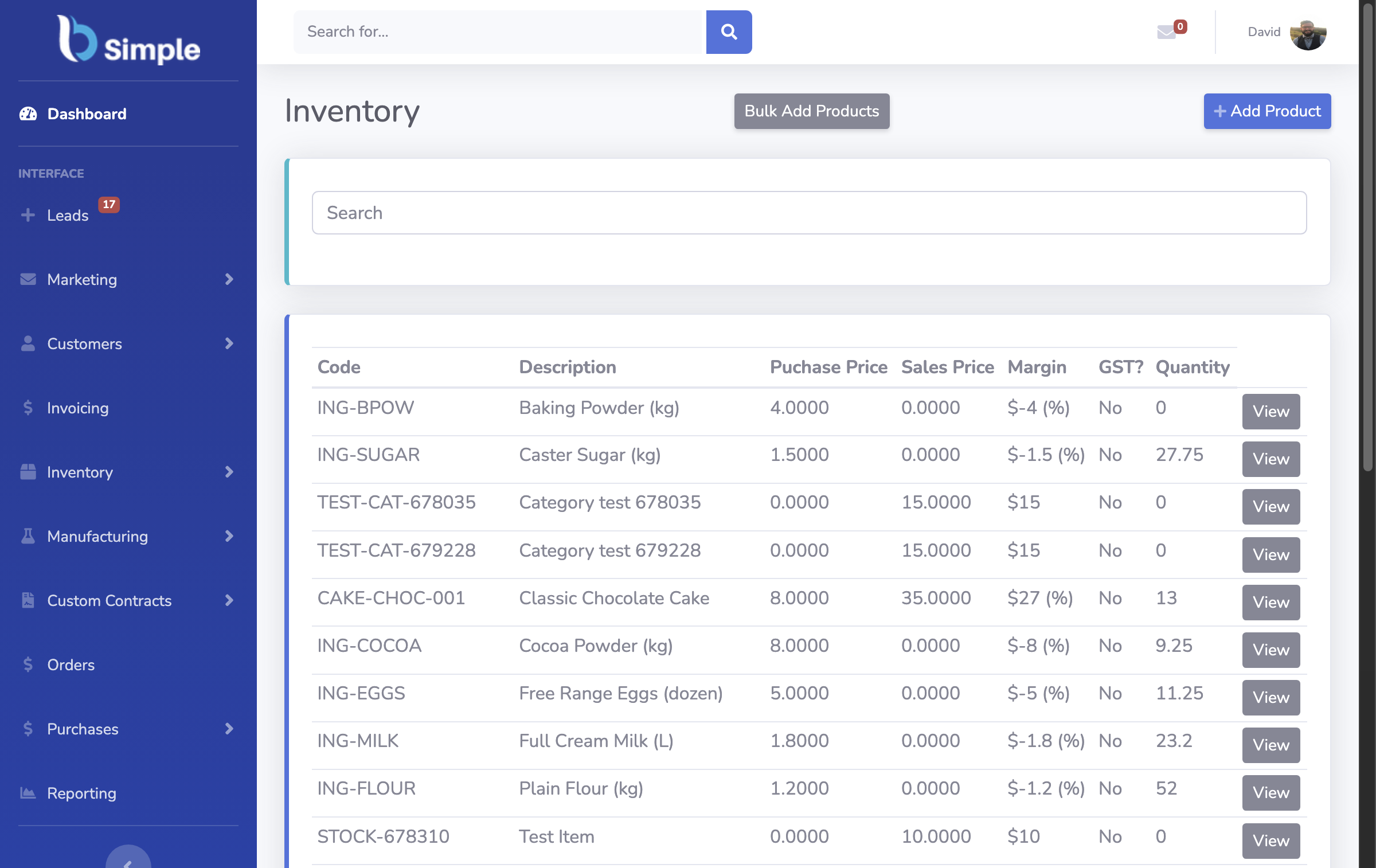
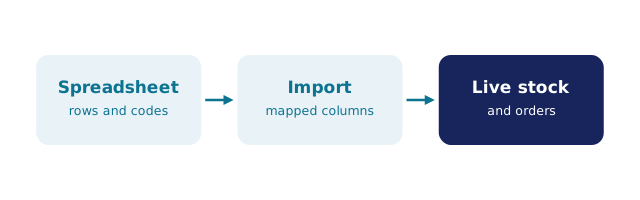
We build BSimple, so weigh that. Stock on one live record: quantities per location, movements as transactions, counts from any phone browser, reorder-driven purchasing, and invoicing with the Xero/MYOB handoff behind it — with batches and expiry where stock ages. Plans start at $180/month (AUD), every feature in the core plans, no modules. The honest test is the trial: import your current list, count a shelf, receive a delivery, and see whether the record earns its keep against what the free rung costs you in work.
If you are comparing the free options first, the pharmacy-free page shows how the ladder looks for expiry-sensitive stock — the pattern is identical everywhere.
Frequently Asked Questions
Is there free stock inventory software?
The spreadsheet, genuinely — free forever at one-person scale. Free tiers of cloud tools add a real database with mobile counts, capped on users and volume. A shared, live record with audit trail and purchasing is the paid layer everywhere in this market.
Is BSimple free?
No — plans start at $180/month (AUD). The trial is the full product with your own data and no card to start, which is the only honest way to judge whether the paid record earns its keep over the free one.
What do free tiers usually leave out?
Users, order volume, locations, history retention, and the accounting handoff. Since the handoff is what stops re-keying invoices, that cap alone can cost more hours than the paid plan costs dollars.
When should we move off the free stock list?
At the second person, the second channel, or the first costly wrong quantity — whichever arrives first. The record needs to be shared and live before those become monthly expenses.
BSimple