
Guide / tracking methods
How do small businesses keep track of inventory?
Five methods, in the order businesses actually try them — memory, paper, spreadsheet, scanning apps, software. Each works until a specific thing happens, and the step up is always the same one.
The key facts
- Method 1 — memory: works at a shelf you can see; breaks the moment there are two shelves.
- Method 2 — paper and whiteboards: survives staff turnover; dies on arithmetic and history.
- Method 3 — spreadsheets: the small-business standard; breaks on concurrency and between-count trust.
- Method 4 — scanning apps: fix identity errors; still feed a side list unless the record is shared.
- Method 5 — software: one live record that ordering, counting and invoicing all read.
- Context: the full inventory system holds the wider system, this page one stop in it.
- 01The key facts
- 02The five methods, and where each breaks
- 03The pattern behind the step-ups
- 04What the software step looks like
The five methods, and where each breaks
Memory ("we"ve got a few out the back"): free and instant, until a second person orders against the same belief and one of them is wrong. Paper — a book or whiteboard: visible and immune to crashes, but no arithmetic, no history, and no way to answer "who changed this?".
Spreadsheets are where most small businesses live: a real record, sortable and free. The breaks are predictable — two people editing at once, quantities that are only right after a count, and purchases driven by memory between counts. Scanning apps upgrade the entry side: the phone reads the barcode and identity errors drop. But most scan into their own list, so the record still waits for someone to reconcile it.
Software is the step where the record becomes shared and live: every receipt, pick and count posts a transaction, quantities are true between counts, and reordering happens because the record said so. What a stock management system is covers the mechanics; an app-based path covers the phone-first version.
The pattern behind the step-ups
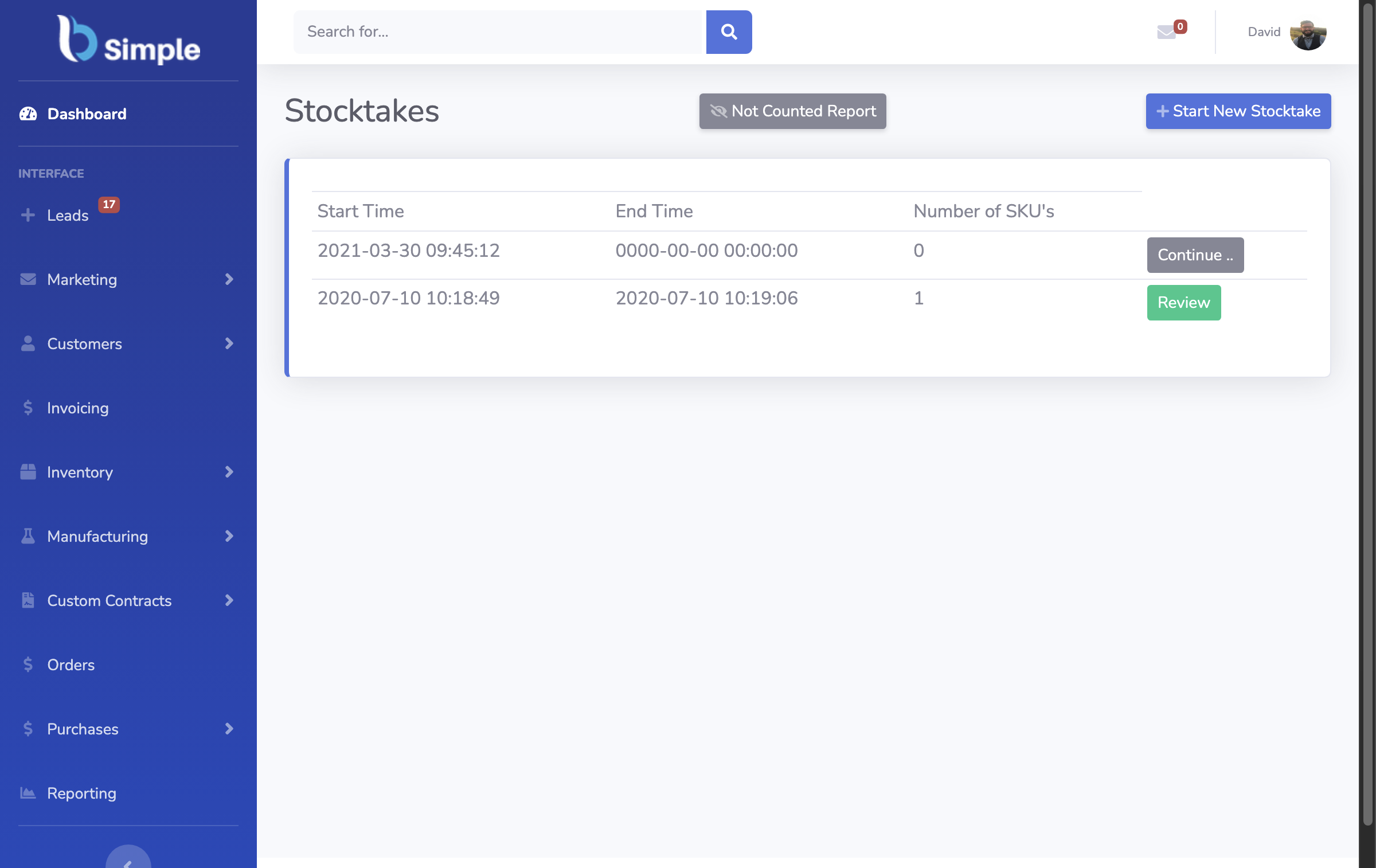
Notice what each break has in common: not size, but a second person or a second truth. Memory fails at the second shelf; spreadsheets fail at the second editor; scanning apps fail at the second list. The software step is not about features — it is about everyone reading one record that updates itself as work happens.
The practical test for staying free: has a wrong quantity ever cost real money — an oversell, a stockout, a re-order nobody placed? Until that happens, your current method is fine. When it happens twice, the step up pays for itself. The examples guide shows the four records software keeps; real-life examples show a working day on them.
What the software step looks like
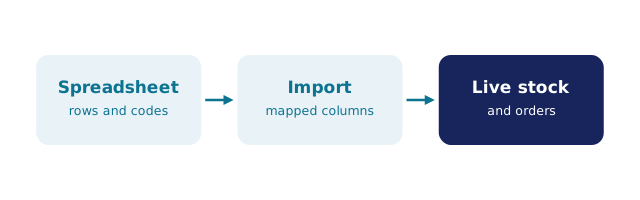
We build BSimple, so weigh that. The step is smaller than businesses expect: import the spreadsheet you already keep, set reorder levels on the items that matter, count a shelf from a phone browser, and take one order from portal to picked to invoiced — with the accounting handoff to Xero or MYOB behind it, from $180/month (AUD). The spreadsheet does not have to be perfect; it has to be honest enough to import.
The trial is the full product with your own data, no card to start — which is the honest way to answer this question for your business rather than in general.
Frequently Asked Questions
What is the most common way small businesses track inventory?
A spreadsheet, usually — sometimes with a scanning app feeding it. It is a legitimate method at one-person scale, and the businesses that move to software are the ones where a wrong quantity or a missed reorder has started costing real money.
Do we need software, or is a spreadsheet fine?
Fine while one person maintains it and quantities are corrected at counts anyway. The triggers to move are a second editor, decisions that need true quantities between counts, and an accountant who needs the numbers without re-keying.
Can we just use a scanning app?
Scanning fixes identity errors — wrong items, mis-read codes. But most apps scan into their own list, so the record still needs reconciling. The value arrives when the scan posts into the same record your orders and invoices use.
How do we start tracking inventory properly?
Import what you have, set reorder levels on the fast movers, count a shelf, and take one order end to end. The trial does that with your own products in an afternoon — the honest test of the step.

BSimple