
Guide / retail free ladder
Free retail inventory software, honestly ranked
Retail starts free and stays free longer than most industries — the POS counts what sells. Here is the honest ladder, and the movements that finally break it.
The short answer
- Rung one is the POS you already have: while every movement is a counter sale, its stock count is honest and free.
- Rung two is the spreadsheet: for the back-room items the till never sees — until two people or two rooms collide.
- Rung three is the trial: the full record, free — the only way to see allocation, purchasing and counts before paying.
- BSimple is not free — from $180/month (AUD) — and is not a POS; it is the record that leads when retail grows sides.
- Where it fits: this page is one branch of the inventory management guide.
- 01The short answer
- 02The retail ladder, rung by rung
- 03Where BSimple fits
The retail ladder, rung by rung
The POS-attached count is the most under-rated free inventory system in retail: every sale scans, every quantity updates, and for a counter-only shop the till is the truth. The movements that break it are the retail growth story: the delivery booked in late (or never), the wholesale order at trade pricing, the online channel, the second outlet, the stock used in-store. Each moves stock the till never learns of — the retail software choice marks that line precisely.
The spreadsheet covers the back-room gaps: the storeroom, the returns, the fixtures — free and honest under one maintainer. Free tiers of retail tools add structure with caps; read the cap as a timing question. The trial is the rung that answers the real question: what does a leading record do for this shop? BSimple's trial is that rung — full product, your catalogue — before plans from $180/month (AUD). The free stock software audit prices the whole ladder.
Where BSimple fits
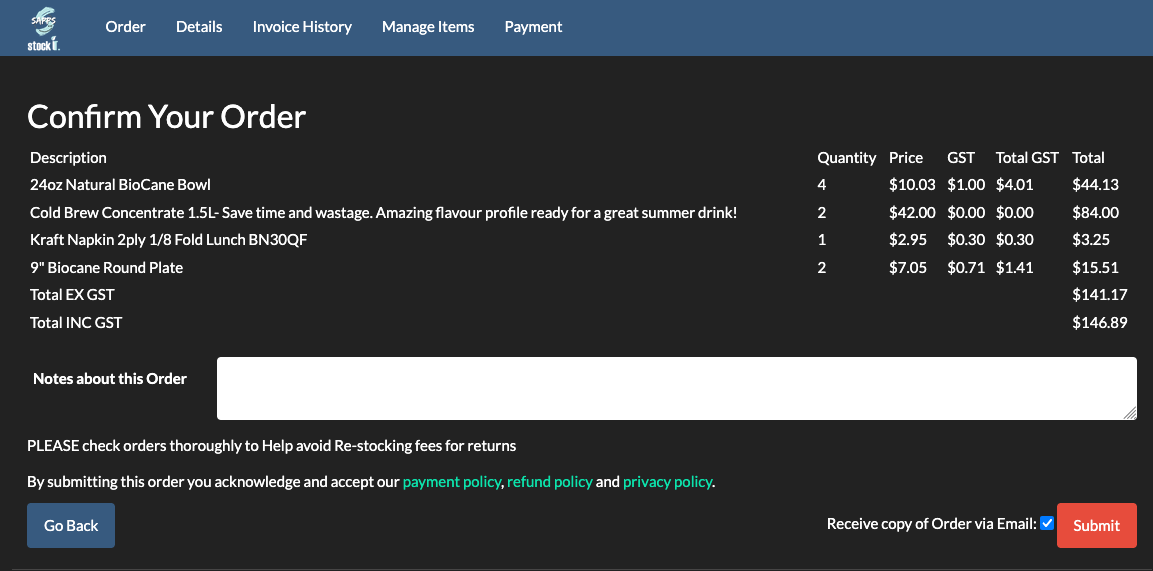
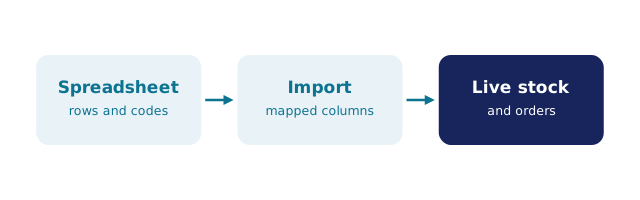
We build BSimple, so weigh that — and the boundary first: it is not a POS. Counter sales stay on the till; BSimple is the live record behind it, plus the sides retail grows: wholesale accounts ordering through their own portal at their own pricing, Shopify sync for the online store, purchase orders from demand with supplier variance flags, counts from any phone browser, multi-level units for packs versus singles, and the Xero or MYOB handoff. One record under the counter, the back room, the website and the trade side.
The honest recommendation, as everywhere on this site: if the counter is the whole business, stay POS-attached and spend nothing. The moment stock moves in ways the till never sees, the retail stock control guide shows what leading the record looks like — and the trial is where it gets tested with your own shelves.
Frequently Asked Questions
Is there a truly free retail inventory system?
Two, honestly: the POS-attached count (while the till is the only thing moving stock) and the spreadsheet (for the gaps). Software with allocation, purchasing, portal and an accounting handoff is paid across the market — free versions are trials or capped tiers.
Does BSimple replace our POS?
No — the till stays. BSimple is the live stock record behind the counter plus the wholesale side: deliveries, back stock, supplier orders, trade portal, counts. The POS and BSimple agree because both read the same truth instead of syncing copies.
Our store also has a website. Does that change the answer?
Yes — two channels promising one shelf is the classic copy-drift problem, and channel-attached counts cannot referee it. One leading record with Shopify sync covers both; the ecommerce guide shows the pattern.
What should a retailer trial first?
The movements the till never sees: receive a delivery, process a return, place a trade order through the portal, count one aisle. If those run clean against your real catalogue, the record has earned the place the POS never could.

BSimple