
Just-in-Time Inventory
Just-in-time inventory is the discipline of holding as little stock as you can get away with, by having goods arrive just before you need them. The idea, borrowed from manufacturing and adopted by everyone from wholesalers to restaurants, is simple: stock sitting on a shelf is cash not doing anything. The less you hold, the more money you free up for the business — provided you can still supply what your customers demand.
The secret to making it work is demand-driven reordering. Instead of buying to a calendar or guessing, you let your real sales dictate the numbers: how fast each line moves, how long your supplier takes to deliver, what's the minimum order the supplier will accept, and what buffer keeps you safe when a delivery runs late. Those numbers decide the timing and the size of each order. The software's job is to keep those calculations current from the live data, so your reorder points reflect what's actually selling.
The risk is obvious — promise too much precision and you run dry. That's why just-in-time is a discipline as much as a logistics trick, and it needs quality stock data. If your counts drift, the recommended orders drift with them, and suddenly your "just in time" is just late. Keeping your numbers true through good stocktake management and barcode scanning for inventory is what separates a smooth JIT operation from a starvation diet.

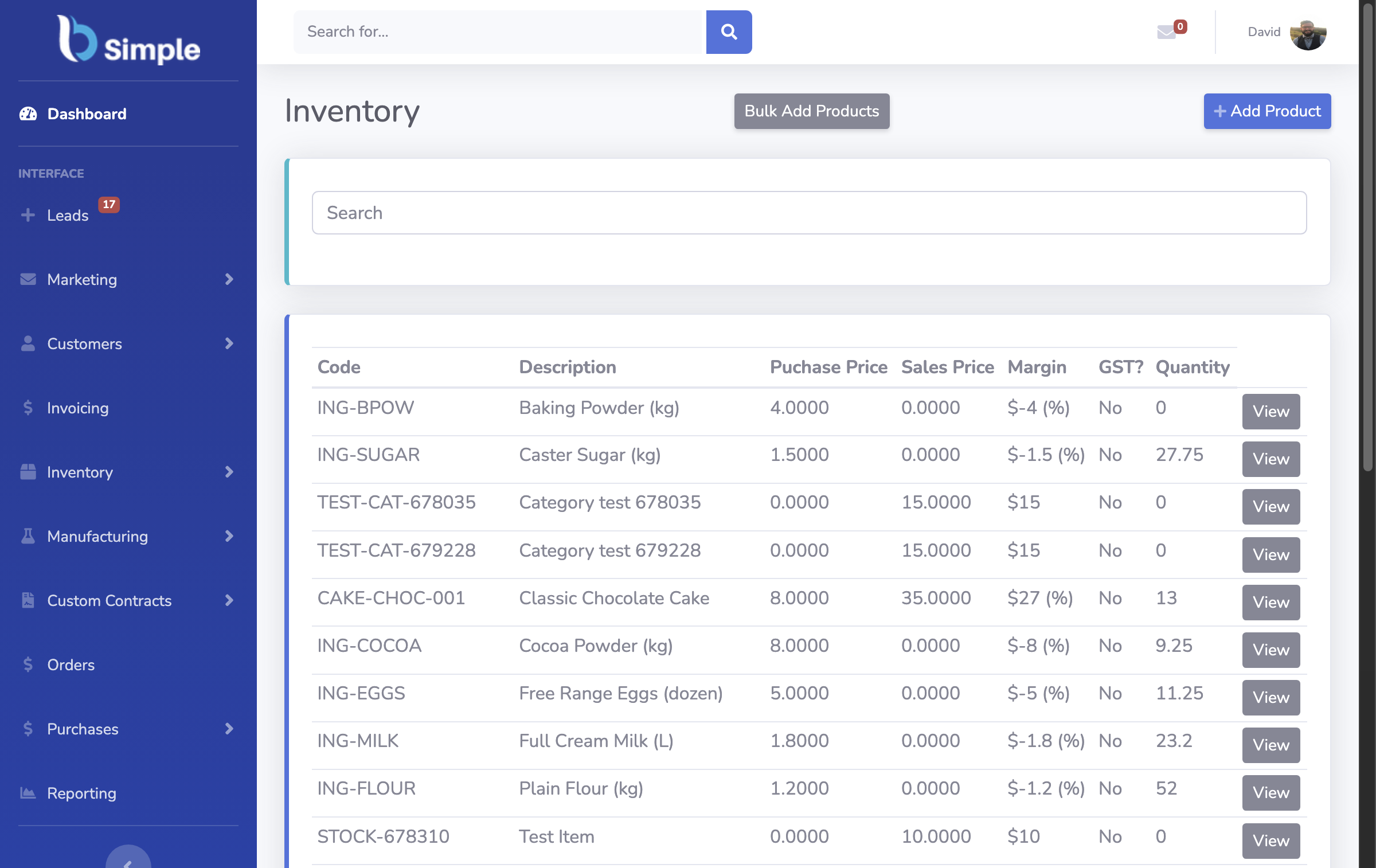
BSimple gives you the machinery for demand-driven reordering. Reorder points come from your live sales and stock picture, automated purchase orders raise the buys at the right moment, and the flow into purchasing management keeps supplier and timing information honest. It marries cleanly with inventory management software so the whole operation — order, receive, count, sell — runs on one live ledger.
BSimple