
Diagram / use cases
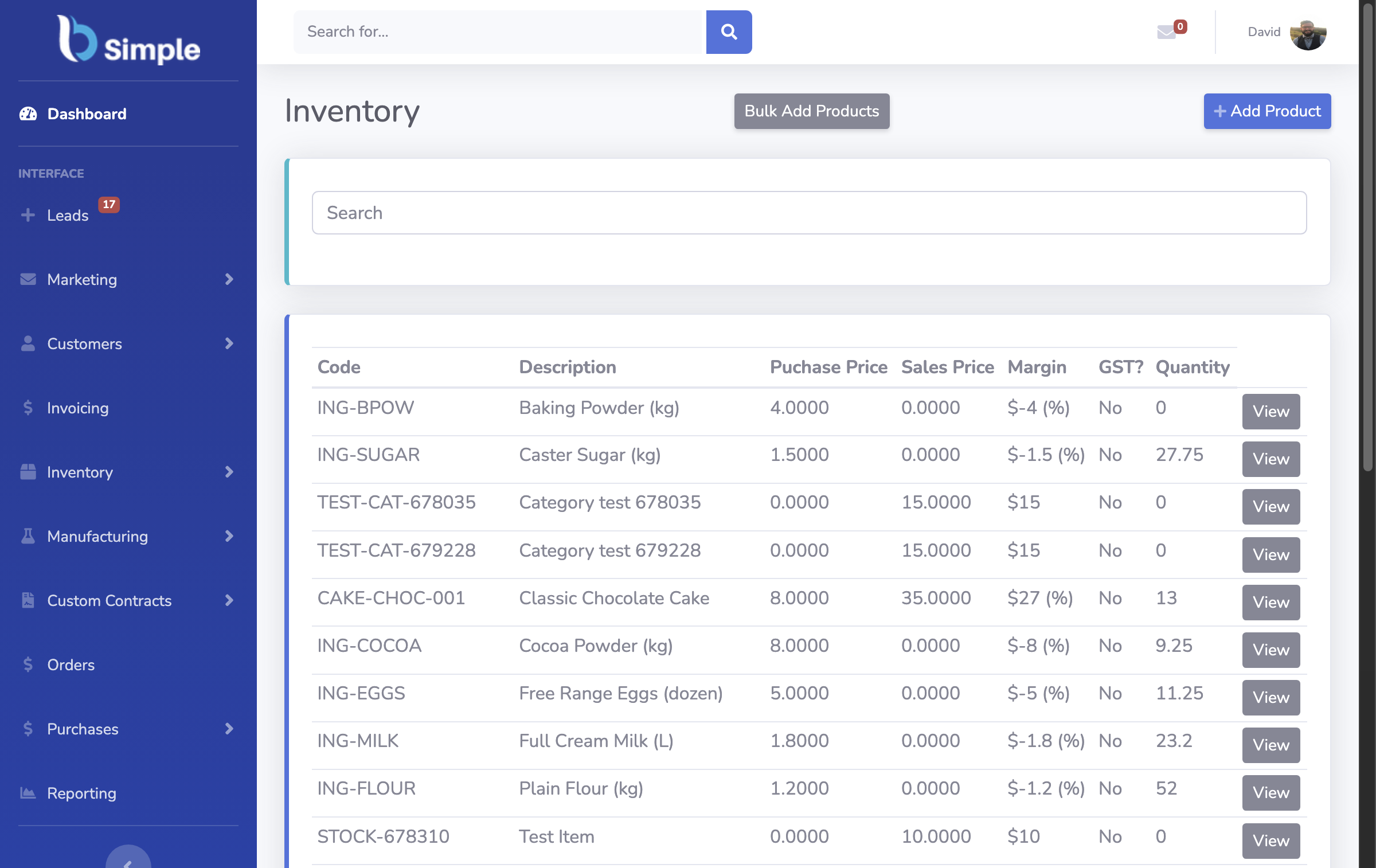
The inventory system use case diagram
Four actors meet one system: customers order, staff fulfil, suppliers restock, accountants reconcile. Here are the use cases each one triggers — the honest skeleton of any inventory system.
The key facts
- Four actors: customer, staff, supplier, accountant — every use case belongs to one of them.
- Customer use cases: browse own product list, order through the portal, see order status.
- Staff use cases: receive goods, pick and pack, count stock, adjust with a reason, approve invoices.
- Supplier and accountant use cases: fulfil purchase orders; receive invoices, mirror payments back.
- The actor the diagram forgets: the system itself, enforcing rules — no overselling, no silent edits.
- 01The key facts
- 02The diagram, actor by actor
- 03The use cases that make or break the system
- 04Drawing it for your own business
The diagram, actor by actor
Customer (wholesale buyer): view my products and my pricing, place an order, see its status. In the good version of this diagram, the customer never sees another customer's prices and never phones to ask where the order is — the portal use case covers it.
Staff: receive goods against a purchase order, pick and pack orders, count stock and record variances with a reason, adjust for damage, approve invoices. Every staff use case writes a transaction — the diagram should show the record, not a spreadsheet, receiving them.
Supplier: is told what to send (the purchase order) and confirms it (the receipt). Suppliers rarely log in; the use case is the paper trail matching the physical one.
Accountant: receives approved invoices, records payments, files the GST. In the integrated version, this actor's system (Xero or MYOB) mirrors payment status back so operations sees it too.
The use cases that make or break the system
Some use cases are where systems earn or lose trust: check availability (against live quantities, including what is already promised); raise purchase order from demand (reorder levels doing the watching); count without closing (cycle counts while trade continues); trace a batch (back to inputs, forward to customers); adjust with a reason (no silent edits — the audit trail is a use case too).
If you are building or evaluating rather than buying, the architecture diagram shows where these use cases live in the layers, and the build-it-yourself guide is honest about what a home-built version covers. The inventory management guide is the full system behind the stick figures.
Drawing it for your own business
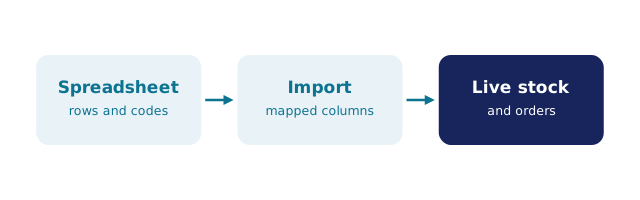
The use case diagram is the fastest requirements tool in inventory: list your actors, list what each one does daily, and you have the real system specification — which usually fits on one page and reads like your last week. Anything on the page that says "ask Dave" or "check the spreadsheet" is a use case your current system does not have.
We build BSimple, so weigh that: the diagram above is roughly BSimple's actor list, from $180/month (AUD), and the trial lets each of your actors run their use cases with your own products — which is the diagram, tested.
Frequently Asked Questions
What are the main use cases of an inventory management system?
By actor: customers order and check status; staff receive, pick, count and adjust; suppliers fulfil purchase orders; accountants receive invoices and mirror payments. Around them all: check availability, reorder from demand, trace batches — with an audit trail under everything.
Who are the actors in an inventory use case diagram?
Four humans-plus: customer, staff, supplier, accountant — plus the system itself as an enforcing actor. If your diagram only shows staff, it is a warehouse tool, not a business system.
How do I draw a use case diagram for my business?
List who touches stock and what each does daily — one line per use case. Anything currently answered by memory or a side spreadsheet is a missing use case. That page is your requirements list and your evaluation script.
Does BSimple cover these use cases?
The diagram above is close to BSimple's actual actor set — portal, receiving, picking, counts, adjustments, invoicing with accounting handoff — from $180/month (AUD). The trial runs each actor's use case with your own data.
BSimple