
Guide / laboratory
Laboratory inventory management — the honest boundaries
Lab stock punishes loose records: reagents expire, lots trace into results, consumption must be attributable. What BSimple covers for lab supply and production — and the clinical line it does not cross.
The key facts
- Lab inventory means lot-and-expiry discipline: reagents and consumables with expiry dates, FEFO usage, batch traceability into results, attributable consumption.
- BSimple covers the supply and production side: batches with use-by dates, trace search, consumption on the record, reorders — the machinery regulated food producers use.
- Stated plainly: BSimple is not LIMS — no sample management, no test workflows, no instrument integration, no clinical compliance.
- Accounting boundary: invoices push to Xero and MYOB (US integrations rolling out); compliance stays with the accounting system.
- 01The key facts
- 02What laboratory inventory actually demands
- 03Where BSimple fits — and the clinical boundary
- 04The test on your own lab
What laboratory inventory actually demands
Lot and expiry on every movement. Reagents, standards and consumables carry lots and expiry dates — and usage discipline (first-expired, first-out) is both quality and money. The record must carry lot and expiry on receipts, issues and returns, and surface short-dated stock before it becomes waste.
Traceability into results. When a result is questioned, the question is a trace: which lot fed that analysis, from which supplier receipt, to which other runs. A movement-based record answers by query; a shelf-register answers by archaeology. Batch trace search is the capability to demand.
Attributable consumption. Who used what, against which job or project — with an audit trail that survives accreditation audits. Adjustments have authors and reasons, not silent overwrites.
Purchasing discipline. Lead times on specialty suppliers are long and unforgiving; reorder levels against live and incoming stock, with supplier price-variance flags, keep the lab from improvising.
Where BSimple fits — and the clinical boundary
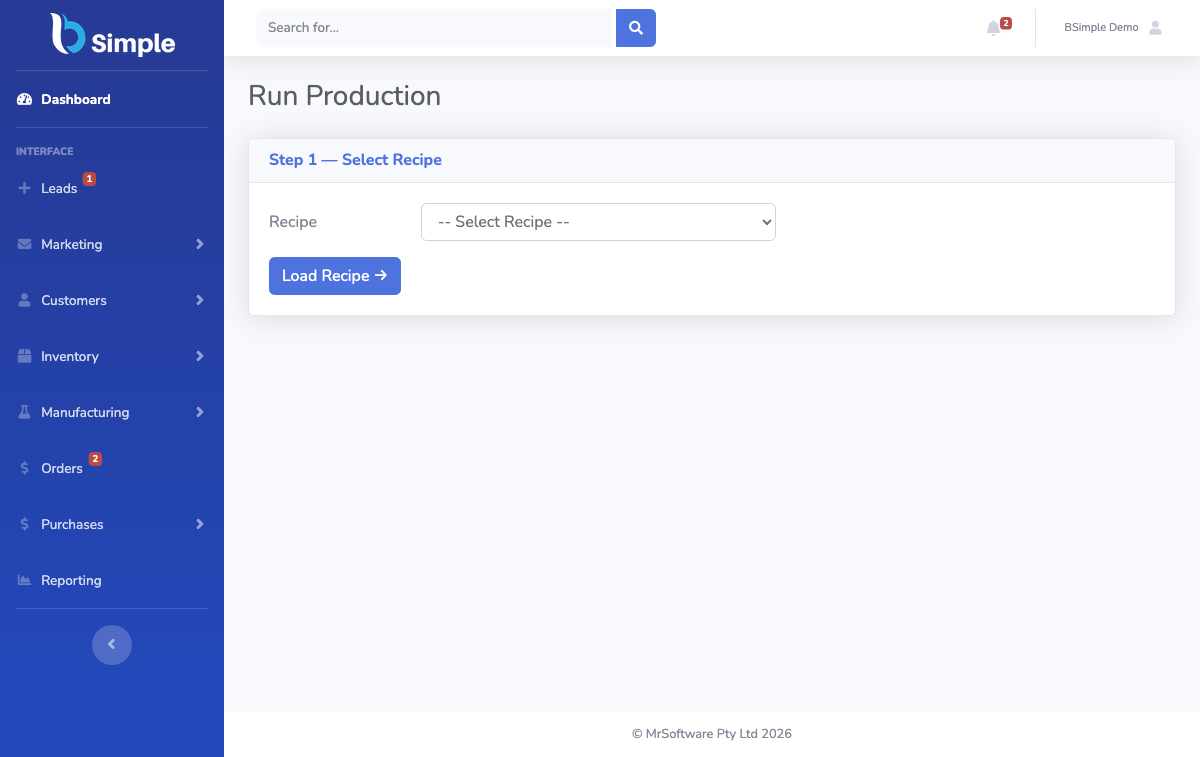
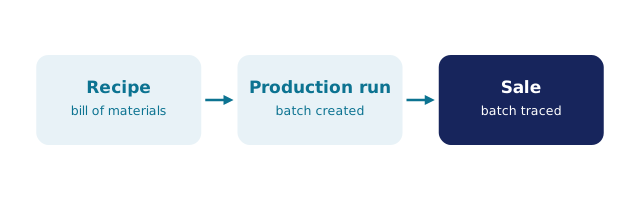
We build BSimple, so weigh that. For lab supply businesses and production labs — distributors of reagents and consumables, producers of diagnostics or lab-made goods — BSimple runs the operational record: batch and expiry tracking on every movement, traceability from supplier to customer, multi-location stock (freezers and rooms as locations), purchasing from demand with reconciliation, and ordering portals for regular buyers. The batch machinery is the same one existing customers use for organic certification (ACO/NASAA/OFC) — regulated-supply discipline, proven at volume.
The boundary, stated plainly: BSimple is not a LIMS — no sample management, test workflows, instrument integration or clinical compliance. Research and clinical laboratories run dedicated systems for those; BSimple serves the inventory, supply and production record around them. The pharmacy-supply comparison covers the adjacent regulated case, and the veterinary-supply variant another.
The test on your own lab
On the trial: receive one reagent with three lots and different expiry dates, consume against FEFO, then run a mock audit — trace a lot to every run and every remaining container. Time it. Set one reorder against a long-lead supplier and check the incoming-stock visibility. Those four results decide the fit more honestly than any feature list — including anything this page says about our own product.
Frequently Asked Questions
Does BSimple track reagent lots and expiry dates?
Yes — lots and expiry travel on movements, short-dated stock is visible, and trace search runs from supplier receipt to consumption. It is the same machinery used for regulated organic-supply traceability.
Is BSimple a LIMS?
No — no samples, test workflows, instruments or clinical compliance, stated plainly. LIMS and lab inventory are different categories; BSimple serves the supply, production and stock record around the lab.
Can consumption be attributed to specific projects or jobs?
Yes — movements carry actors and reasons, and projects group consumption and assets under a customer or study where the record calls for it. Attributable consumption is what accreditation audits ask for first.
Does it handle cold-chain or storage conditions?
Locations hold quantities and history; temperature monitoring itself is separate instrumentation. We state the boundary rather than imply environmental sensing we do not have.
What does it cost for a lab supply operation?
$180/$250/$399 per month AUD with batches, traceability and portals in every plan. The trial runs the mock-audit test on your own lots before any commitment.
BSimple