
Guide / inventory basics
Inventory software for business: the four jobs that matter
Strip the feature lists away and a business needs four things from inventory software: know what you have, buy what you need, sell without overselling, and count without lying to yourself.
The key facts
- Four jobs define business inventory software: know (live quantities), buy (purchasing from demand), sell (orders against real stock), count (stocktakes with variances).
- The trigger to move past spreadsheets is not size — it is the moment two people need the same number to be true at once.
- The accounting line: operations software holds the stock record; accounting stays in the accounting system. BSimple hands invoices to Xero and MYOB, with US integrations rolling out.
- Pricing shape: BSimple runs $180/$250/$399 per month AUD with core features in every plan — no free tier, but a full-product trial.
- 01The key facts
- 02The four jobs, and what "done" looks like
- 03When a business actually needs this (and when it does not)
- 04How BSimple fits — plainly
The four jobs, and what "done" looks like
Know. Every product's quantity, in every location, live — not last night's export. Done looks like: the office and the warehouse answer a quantity question with the same number, from the same screen.
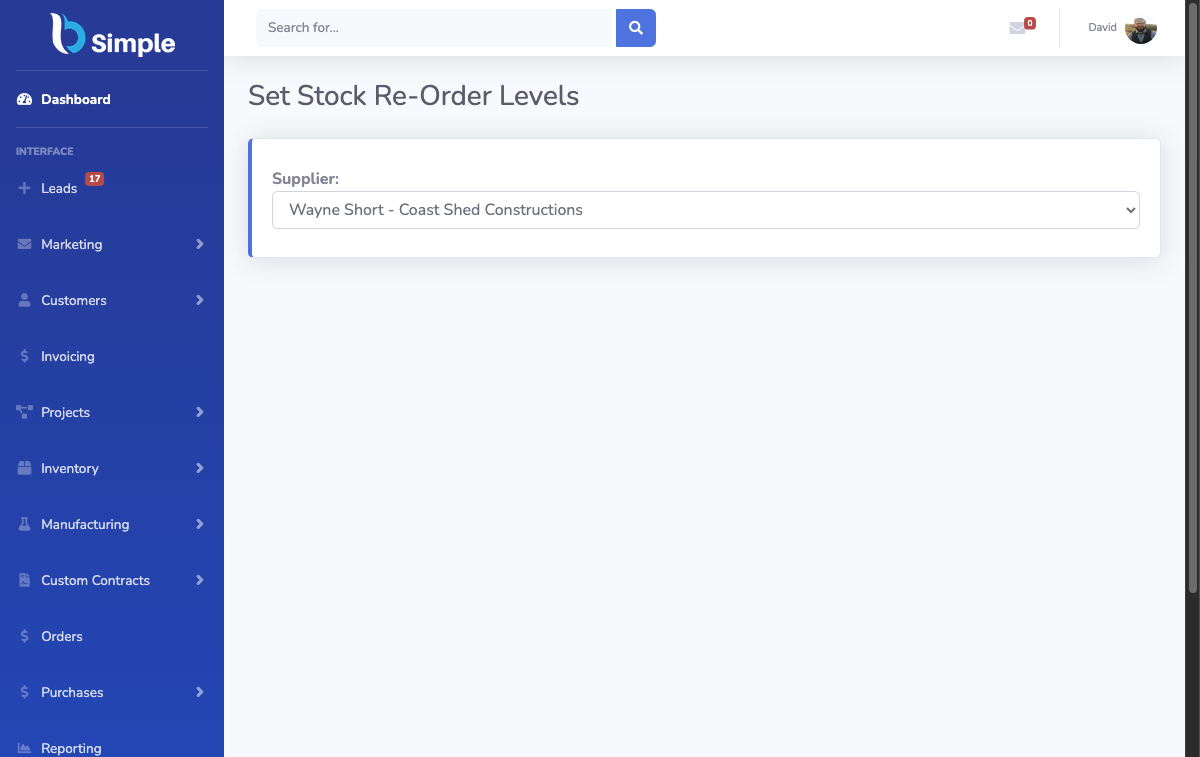
Buy. Reorder levels signal what to purchase before it runs out; purchase orders track what is incoming and reconcile when the supplier invoice arrives. Done looks like: nobody discovers a stockout from a customer.
Sell. Orders check against real quantities, move through pick and pack, and become invoices without re-entry. Wholesale adds per-customer pricing and portals. Done looks like: the thing you sold is the thing you ship, at the price you quoted.
Count. Cycle counts and EOFY stocktakes with variances flagged and adjusted on the record. Done looks like: year-end is a week of counting, not a fortnight of archaeology.
When a business actually needs this (and when it does not)
The honest trigger is shared truth: the moment a second person — or a second location, or a customer ordering through a portal — needs quantities to be right while the first is still working, the spreadsheet becomes a rumour mill. Before that moment, a well-kept spreadsheet is genuinely fine, and software would be paying for a problem you do not have yet.
After it, the pattern is consistent across the businesses that run this software: stockouts that surprise everyone, quantities adjusted by memory, and a month-end reconciliation that never quite balances. If production is part of the business — making rather than only reselling — bills of materials and recipes add the manufacturing half to the same four jobs.
How BSimple fits — plainly
We build BSimple, so weigh that. It is Australian-made operations software for wholesale, manufacturing, distribution and trade businesses: the four jobs above on one record, with batch and expiry tracking, multi-level units, an audit trail, and accounting left to the accounting system. It is deliberately not an ERP — no HR, no payroll, no MRP scheduling — and the inventory guide maps the whole surface if you are early in the evaluation.
The trial is the fastest test: load your products, run one order and one count, and see whether the record earns its monthly cost against the spreadsheet it would replace. For most businesses that answer is obvious within an afternoon.
Frequently Asked Questions
What does inventory management software do for a business?
It keeps one live stock record and runs the jobs around it — purchasing from demand, orders through fulfilment, invoices to accounting, counts with variance review — so quantities stay true without manual reconciliation. BSimple runs all of it on the same record.
Can I keep using my spreadsheet alongside the software?
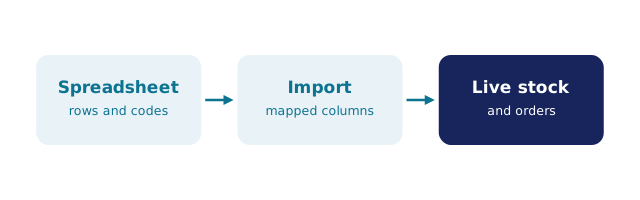
Yes, briefly. BSimple imports your product list and works alongside the spreadsheet while you switch; the goal is that the system becomes the record and the spreadsheet retires, not that both run forever and drift apart.
How much does business inventory software cost?
It varies widely. BSimple is $180/$250/$399 per month AUD with core features included and SMS as the only metered extra (AU$0.20 per segment). Compare vendors at your real shape — products, locations, users — rather than on headline prices.
Does the software replace my accounting system?
No, and be suspicious of any that claims to. BSimple holds the operational record and hands reviewed invoices to Xero or MYOB — US accounting integrations are rolling out — where compliance and payments belong.
What is the first feature to set up?
The stock record: products, locations, opening quantities from a stocktake. Every other job — ordering, purchasing, invoicing — depends on it, which is why implementation starts with a count rather than a configuration screen.

BSimple