
Guide / grocery inventory
Is there a free grocery inventory software download worth using?
For counting shelves and reorder lists, free downloads and spreadsheets genuinely work. The trouble starts where grocery stock is hardest: perishables and POS.
The facts about free grocery inventory downloads
- The download-shaped offers are three things: spreadsheet templates, free tiers with caps, and free trials — know which one you are installing.
- Free genuinely covers: shelf counts, reorder lists, waste notes and a monthly reconciliation.
- Grocery stock is perishable stock: use-by dates and rotation make counts harder than generic retail.
- The POS is where the stock actually moves — a download that does not connect to it stays a parallel fiction.
- BSimple is not a download: cloud software from $180/month (AUD) with a free trial — built for product businesses, not corner-store POS.
- The wider system: inventory management end to end maps the whole record this page sits in.
- 01The facts about free grocery inventory downloads
- 02What the free options genuinely cover
- 03The two grocery problems: perishables and the POS
- 04Where a system earns its place in grocery
- 05Where BSimple fits, stated plainly
What the free options genuinely cover
Strip away the "download" framing and the free market offers three things. Spreadsheet templates: a stock sheet, a reorder list, a waste log — free forever, and enough for a small store with one person who owns the count. The Excel and PDF template list and the basic free tools cover the structured starts. Free tiers of commercial tools: real software with caps on users, orders or history. Free trials: full-featured, time-boxed, the honest way to test anything before paying.
For a corner store with a disciplined owner, the spreadsheet is a legitimate permanent answer: count weekly, order to pars, log waste, reconcile monthly. The trouble is not that free fails — it is that grocery stock has two properties free tools handle worst.
The two grocery problems: perishables and the POS
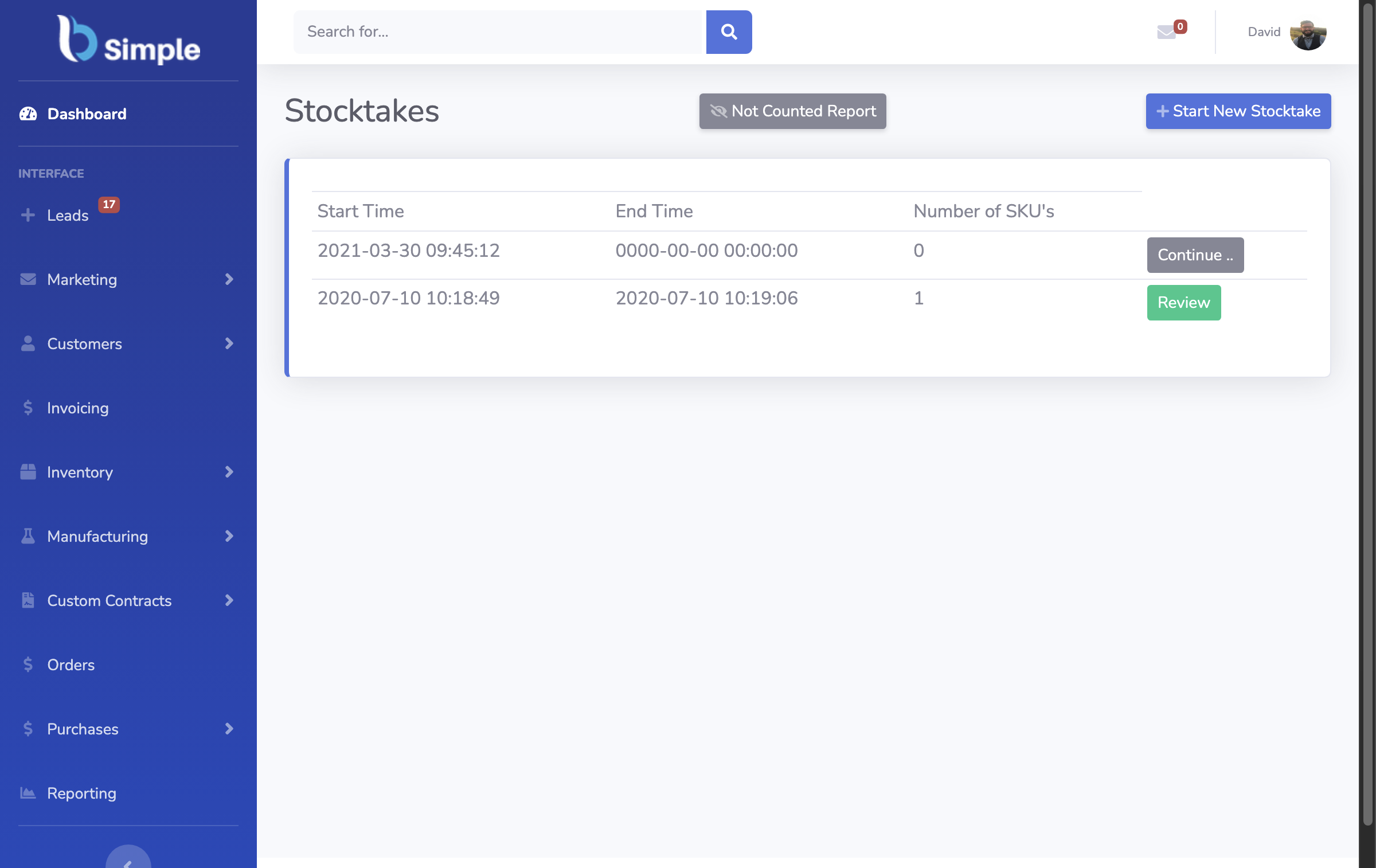
Perishables. Grocery inventory expires while it sits. Quantities without use-by dates answer "how many?" but not "how many will still be sellable on Friday?" — which is the question that matters. Rotation (first-expired-first-out) and expiry-aware reordering are batch-tracking features: the moment they matter, counting downloads stop being enough. The batch tracking guide explains the capability.
The POS. In a grocery store, most inventory movement happens at the checkout. A downloaded stock list that does not connect to the point of sale becomes a parallel fiction — right once a week, wrong every day between. That is why retail inventory answers usually live in or beside the POS rather than in a standalone download. The retail free-tier comparison covers that side honestly.
Where a system earns its place in grocery
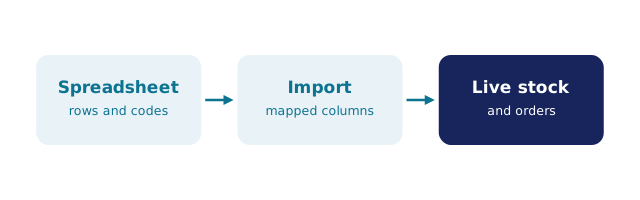
Move past free when any of these is true: spoilage is costing real money and no one can say where it goes; wholesale or supplier ordering runs off demand rather than a guess; the store gained a second site; or the accountant wants stock figures the POS cannot produce. At that point the requirement is not a download — it is one live record connecting shelves, checkout, suppliers and books: quantities with use-by dates, purchase orders from demand, stocktakes that reconcile, and the handoff to Xero or MYOB.
That is the record BSimple runs for product businesses, and grocery-adjacent wholesalers — food distributors, producers supplying stores — are squarely in its audience. A corner store wanting POS-first retail software is honestly not BSimple's audience, and pretending otherwise helps nobody.
Where BSimple fits, stated plainly
We build BSimple, so weigh that. It is not a free download — it is cloud software, from $180/month (AUD), with a full-featured free trial. The fit: businesses behind the shelves as much as in front of them — wholesalers, food producers, distributors — who need perishable stock handled properly (batches, use-by dates, traceability search), purchase orders raised from demand, a customer ordering portal for trade buyers, and invoices that reach Xero or MYOB untouched.
If your need is the corner-store count, take the free templates above with confidence — they are the right-sized answer. If stock has outgrown the checkout and the spreadsheet, start the trial with your real products and see whether one live record changes the week.

Frequently Asked Questions
Is there truly free grocery inventory software?
Yes, in the spreadsheet sense — templates cost nothing and work for small stores. Free tiers add multi-user access within caps. A "free download" that runs a full grocery operation with POS integration and perishables handling does not exist; anything claiming it monetises somewhere.
Why does POS integration matter so much here?
Because the checkout is where most stock leaves. Without it, the downloaded list and the shelf diverge daily, and the weekly count becomes reconciliation archaeology. Retail answers usually live in or beside the POS; wholesale answers in an operations system.
How does software handle use-by dates?
As batches: each receipt carries its date, rotation follows first-expired-first-out, and traceability search finds what needs moving or pulling. BSimple builds this into the core — batches with use-by dates and lot-level search — because it matters for every food business it serves.
What does BSimple cost compared to free?
Free costs discipline; BSimple costs $180/month (AUD) published, all features included, with a free trial. The comparison that matters: if spoilage, stockouts or reconciliation hours cost more than the subscription, the paid record pays for itself; if not, stay free with confidence.
Is BSimple suitable for a single corner store?
Honestly, usually not — a single store without wholesale operations is better served by POS-first retail tools, and the free templates above may be all it needs. BSimple fits the businesses behind the grocery supply chain: producers, wholesalers and distributors.
BSimple