
Guide / the basic scope
Basic inventory software: what basic should include
Basic is not an insult — it is a scope. Here is what a basic inventory system should cover, which free options deliver it, and the two features that mark the end of basic.
The short answer
- The basic scope: live quantities, a few locations, and counts you will actually do — nothing more, honestly.
- Free versions of basic: a spreadsheet, or free tiers of light tools with caps.
- The two features that end basic: allocation (orders promising stock) and the accounting handoff (invoices moving to the ledger).
- BSimple starts above basic by design — from $180/month (AUD) with a trial — and says so rather than selling you "basic".
- Where it fits: this page is one branch of the inventory management guide.
- 01The short answer
- 02What basic should include, and what free delivers
- 03Where BSimple fits
What basic should include, and what free delivers
Live quantities — numbers that update when stock moves, not when someone remembers. A location or three — the shelf, the back room, the van. Counts you will actually do — which on a basic budget means a phone and a spreadsheet discipline. That is the honest basic scope, and free delivers it: a well-built template is the classic answer, free tiers of light tools are the software-shaped version, and both stay honest while one person maintains them and nothing orders against the stock.
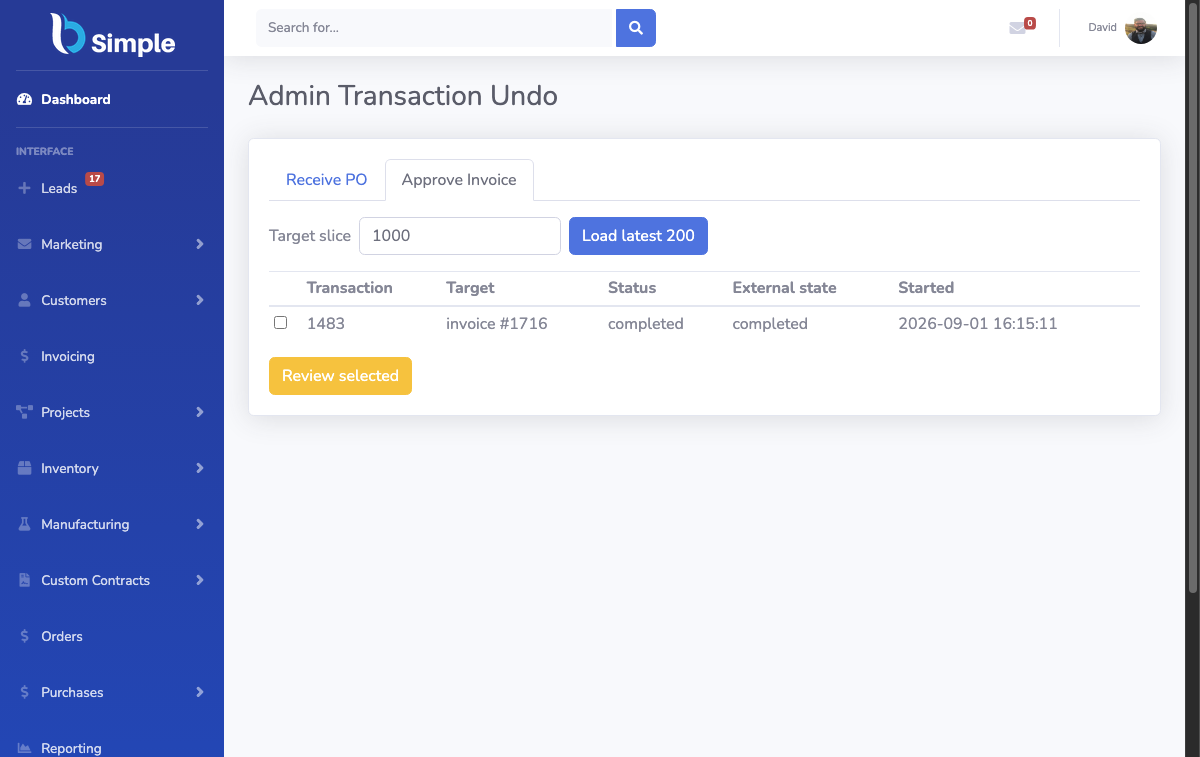
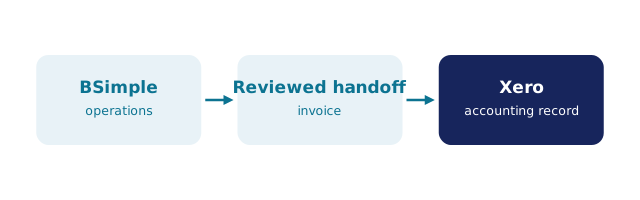
The two features that end basic are allocation — an order reserving units so the next order cannot double-promise — and the accounting handoff — invoices moving to the ledger complete, statuses mirroring back. Both are workflow, not record-keeping; both are where free tools stop and paid products begin, at every vendor. Businesses that need neither can stay basic for years and be right to.
Where BSimple fits
We build BSimple, so weigh that: it is not basic software and does not market a basic tier. It starts above the two features — allocation from live multi-location stock, the Xero/MYOB handoff, plus purchasing from demand, batch traceability, counts from any phone, and a customer ordering portal — because it is built for wholesale, manufacturing, distribution and trade businesses whose stock gets promised daily. Plans run from $180/month (AUD), and the free trial tests the above-basic features on your own products before anything is paid.
The honest recommendation: if your operation genuinely sits in the basic scope, use the free options — a template is honest value, and the free ladder maps the rungs. The graduation moment is the first allocation conflict or the first re-keyed invoice; the vendor guide covers the trial process that follows.
Frequently Asked Questions
What is the best free basic inventory software?
A two-sheet template — products and movements, with derived on-hand — is the honest answer for one maintainer. Free tiers of light tools add polish with caps. The template guide builds the structure; the ladder explains when to leave it.
Is BSimple basic?
No — it starts above basic: allocation, purchasing, portal, traceability and the accounting handoff are all included, from $180/month (AUD). Businesses genuinely in the basic scope are better served by free options, and this page would rather say that than sell.
What features are worth paying for first?
The two that end basic: allocation and the accounting handoff. They are worth paying for because they stop the two most expensive manual failures — the double-promise and the re-keyed invoice. Everything else is refinement until the workflow demands it.
How do we know basic is no longer enough?
When stock gets promised (by orders, bookings or staff) or when invoices get typed twice. Those are workflow events, not size events — a five-person trade counter hits them before a ten-person storeroom. The trial after that moment is free, which is the right price for finding out.

BSimple