
Guide / the type map
Examples of inventory management systems
System types, not brand rankings: perpetual and periodic, barcode-driven, batch-controlled, warehouse-scale, and just-in-time. Each is an example of a different philosophy — and most growing businesses end up combining the first four.
The key facts
- Type 1, perpetual: every movement recorded as it happens — the foundation the other types build on.
- Type 2, periodic: count-and-adjust on a schedule — simple, and always a snapshot behind reality.
- Type 3, barcode-driven; 4, batch-controlled: speed and identity, respectively — accuracy at volume and traceability where it matters.
- Type 5, warehouse-scale (WMS); 6, JIT: location-level orchestration and demand-timed replenishment — where BSimple carries the first four types on one record.
- 01The key facts
- 02Types 1 and 2 — perpetual and periodic
- 03Types 3 to 6 — barcode, batch, warehouse, just-in-time
Types 1 and 2 — perpetual and periodic
The perpetual system records every movement as it happens: a sale deducts, a receipt adds, an adjustment trails its evidence. The record is current enough to act on — which makes every other control possible. The periodic system is the count-and-adjust approach: quantities updated on a schedule, from weekly to annual. It is simpler and always wrong between counts — acceptable for low-value stock, ruinous for anything customers are promised against. The two are the first fork in every evaluation: perpetual tracking is what makes the rest of this list meaningful, because a system that only knows last month's position cannot protect today's sale.
Types 3 to 6 — barcode, batch, warehouse, just-in-time
Barcode-driven systems attach scanning to the perpetual record: receive, pick and count by scan — speed and accuracy at volume, and the reason typing errors stop being a cost. Batch-controlled systems add identity: lots and expiry dates on every receipt, traceability in both directions, use-by discipline on production — the non-negotiable layer for food, beverage, pharma and certified goods. Warehouse management systems (WMS) orchestrate space and labour: bin-level locations, pick waves, directed put-away — powerful at scale, and usually more system than a growing business needs before it has locations worth orchestrating. Just-in-time is a replenishment philosophy rather than a product: stock arrives demand-timed, and it works only on top of a record trustworthy enough to time it against.
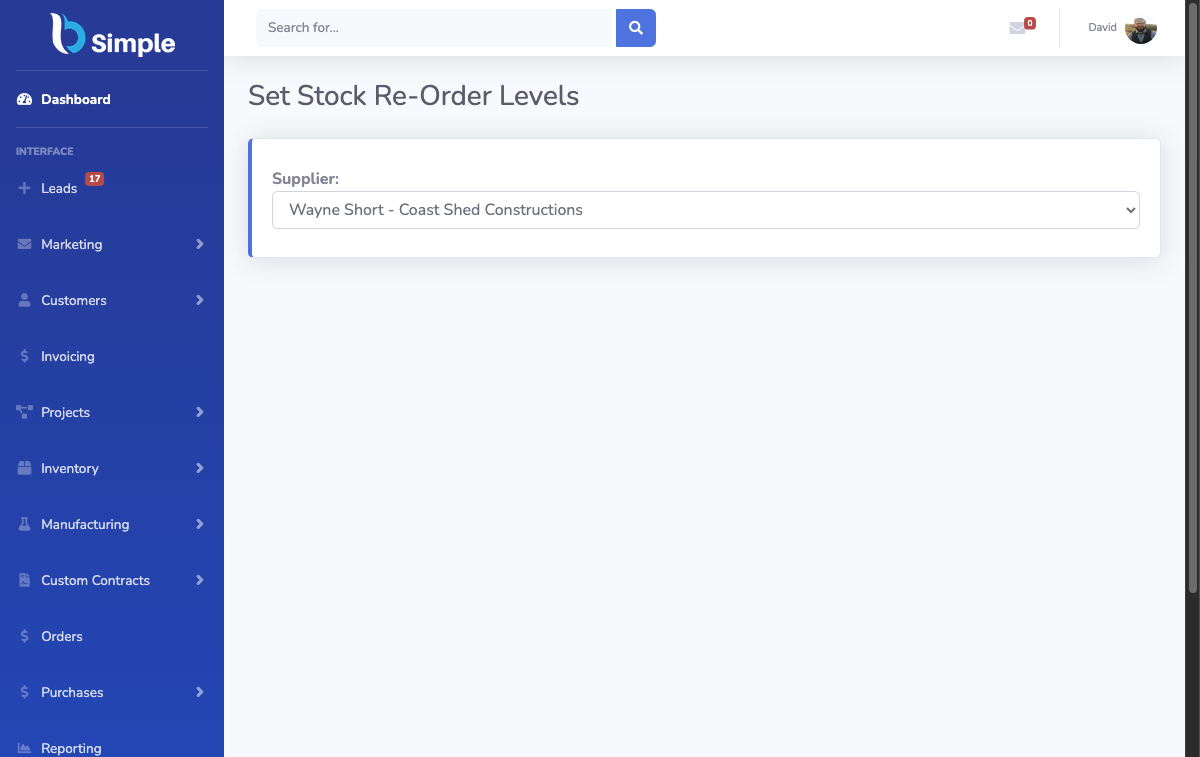
We build BSimple, so weigh that: it carries the first four types on one record — perpetual by design, barcode input via any standard scanner, batch and expiry control with traceability search, and multi-location warehouse functionality — while JIT becomes the reorder-automation layer working against real demand. From $180/month AUD, everything in the core plans. Tracking system examples by industry, control-system examples by rule and the system types in context cover the neighbouring views; the inventory management pillar holds the map, and the trial runs your products through every type at once.
Frequently Asked Questions
What are the main types of inventory management systems?
Perpetual and periodic (how the record updates), barcode-driven and batch-controlled (how movements are captured and identified), warehouse-scale systems (how space and labour are orchestrated), and just-in-time (how replenishment is timed). Most growing businesses combine the first four.
Which type should a small business start with?
Perpetual, barcode-driven if volumes justify scanning, and batch control the moment anything carries a lot or expiry. Periodic counting is a starting habit, not a destination — it is always a snapshot behind reality.
Do we need a WMS?
Only when bin-level orchestration — directed put-away, pick waves — is the bottleneck. Multi-location quantities and scanning, which most businesses need first, do not require a full WMS. The trial shows which layer your operation actually exercises.
Is just-in-time a kind of software?
No — it is a replenishment philosophy. Software enables it: reorder levels firing purchase orders from real demand is the mechanical version of JIT, and it only works on top of a trustworthy record.
Can one system be all of these at once?
Yes — that is the point of a record like BSimple's: perpetual and barcode-driven by design, batch-controlled where products need it, multi-location for the warehouse layer, and reorder automation delivering the JIT discipline.

BSimple