
Guide / the stack, named
Enterprise system management, component by component
Enterprise system management is a stack of six components — infrastructure, data, applications, integration, security, monitoring — and knowing which layer a vendor sells stops a lot of expensive confusion.
The key facts
- Six components make the stack: infrastructure, data, applications, integration, security and access, monitoring and reporting.
- Vendors sell layers, not the stack: confusing "which layer are you?" is the most common enterprise-buying error.
- The layers below the application are IT's job; the application layer is where business records live.
- BSimple's layer: the application layer only — the operational record for stock businesses — sitting on standard cloud infrastructure it manages for you.
- Where it fits: this page is one branch of the inventory management guide.
- 01The key facts
- 02The six components, from the floor up
- 03How the components map to what you buy
- 04BSimple's layer, stated plainly
The six components, from the floor up
1. Infrastructure — the servers, storage and network everything runs on: on-premise racks, cloud tenancy, or a mix. 2. Data — the databases and the governance around them: where records live, who owns them, how they are backed up and restored. 3. Applications — the business software itself: finance, inventory, manufacturing, HR, CRM — the layer people actually see. 4. Integration — the connective tissue: APIs, middleware, and the interfaces that let applications exchange records instead of humans re-keying between them. 5. Security and access — identity, permissions, encryption, audit: who may do what, and the evidence of who did. 6. Monitoring and reporting — knowing the stack is healthy and the business is honest: uptime, performance, and the operational reporting that turns records into decisions.
The layers explain vendor conversations that otherwise feel like Different Language. An infrastructure vendor answers "is it up and safe?"; an application vendor answers "is the record true?"; an integration vendor answers "do the two talk?". All six questions are real; only the third and sixth are answerable by a dashboard, and only the third by a product you can trial with your own data.
How the components map to what you buy
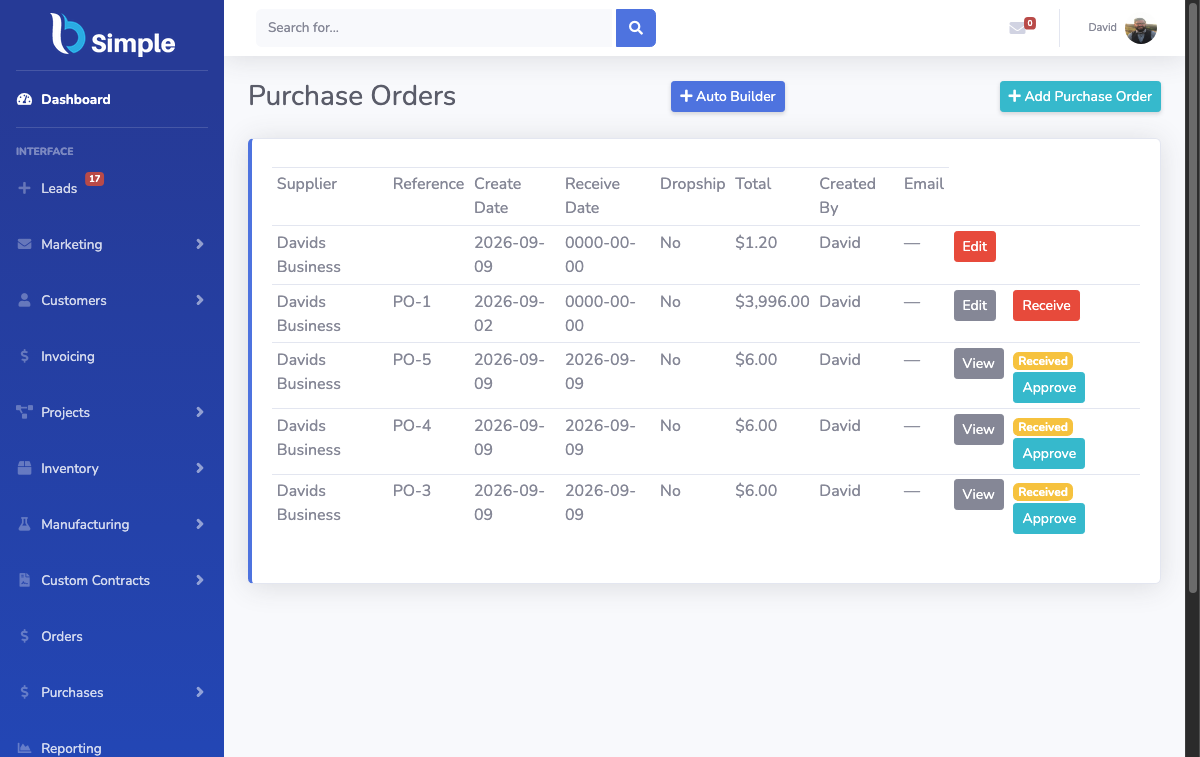
Buying well is matching the layer to the buyer. Infrastructure and monitoring belong to IT — evaluated on uptime, cost and competence. Integration is a shared job — and the layer where accountability must be named, because every boundary between systems is a place work and errors enter. The application layer belongs to the business: this is where enterprise management software — the definition and the tier sits, where ERP versus SMB business management software is decided, and where the honest question is not "which components does it include?" but "does it hold the record my business repeats daily?"
Security and access span every layer, and the component small businesses underbuy is governance: names against responsibilities, and an audit trail behind every action. Software can carry the mechanism — BSimple carries one on every record — but the policy of who may do what is a management decision no product makes for you.
BSimple's layer, stated plainly
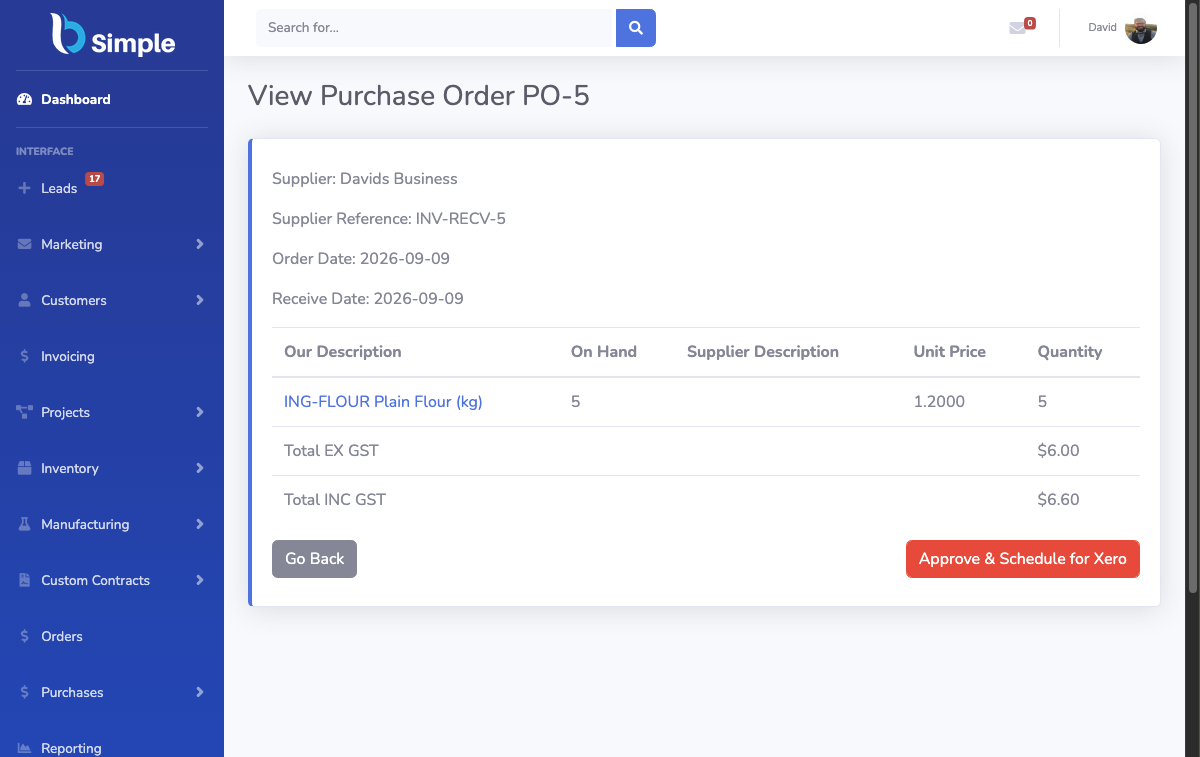
We build BSimple, so weigh that: it is an application-layer product for wholesale, manufacturing, distribution and trade businesses — one record of inventory, orders, purchasing and invoicing, with multi-level stock, batch and expiry tracking, the customer portal, and the accounting handoff to Xero or MYOB (US accounting integrations rolling out). The infrastructure below it is cloud, managed by us: browser-based, nothing to host, with tenant isolation and the audit trail carried on the same platform. Integration is the layer we meet you on: the REST API with keys and scopes is the designed boundary for everything else in your stack, and the business software category map shows how the application layer splits by job.
Plans run $180/$250/$399 per month AUD with every feature in the core plans; the trial evaluates the application layer the only honest way — on your products, for a real week.
Frequently Asked Questions
What are the main components of enterprise system management?
Six, from the floor up: infrastructure, data, applications, integration, security and access, and monitoring and reporting. Vendors sell individual layers; knowing which layer you are buying prevents most confusion in the aisle.
Which layer is BSimple?
The application layer — the operational record for stock-carrying businesses. The infrastructure beneath it is cloud managed by us; integration with your stack runs through the REST API.
Why does the integration layer cause so much trouble?
Because every handoff between systems is a thing that can silently break, and ownership is often nobody's. Name who maintains each interface and what happens when it fails — before the second system is bought, not after the first incident.
Do we need all six components covered before we launch?
Infrastructure, data and security are not optional; applications follow the business need; integration and monitoring grow with the stack. Small businesses typically under-invest in governance and over-invest in tooling for problems they do not yet have.
How do we evaluate an application-layer vendor like BSimple?
On the record: run the trial on your real products for a real week. Application-layer truth is provable in use — no other layer of the stack makes a promise you can test that directly.

BSimple